The European Commission has placed five new EU defence projects at the heart of its drive to build weapons together instead of country by country. Announced on 3 July 2026, the so-called European Defence Projects of Common Interest cover drones, seabed protection, space, air and missile defence, and the bloc’s exposed Eastern Flank. The plan marks a shift from writing cheques toward steering Europe’s fragmented industrial base.
## What the new EU defence projects cover
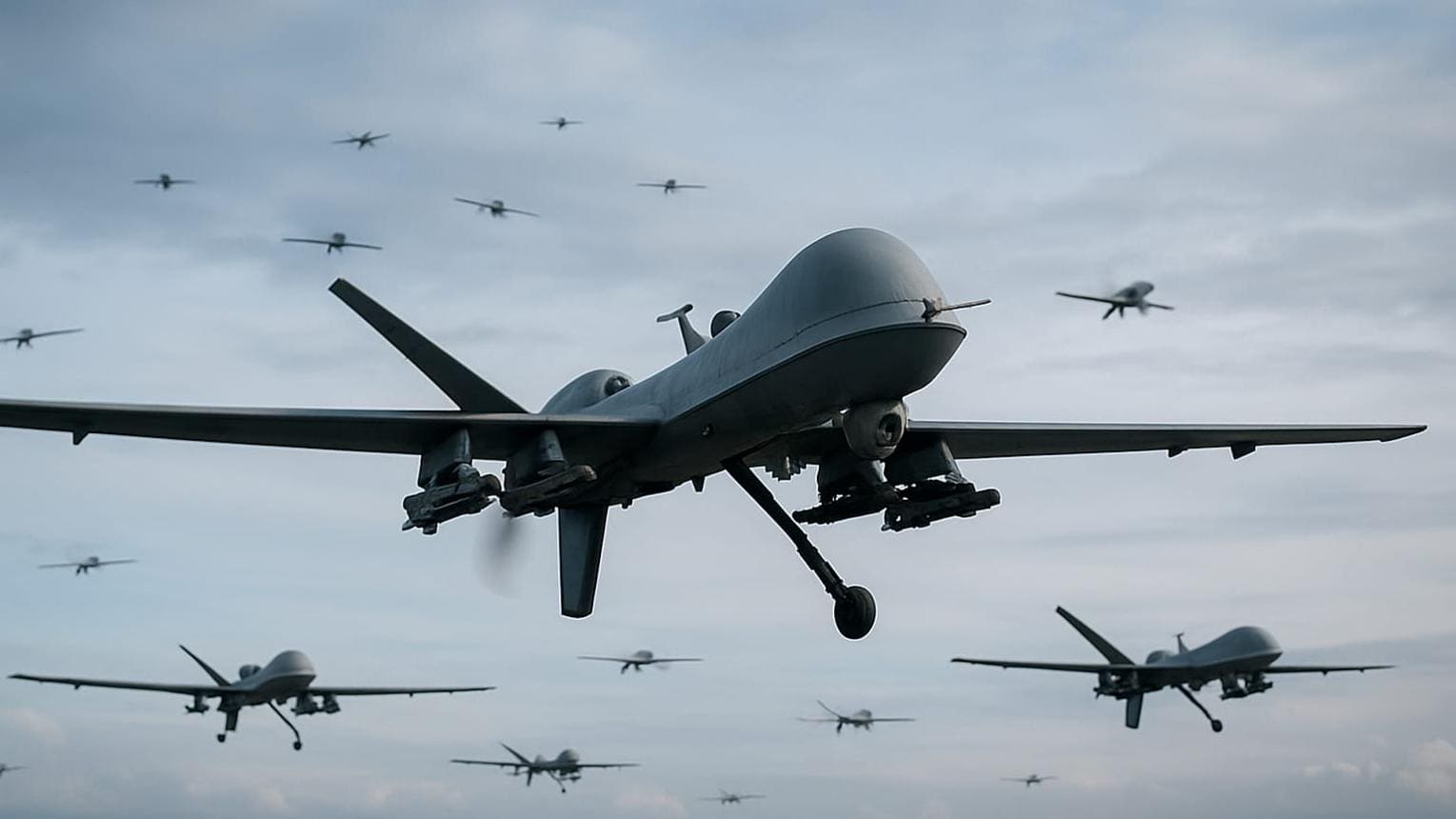
The five EU defence projects target the capability gaps that the war in Ukraine exposed most sharply. They span drones and counter-drone systems, maritime and seabed defence, space assets, air and missile defence, and reinforced security along the EU’s eastern border.
Each project is designed to be built jointly by several member states rather than duplicated across national programmes. The Commission has earmarked an initial 325 million euros from the European Defence Industry Programme to establish and deploy them, with a combined long-term funding ambition of roughly 190 billion euros by 2036.
## How the money actually flows
The European Defence Industry Programme, known as EDIP, provides 1.5 billion euros in grants for 2025 to 2027. The Commission has split the pot to push both procurement and production:
– 240 million euros for common procurement of counter-drone, air and missile defence, and combat systems, open to member states and Norway.
– More than 700 million euros to ramp up defence manufacturing in Europe and Ukraine.
– 300 million euros ring-fenced for a dedicated Ukraine Support Instrument.
## Why joint procurement is the hard part
The numbers are large, but the politics are harder. Europe still buys defence through 27 largely separate markets, each protecting national champions and jobs. Pooling orders promises lower unit costs and interoperable kit, yet governments have long resisted ceding control over what they buy and from whom.
That is the tension these EU defence projects are meant to resolve. By tying EU money to genuinely shared programmes, Brussels is trying to make cooperation the cheaper option rather than a political favour. Analysts have long argued that Europe’s habit of running parallel national procurements wastes billions and leaves armies fielding incompatible equipment. A single counter-drone or missile-defence line, built for several buyers at once, could finally break that pattern if enough capitals commit.
## Where Ukraine fits
Ukraine is no longer an afterthought in EU industrial planning. The dedicated support instrument and the production funding both explicitly cover Ukrainian firms, treating Kyiv’s defence sector as an extension of Europe’s own. That integration hard-wires long-term support into the programme’s design, well beyond any single aid package.
## What happens next
Member states must now decide which projects to join and how to co-finance them, with detailed work programmes expected through the autumn. The gap between the headline 190 billion euro ambition and the modest seed funding will test whether capitals match rhetoric with cash. Critics warn that without binding commitments, the projects risk becoming another layer of coordination rather than real capability. Supporters counter that a common industrial frame, however imperfect, beats the status quo of duplicated fleets and empty magazines.