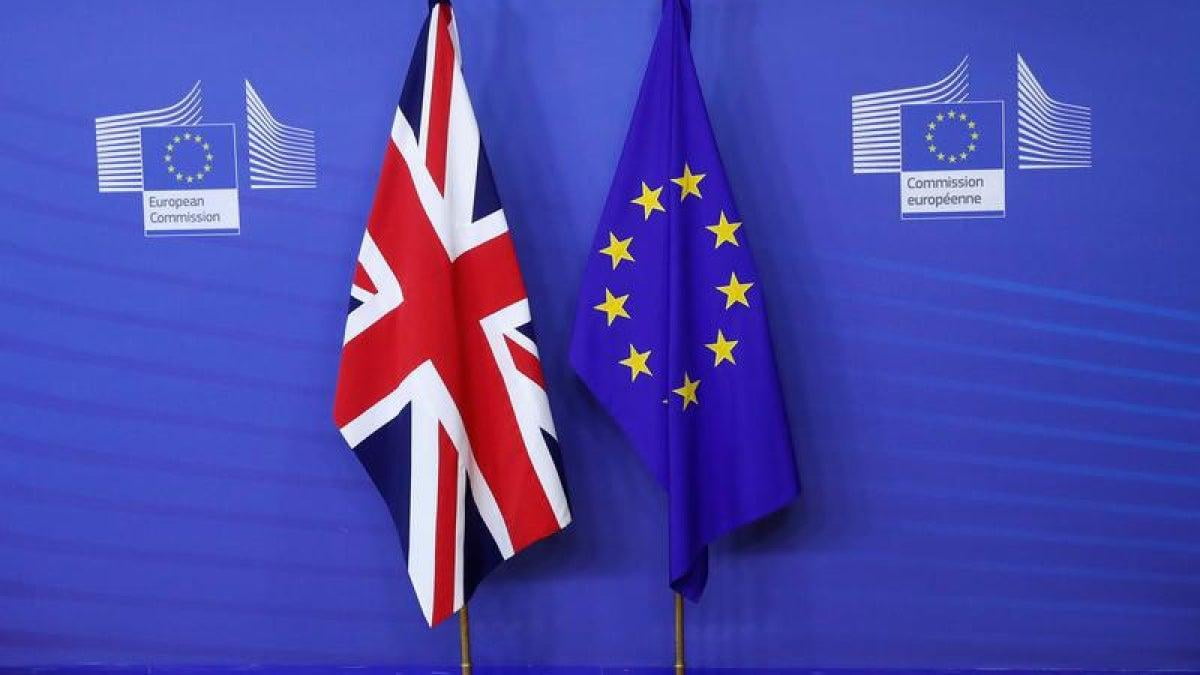
The Industrial Accelerator Act has become the test case for how far Europe will go to protect its factories, and the United Kingdom now wants a seat at the table. Hamish Falconer, the British minister for European relations, spoke in Strasbourg on 7 October after meeting EU counterparts, including Trade Commissioner Maroš Šefčovič. He warned against “new barriers” and argued that open supply chains serve both sides.
The Commission proposed the Industrial Accelerator Act to give European manufacturers a preference in public contracts. Brussels sees the rules as an answer to China’s state-subsidised competition. The central dispute is what counts as “European”, and whether non-EU suppliers can compete on equal terms.
Member states are split on that question inside the Industrial Accelerator Act. France pushes for a stricter definition of European content, while Germany is more willing to extend the rules of origin to trading partners that give EU companies equivalent access. Spain has tried to bridge the gap between the two capitals, according to press reports from late September.
Falconer made the British case for the Industrial Accelerator Act with trade figures. The UK is the EU’s second-largest export market, and it is the largest destination for new vehicles made in the Union. In his view the two economies share an industrial base, so a preference scheme that shuts Britain out would weaken both.
Prime Minister Andy Burnham has made inclusion in the scheme a priority since taking office in July. He raised the matter with Commission President Ursula von der Leyen at the UN General Assembly in New York, and he is due to meet German Chancellor Friedrich Merz in Berlin. EU sources say talks on British participation have accelerated in recent weeks.
The European Parliament will not make the decision any easier. At a joint hearing of the internal market, industry and trade committees on 2 June, Executive Vice-President Stéphane Séjourné faced criticism from several directions. Jörgen Warborn of the EPP called the proposal too restrictive and questioned the Commission’s legal basis for excluding free trade partners. Pierre Jouvet of the S&D warned that using delegated acts to exclude third countries could be “a real tinderbox”.
Séjourné rejected the claim that the Industrial Accelerator Act would reach 90 countries, calling it “fake news”. Of the 90 third countries with EU trade agreements, he said, 40 have a public procurement agreement and about 20 operate on reciprocity. The Commission currently counts around 20 trusted partners, and it argues the administrative cost for companies will be marginal.
Rapporteurs are due to present draft reports after the summer, so the legislative clock is only starting. Centre-right lawmakers are divided along national lines over the meaning of “Made in Europe”, and the S&D group says an EPP push to scrap the proposal would put industry and jobs at risk. That fight will shape how generous the final text is to outside partners.
A date for an EU-UK summit has not been fixed, although officials expect one before the end of 2026, probably in Brussels. A deal on the Industrial Accelerator Act could become one of its main deliverables. For now, the Industrial Accelerator Act shows that European preference is no longer an abstract slogan, and that every trading partner, from London to Ankara, will lobby to be counted as European enough.