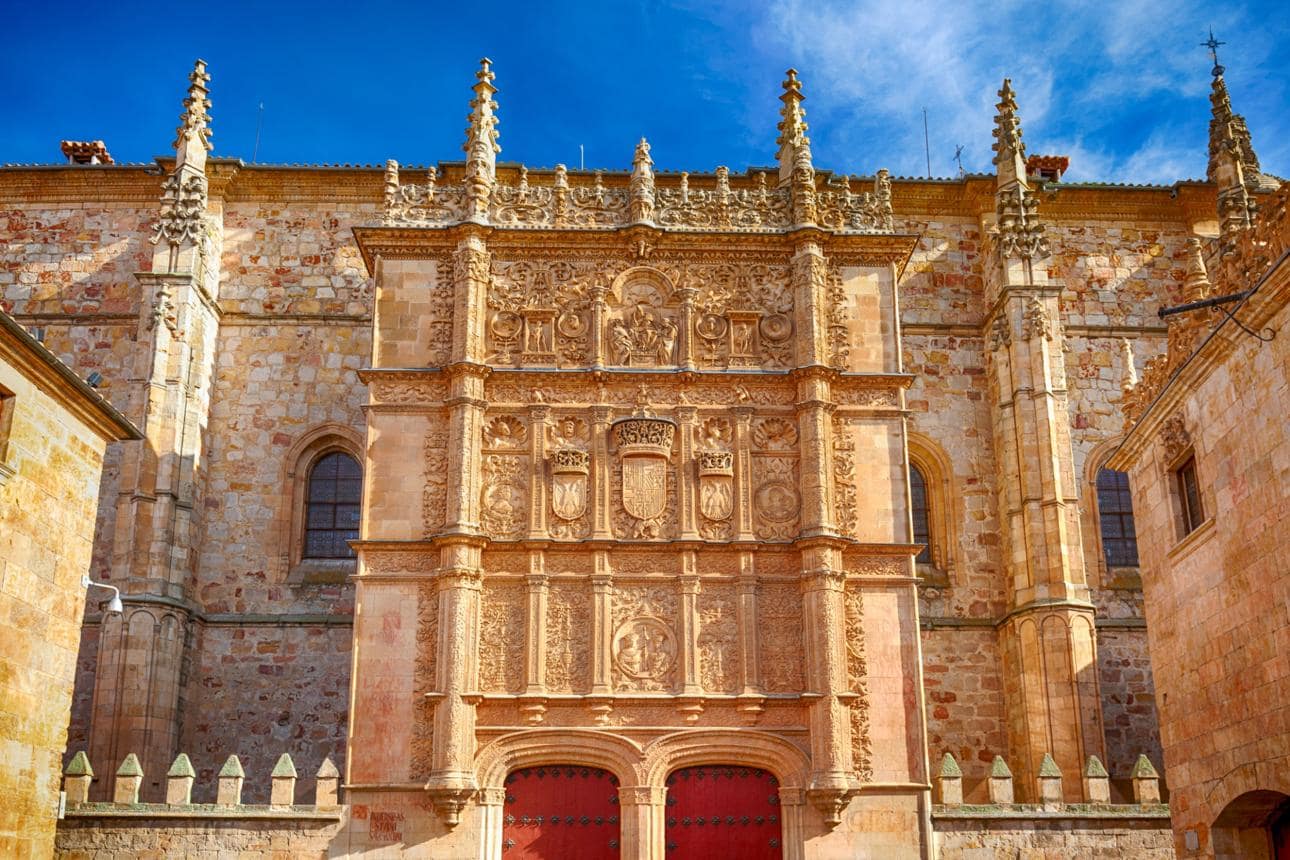
Salamanca: European universities begin rolling out a joint European degree label this year, the first concrete step in a roadmap member states agreed to run through 2029. The label lets alliances of universities mark a joint programme as meeting common European criteria, and it arrives before any binding new qualification exists.
Education ministers set the sequence themselves. Meeting on 7 May 2025, the Council adopted a resolution on the joint label alongside a recommendation on a European quality assurance and recognition system in higher education, choosing a phased approach over the faster route the Commission had sketched.
Phase one covers 2025 and 2026 and looks administrative rather than dramatic. A working group of member state representatives, Commission officials and higher education stakeholders is writing the definitions, criteria, guidelines and implementation model that the label will run on. Universities in Salamanca, Coimbra and Bologna have joined pilots that test those criteria against real joint programmes.
The ambition behind the label is larger. The Commission’s 2024 blueprint proposed two entry points, a preparatory label for joint programmes meeting European criteria, and something far more consequential.
a European degree as a new type of qualification awarded jointly by several universities and automatically recognised
Automatic recognition is the part that unsettles national ministries. Recognising a foreign qualification remains a national competence, and several governments read the phrase as a quiet transfer of authority to Brussels. The three-phase roadmap exists precisely because ministers wanted to test the machinery before committing to the destination.
Evidence for the approach comes from six Erasmus+ pilot projects involving more than 140 higher education institutions across every EU country. Those pilots exposed the obstacles clearly enough:
- differing national rules on who may award a degree jointly
- accreditation systems that assess programmes country by country
- student mobility rules that assume one home institution rather than several
The Council’s resolution on the label sets out the vision and the roadmap. The European University Association welcomed the step-by-step design while noting that a label without funding behind it changes little, a caution set out in its assessment of the Council decision.
Money is arriving from a different direction. The Commission has launched European degree pathway projects inside Erasmus+, giving member states and universities a financial reason to engage. It also plans Erasmus+ scholarships aimed at science and technology students, part of a broader push tied to the STEM Education Strategic Plan the College adopted in March 2025.
That plan runs on three tracks, anchoring science and technology as a strategic pillar of EU education policy, widening the talent pipeline, and advancing women in those fields. It commits the Commission to a STEM competence framework covering all learners at every stage of education by 2026, and to piloting skills foundries where companies mentor student entrepreneurs in strategic sectors.
Both files sit under the Union of Skills, which marked its first year on 5 March 2026 having delivered a Council recommendation on human capital, a European Skills High-Level Board and a European Skills Intelligence Observatory. Critics inside the sector call that an impressive list of structures and a thin list of outcomes.
The European degree therefore advances on two legs, a label universities may adopt voluntarily and a quality assurance reform that makes cross-border recognition routine. Whether a student graduating in Salamanca in 2030 holds a genuinely European qualification depends less on Brussels than on whether twenty-seven education ministries let their accreditation agencies agree.