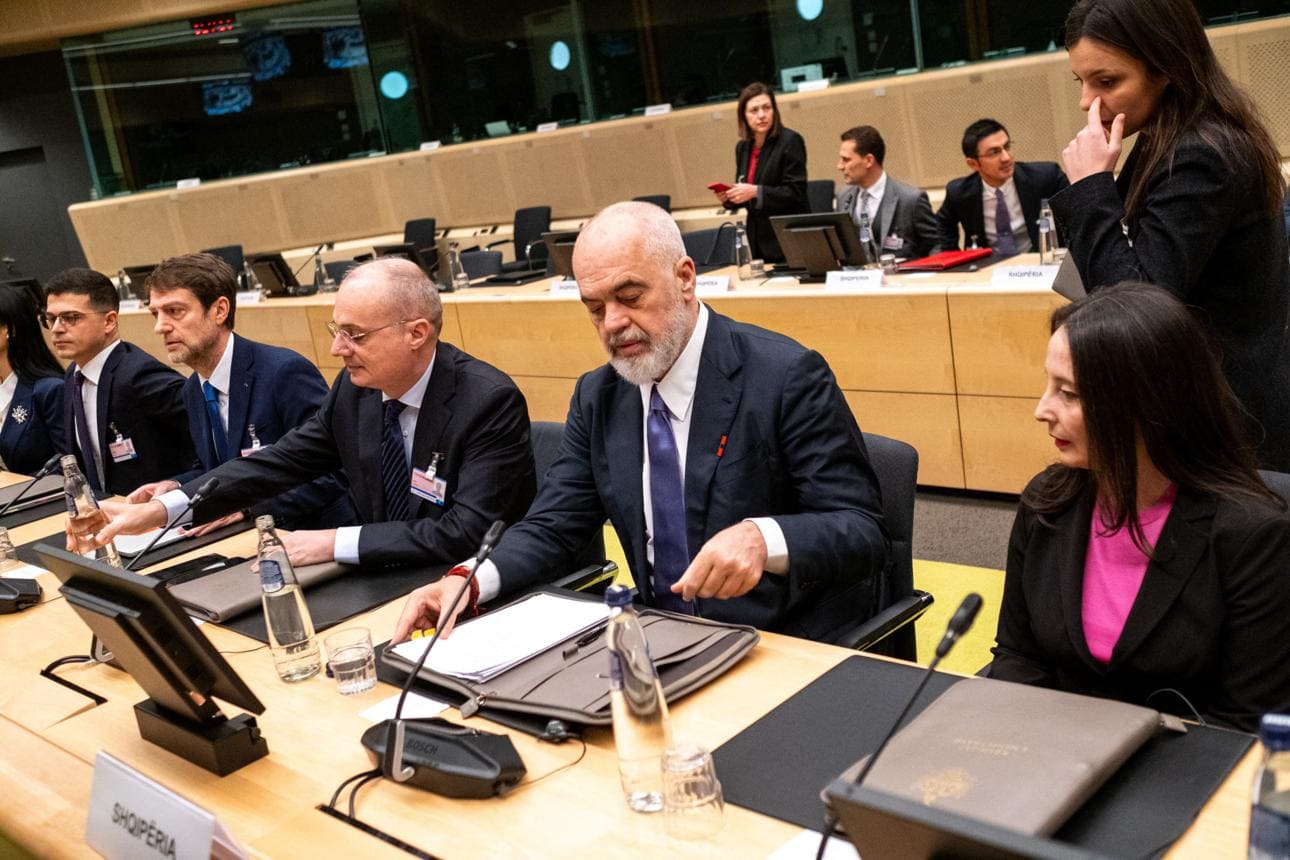
Brussels: EU enlargement gained fresh momentum this week as Montenegro and Albania each closed negotiating chapters at intergovernmental accession conferences held in Brussels on 14 July, handing the Western Balkans its clearest sign of progress in years.
Montenegro provisionally closed two more chapters, on competition policy and the customs union, lifting its total to 18 of 33 and cementing its status as the frontrunner. Enlargement Commissioner Marta Kos said Podgorica could complete the talks by 2028, the date the government has set for full membership.
Albania, a later starter, closed its first three chapters, covering science and research, education and culture, and external relations. Tirana matched its neighbour's ambition, saying it too aims to finish negotiating by 2028 and to join shortly after Montenegro.
Moldova and Ukraine advanced on the same day. Ukraine opened the second cluster of its talks, aligning its foreign, security, trade and defence policies with the bloc, a striking pace for a country that only applied in 2022, days after Russia's full-scale invasion. The Council set out the state of play on its enlargement policy pages.
The choreography matters because it signals that the merit-based process still delivers rewards. For a decade, candidates watched talks stall while capitals bickered, and public support in the Balkans drifted. Closing chapters, even provisionally, hands reformist governments something concrete to show voters.
The Western Balkans is not the only file in motion. Kos has pressed capitals to treat accession as a geopolitical investment rather than a bureaucratic checklist, arguing that a credible path keeps reformers in power and Russian and Chinese influence at bay. Serbia and North Macedonia, by contrast, remain stalled, a reminder that momentum is uneven across the region.
Money is quietly reshaping the incentives too. Under the Growth Plan for the Western Balkans, Brussels has tied billions in pre-accession funds to concrete reforms, letting candidates taste the benefits of membership before they formally join. Officials hope the carrot proves more durable than a decade of stern annual progress reports.
Yet the road narrows from here. The toughest chapters, on the judiciary, corruption and media freedom, remain open, and every closure requires unanimous approval from all 27 member states. National vetoes have derailed candidates before, and any single government can freeze progress over a bilateral dispute.
Sceptics also warn that 2028 targets risk overpromising. Absorbing new members forces hard choices on farm subsidies, cohesion funds and voting weights that the Union has barely begun to debate. Enlargement enthusiasts counter that the geopolitical cost of leaving the Balkans and Ukraine in limbo now outweighs the institutional headache. The Commission tracks each candidate's scorecard through its enlargement directorate.
For now, Brussels has bought goodwill. Whether the pace survives the politically explosive chapters ahead will decide if 2028 becomes a genuine deadline or another slipping horizon.