
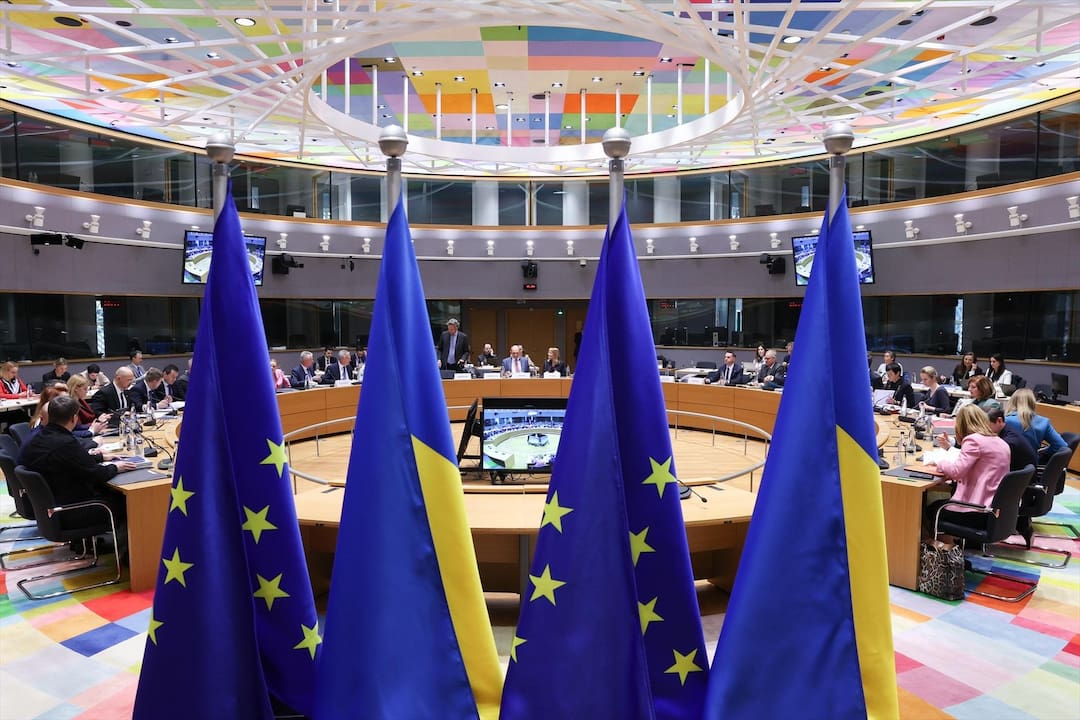
Brussels: The European Union opened a new accession cluster with Ukraine and Moldova in mid-July 2026, moving both candidate countries a step closer to membership after months of political deadlock. Ambassadors from the 27 member states unanimously agreed to unblock Cluster 6, which covers external relations, at a meeting in Brussels.
The decision follows the opening of Cluster 1, on the fundamentals of membership, at an accession conference held in Luxembourg on 15 June. Marta Kos, the Commissioner for Enlargement, urged capitals to keep up the pace and open the remaining chapters as soon as possible.
Progress had stalled for nearly two years while Hungary blocked Kyiv’s path. That obstruction ended after a change of government in Budapest, when the incoming prime minister lifted the veto in early June and cleared the way for negotiations to resume.
Each accession cluster groups several negotiating chapters that a candidate must align with EU law. Ukraine and Moldova must now work through four clusters that remain blocked, covering the internal market, competitiveness, connectivity and other policy areas. Officials say the chapters are technically ready and that Kyiv has met the conditions to open them.
The July target of opening all remaining clusters will not be met. Instead, member states plan to tackle them one by one from September, a slower timetable that reflects the political sensitivities still surrounding the process. A joint statement from Council President Antonio Costa and Commission President Ursula von der Leyen framed the earlier decision as proof that enlargement is moving from promise to practice.
For Kyiv, each accession cluster carries symbolic and practical weight. Opening negotiations signals that reforms undertaken during wartime win recognition, and it locks in a framework that keeps European integration on track regardless of shifting battlefield conditions. Moldova, whose bid has advanced in parallel, benefits from the same momentum.
The Commission has kept the two candidates paired throughout the process, arguing that their reform records justify moving together. Some diplomats privately worry that binding the two bids could slow the faster performer, yet the political case for a joint track has so far prevailed.
Enlargement has returned to the top of the EU agenda since 2022, when the bloc granted Ukraine and Moldova candidate status within months of Russia’s full-scale invasion. Turning that status into concrete negotiations has proved harder, and the cluster-by-cluster approach gives member states repeated chances to weigh in.
The Commission’s enlargement service insists the direction of travel is clear even if the calendar slips. Analysts caution that the hardest chapters, on the rule of law and the single market, still lie ahead. For now, the opening of a second accession cluster gives Kyiv and Chisinau a rare piece of good news and keeps the promise of membership within reach.


