August 7, 2026
LATEST
New Zealand Trade With Europe Hits a Record in Its First YearEurope Locks Chinese Medical Devices Out of Its Public TendersHow Far Can Europe and Japan Take Their New Security Pact NowSeoul’s Gamble on Europe’s Research Money Is Starting to Pay OffEurope Freezes Its Retaliatory Tariffs on the US IndefinitelyAir Passenger Rights Get Their First Big Rewrite in 20 YearsFive Joint Defence Projects Win Brussels Backing and Shared CashTobacco Tax Overhaul Stalls as Governments Block UnanimityCritical Medicines Act Heads for Final Adoption This AutumnMoldova Accession Reaches Its Foreign-Policy ChapterMercosur Tariffs Fall as Europe’s Farmers Watch the GaugesWhy Europe’s Digital Fairness Act Worries Online RetailersErasmus+ Faces a Budget Fight Before Its 2028 RelaunchMedia Freedom Rules Turn One as Enforcement LagsPlatform Work Rules Push Member States Toward a December ReckoningSingle Ticket Plan Would Let One Booking Cover Europe by RailHungary Races an August Deadline to Unlock Its Recovery FundsCapitals Race a September Deadline to Restore NatureEuro-Zone Inflation Nudges Back Up as Energy Bills ClimbRed Bull Case Tests a New Frontier in EU AntitrustNew Zealand Trade With Europe Hits a Record in Its First YearEurope Locks Chinese Medical Devices Out of Its Public TendersHow Far Can Europe and Japan Take Their New Security Pact NowSeoul’s Gamble on Europe’s Research Money Is Starting to Pay OffEurope Freezes Its Retaliatory Tariffs on the US IndefinitelyAir Passenger Rights Get Their First Big Rewrite in 20 YearsFive Joint Defence Projects Win Brussels Backing and Shared CashTobacco Tax Overhaul Stalls as Governments Block UnanimityCritical Medicines Act Heads for Final Adoption This AutumnMoldova Accession Reaches Its Foreign-Policy ChapterMercosur Tariffs Fall as Europe’s Farmers Watch the GaugesWhy Europe’s Digital Fairness Act Worries Online RetailersErasmus+ Faces a Budget Fight Before Its 2028 RelaunchMedia Freedom Rules Turn One as Enforcement LagsPlatform Work Rules Push Member States Toward a December ReckoningSingle Ticket Plan Would Let One Booking Cover Europe by RailHungary Races an August Deadline to Unlock Its Recovery FundsCapitals Race a September Deadline to Restore NatureEuro-Zone Inflation Nudges Back Up as Energy Bills ClimbRed Bull Case Tests a New Frontier in EU Antitrust
August 7, 2026
LATEST
New Zealand Trade With Europe Hits a Record in Its First YearEurope Locks Chinese Medical Devices Out of Its Public TendersHow Far Can Europe and Japan Take Their New Security Pact NowSeoul’s Gamble on Europe’s Research Money Is Starting to Pay OffEurope Freezes Its Retaliatory Tariffs on the US IndefinitelyAir Passenger Rights Get Their First Big Rewrite in 20 YearsFive Joint Defence Projects Win Brussels Backing and Shared CashTobacco Tax Overhaul Stalls as Governments Block UnanimityCritical Medicines Act Heads for Final Adoption This AutumnMoldova Accession Reaches Its Foreign-Policy ChapterMercosur Tariffs Fall as Europe’s Farmers Watch the GaugesWhy Europe’s Digital Fairness Act Worries Online RetailersErasmus+ Faces a Budget Fight Before Its 2028 RelaunchMedia Freedom Rules Turn One as Enforcement LagsPlatform Work Rules Push Member States Toward a December ReckoningSingle Ticket Plan Would Let One Booking Cover Europe by RailHungary Races an August Deadline to Unlock Its Recovery FundsCapitals Race a September Deadline to Restore NatureEuro-Zone Inflation Nudges Back Up as Energy Bills ClimbRed Bull Case Tests a New Frontier in EU AntitrustNew Zealand Trade With Europe Hits a Record in Its First YearEurope Locks Chinese Medical Devices Out of Its Public TendersHow Far Can Europe and Japan Take Their New Security Pact NowSeoul’s Gamble on Europe’s Research Money Is Starting to Pay OffEurope Freezes Its Retaliatory Tariffs on the US IndefinitelyAir Passenger Rights Get Their First Big Rewrite in 20 YearsFive Joint Defence Projects Win Brussels Backing and Shared CashTobacco Tax Overhaul Stalls as Governments Block UnanimityCritical Medicines Act Heads for Final Adoption This AutumnMoldova Accession Reaches Its Foreign-Policy ChapterMercosur Tariffs Fall as Europe’s Farmers Watch the GaugesWhy Europe’s Digital Fairness Act Worries Online RetailersErasmus+ Faces a Budget Fight Before Its 2028 RelaunchMedia Freedom Rules Turn One as Enforcement LagsPlatform Work Rules Push Member States Toward a December ReckoningSingle Ticket Plan Would Let One Booking Cover Europe by RailHungary Races an August Deadline to Unlock Its Recovery FundsCapitals Race a September Deadline to Restore NatureEuro-Zone Inflation Nudges Back Up as Energy Bills ClimbRed Bull Case Tests a New Frontier in EU Antitrust

Economic Security Redefines the EU-Japan Partnership

Nagoya: In the workshops of central Japan’s manufacturing belt, where Mitsubishi Heavy Industries and a dense web of precision suppliers turn out everything from aircraft parts to power turbines, a quieter European ambition is taking shape. Economic security has become the organising idea behind the deepening relationship between Tokyo and Brussels, and this industrial heartland is where the abstraction meets the machine tools.

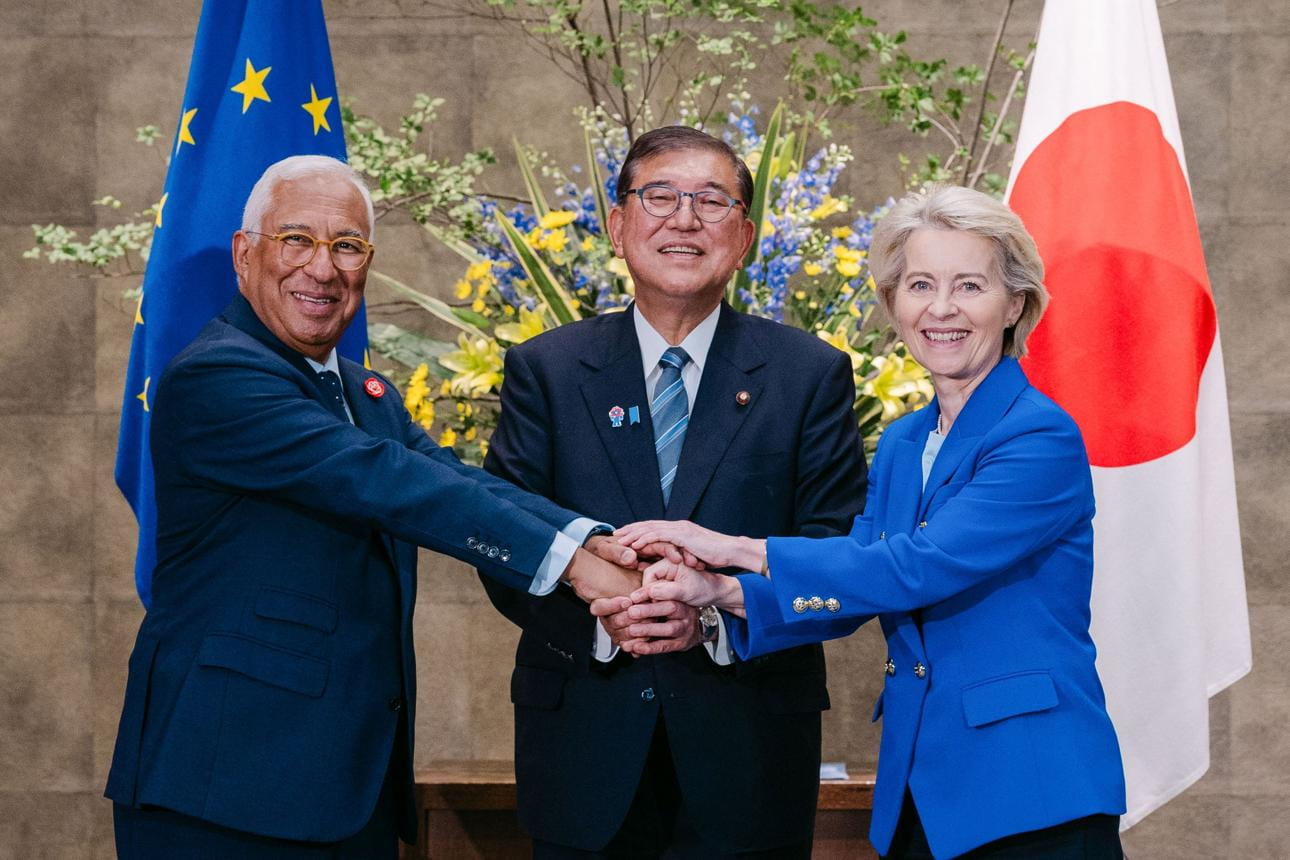
The European Union and Japan have spent the past year converting warm language into working structures. Their seventh High-Level Economic Dialogue, held in Brussels in May, pledged tighter coordination on trade defence, industrial policy and the screening of sensitive investments. Around the same time, the two sides launched a Competitiveness Alliance that bundles data flows, artificial intelligence, quantum research and supply-chain resilience into one framework. The message is plain: two advanced economies, each nervous about overreliance on China and unsettled by Washington’s tariff threats, would rather build resilience together than alone.

What makes the current phase different is the willingness to touch defence. In April, Japan and the EU convened their first Defence Industry Dialogue, agreeing to explore joint work on dual-use and advanced technologies. For a Union that long treated hard security as a matter for NATO capitals, and for a Japan bound by decades of export caution, the step is not trivial. It signals that both now read industrial capacity as a strategic asset rather than a purely commercial one.

The EU-Japan Security and Defence Partnership gives this ambition a political roof, but the harder work sits below it. Rare earths and critical minerals remain the clearest test. A dedicated minerals and rare-earths partnership aims to loosen China’s grip on the inputs that feed European and Japanese factories alike, from the magnets in electric motors to the processing chemistry that no Western supplier has yet mastered at scale.

Friction is real. Tokyo bristles at some of the EU’s newer trade-defence instruments, fearing they could ensnare Japanese firms alongside their intended Chinese targets. Brussels wants faster commitments on standards and reciprocal market access before it grants Japanese companies privileged status. These are the arguments of partners who expect the relationship to last, not of rivals hunting for an exit.

The strategic logic is straightforward. Japan offers Europe a like-minded anchor in the Indo-Pacific with world-class engineering and a shared interest in keeping trade rules predictable. Europe offers Japan scale, a single market of consumers and a regulatory heft that shapes global norms. Neither can substitute for the American security guarantee, and neither pretends to. What they can do is thicken the web of ties that makes coercion costlier and supply shocks survivable.

Nagoya’s factories will not notice a treaty. They will notice whether orders, joint ventures and technology licences actually materialise. On that measure the alliance remains a promise more than a delivery. Yet the direction of travel is unmistakable, and for a European Union learning to think about power in industrial terms, Japan has become the partner that best mirrors its own anxieties and its own ambitions. The joint partnership statement sets out the political scaffolding now being built upon.