Seoul: South Korea and the European Union built their partnership on chips, cars and container ships. Now they are adding molecules. Both sides have opened a dedicated energy dialogue and singled out clean hydrogen as the field where their industries can gain the most, a bet that could reshape how each powers its factories in the decades ahead.
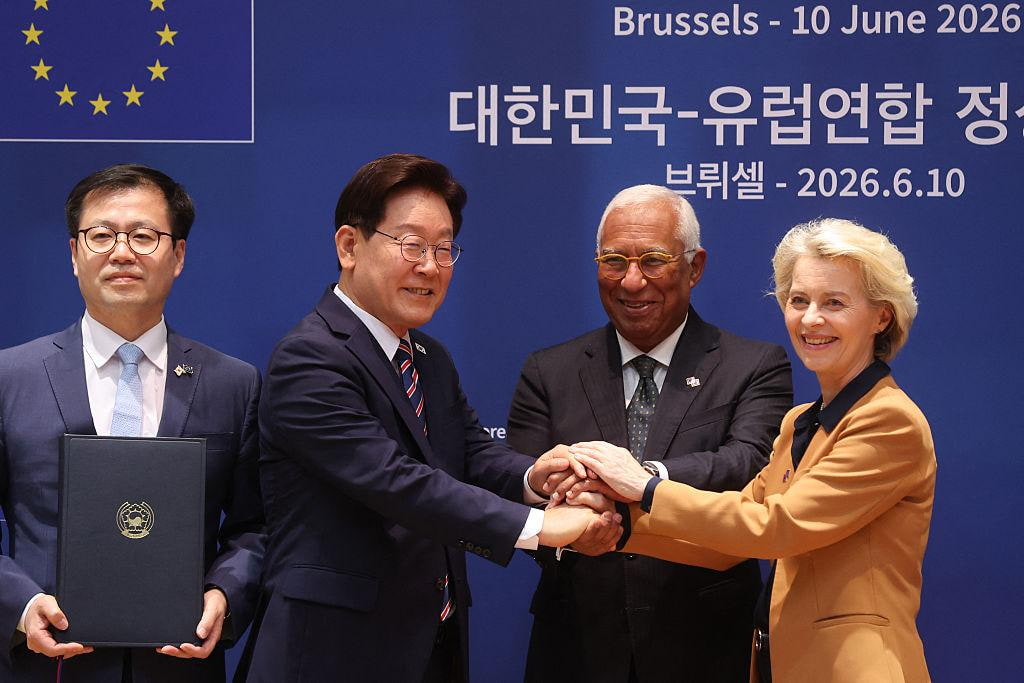
The push follows the bloc’s latest summit with Seoul, where leaders agreed to expand cooperation across clean energy and advanced technology. Europe wants reliable suppliers of low-carbon fuel as it weans heavy industry off natural gas, and Korea wants a vast export market for the hydrogen technology its engineering giants have spent years perfecting.
The fit runs deep. Korean firms rank among the world’s leaders in electrolysers, fuel cells and the specialised vessels that carry hydrogen and ammonia across oceans. European buyers, meanwhile, control demand: steelmakers, chemical plants and shipping lines that must decarbonise or lose access to the bloc’s tightening carbon market. Clean hydrogen could bind those two halves into a single trade.
Offshore wind rounds out the agenda. Korea has mapped ambitious wind zones off its southern coast, and European developers already dominate the global market for turbines, floating platforms and grid connections. Brussels sees a chance to export expertise while Seoul builds a home industry, turning a shared climate goal into commercial opportunity for both.
Nuclear power adds a third track. The two sides have flagged small modular reactors as a promising area, a technology Korea has commercialised at scale and one that several European governments now view as essential to firm, low-carbon electricity. Cooperation there would let each hedge against the intermittency that wind and solar still carry.
Money and rules will decide how far the ambition travels. Hydrogen remains expensive, and neither market has yet built the pipelines, ports and storage the fuel demands. European subsidy schemes and Korean industrial credits could close part of that gap, but investors will wait for firm contracts before committing to plants that take years to pay back.
Geopolitics sharpens the incentive. Both economies import most of their energy and both worry about depending on a single supplier, a lesson Europe learned the hard way after Russia’s invasion of Ukraine. By diversifying toward each other, Seoul and Brussels reduce that exposure while advancing climate targets they have already written into law.
The partnership still rests on pilot projects and study groups rather than shipments. Yet the intent is unmistakable. Two of the world’s most trade-dependent economies have decided that clean hydrogen and the wider energy transition are now strategic ground, and they would rather cross it together than alone.