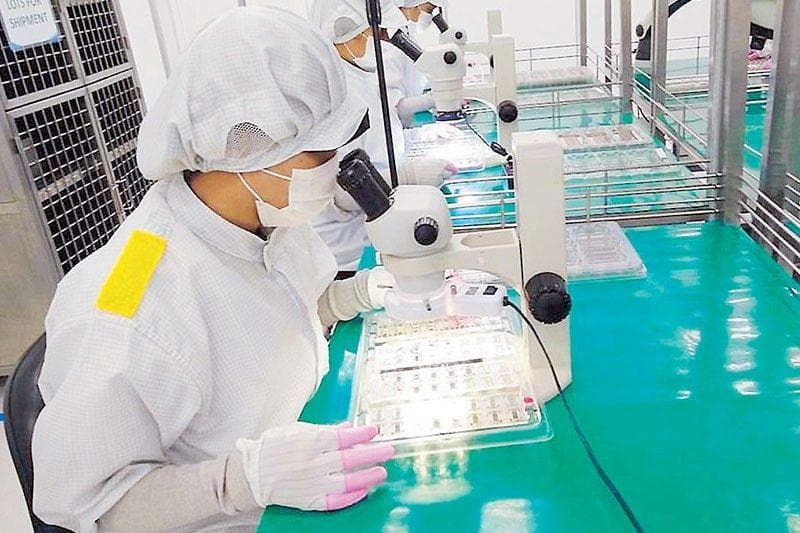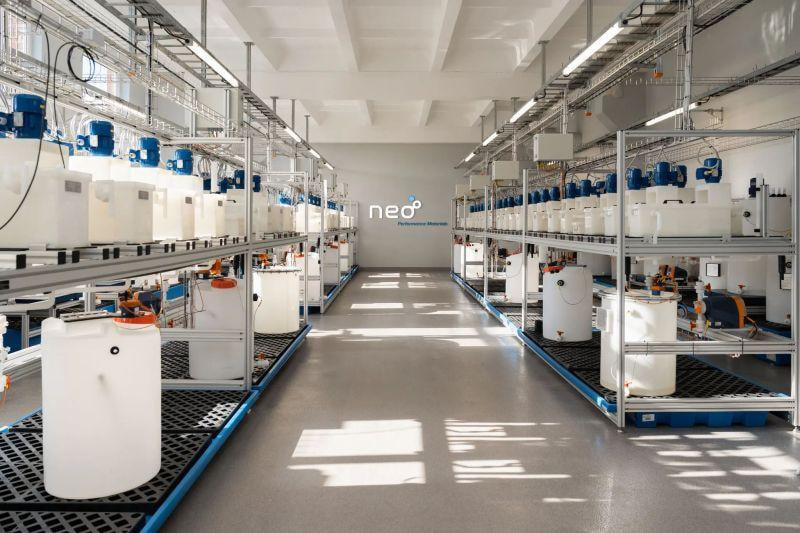
Sillamäe: This small Estonian port town hosts one of the very few plants inside the European Union that can separate rare earths into usable oxides, and for most of the past two years Brussels has treated that fact as a curiosity rather than a strategy. It is about to become a test.
Beijing suspended the second wave of its rare earths export controls on 7 November 2025, and that suspension runs out on 10 November 2026. European industry therefore has roughly two months of certainty left, after which China either extends the pause, lets it lapse, or replaces it with something narrower. Brussels has no vote in that decision.
The first wave, which Beijing imposed in April 2025, covered seven heavy rare earth elements along with their compounds, metals and magnets, and it never lifted. What the October 2025 package added was reach: licensing conditions that touched foreign-made goods containing Chinese-origin material, which is a different kind of instrument altogether. The suspension bought time. It did not retire the tool.
European exposure is easy to underestimate because so little of it shows up on a customs form. Economists at the European Central Bank found that more than 80% of large European firms sit no more than three intermediaries away from a Chinese rare earth producer. A German gearbox maker does not import dysprosium. It buys a motor that contains a magnet that contains dysprosium, and the licence risk sits three invoices upstream, where its procurement team has neither visibility nor leverage.
The European Parliament’s research service has set out how the restrictions bear on the EU’s digital, green and defence industries, and the International Energy Agency has argued that supply concentration has stopped being a modelling assumption and now behaves like an operating condition.
Europe’s answer so far has two parts, and both are weaker than they sound. The first is the upgraded supply chain mechanism agreed with Beijing, a channel for flagging bottlenecks as they appear. That amounts to useful triage. It does not amount to supply. A mechanism that lets Brussels escalate a stalled licence faster still leaves the licence in Chinese hands.
The second is the Critical Raw Materials Act, with its 2030 benchmarks for extraction, processing, recycling and single-country dependence. Those targets make sound policy and almost no difference to November. Permitting, financing and commissioning a separation line takes years. The deadline falls in eight weeks.
Which is why a town like Sillamäe matters out of proportion to its output. Capacity that already exists, already holds its permits and already runs is the only capacity that can answer inside the window. The honest European question is not how to build a rare earths industry by 2030. It is how much of the demand that a November disruption would touch could actually be served by plants operating today, and nobody in Brussels has published that number.
The calendar carries a quieter risk of its own. If Beijing extends the suspension again in early November, European buyers will read the extension as normality returning, orders will stay where they are, and the case for expensive domestic separation will weaken precisely because the threat did not materialise. Repeated reprieves do not equal resolution. They keep a dependency alive at low political cost.
Europe should therefore treat 10 November as a planning date rather than a news date, and it should say publicly which industries it would prioritise if licences slow. Rationing decisions taken in advance count as policy. Taken in December, they count as damage control.