Lyon: A quiet administrative court in France has just shown Europe how sharp its newest trade weapon can be. In July 2026 the Lyon Administrative Court delivered the first judicial reading of the European Union’s International Procurement Instrument, ruling that public buyers must look past a company’s EU letterhead and examine where its business substance truly sits. The case turned a bureaucratic tool into a live constraint on Chinese medical suppliers.
The instrument itself took force on 30 June 2025. It bars Chinese firms from bidding on EU public contracts for medical devices worth more than five million euros, and it will hold for five years. The measure followed a Commission investigation that closed in January 2025 and found discriminatory requirements in 87 percent of China’s own medical procurement tenders. Brussels framed the response as reciprocity rather than protectionism.
The mechanics bite in two directions. Any bidder that wins a covered contract must ensure that no more than half its value draws on Chinese components, parts or subcontractors. Break that condition and the penalty runs between 10 and 30 percent of the contract’s worth. The rule pushes hospitals and health authorities to trace supply chains they once ignored.
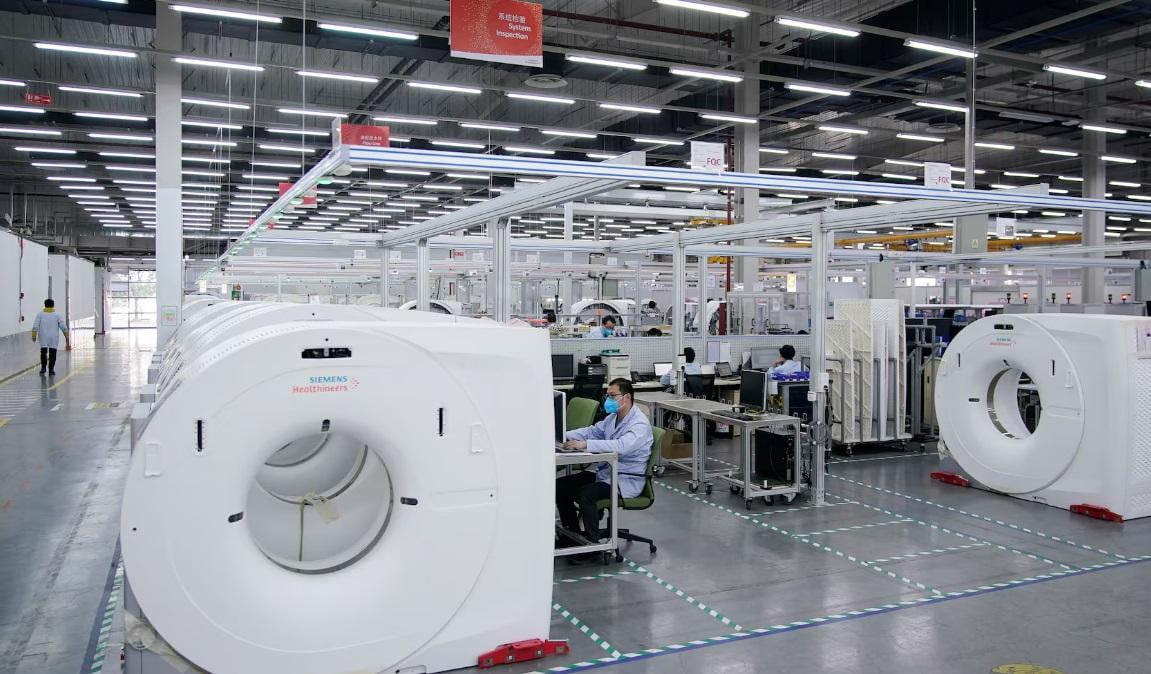
China’s medical device makers have grown fast, and Europe remains one of their most valuable export markets. Scanners, ventilators and surgical kits from Chinese producers had begun to win tenders on price alone. The Commission argues that European firms enjoyed no comparable access in China, where local-content rules and hidden preferences shut them out. You can read the legal text in the Commission’s implementing regulation.
The Lyon ruling matters because it closes an obvious escape route. A Chinese manufacturer could register a thin subsidiary inside the Union and claim European origin. The court insisted that contracting authorities investigate the commercial reality behind such shells rather than accept the paperwork. That reading gives the instrument teeth it might otherwise have lacked.
Not everyone in the health sector welcomes the shift. Device buyers worry about narrower competition and higher prices at a moment when budgets are already strained. Industry groups that represent European manufacturers counter that a level field will reward the firms that kept research and production on the continent. Both claims hold some truth, and the coming tenders will test which one dominates.
The wider signal points beyond hospitals. The procurement instrument is the first serious tool the Union has built to answer closed markets with closed markets, and Beijing will read the medical device decision as a template. If it works here, Brussels has every reason to reach for it again in sectors from clean technology to rail. Europe spent years insisting that openness was its strength; the Lyon judgment shows it has finally learned to make that openness conditional.