August 7, 2026
LATEST
New Zealand Trade With Europe Hits a Record in Its First YearEurope Locks Chinese Medical Devices Out of Its Public TendersHow Far Can Europe and Japan Take Their New Security Pact NowSeoul’s Gamble on Europe’s Research Money Is Starting to Pay OffEurope Freezes Its Retaliatory Tariffs on the US IndefinitelyAir Passenger Rights Get Their First Big Rewrite in 20 YearsFive Joint Defence Projects Win Brussels Backing and Shared CashTobacco Tax Overhaul Stalls as Governments Block UnanimityCritical Medicines Act Heads for Final Adoption This AutumnMoldova Accession Reaches Its Foreign-Policy ChapterMercosur Tariffs Fall as Europe’s Farmers Watch the GaugesWhy Europe’s Digital Fairness Act Worries Online RetailersErasmus+ Faces a Budget Fight Before Its 2028 RelaunchMedia Freedom Rules Turn One as Enforcement LagsPlatform Work Rules Push Member States Toward a December ReckoningSingle Ticket Plan Would Let One Booking Cover Europe by RailHungary Races an August Deadline to Unlock Its Recovery FundsCapitals Race a September Deadline to Restore NatureEuro-Zone Inflation Nudges Back Up as Energy Bills ClimbRed Bull Case Tests a New Frontier in EU AntitrustNew Zealand Trade With Europe Hits a Record in Its First YearEurope Locks Chinese Medical Devices Out of Its Public TendersHow Far Can Europe and Japan Take Their New Security Pact NowSeoul’s Gamble on Europe’s Research Money Is Starting to Pay OffEurope Freezes Its Retaliatory Tariffs on the US IndefinitelyAir Passenger Rights Get Their First Big Rewrite in 20 YearsFive Joint Defence Projects Win Brussels Backing and Shared CashTobacco Tax Overhaul Stalls as Governments Block UnanimityCritical Medicines Act Heads for Final Adoption This AutumnMoldova Accession Reaches Its Foreign-Policy ChapterMercosur Tariffs Fall as Europe’s Farmers Watch the GaugesWhy Europe’s Digital Fairness Act Worries Online RetailersErasmus+ Faces a Budget Fight Before Its 2028 RelaunchMedia Freedom Rules Turn One as Enforcement LagsPlatform Work Rules Push Member States Toward a December ReckoningSingle Ticket Plan Would Let One Booking Cover Europe by RailHungary Races an August Deadline to Unlock Its Recovery FundsCapitals Race a September Deadline to Restore NatureEuro-Zone Inflation Nudges Back Up as Energy Bills ClimbRed Bull Case Tests a New Frontier in EU Antitrust
August 7, 2026
LATEST
New Zealand Trade With Europe Hits a Record in Its First YearEurope Locks Chinese Medical Devices Out of Its Public TendersHow Far Can Europe and Japan Take Their New Security Pact NowSeoul’s Gamble on Europe’s Research Money Is Starting to Pay OffEurope Freezes Its Retaliatory Tariffs on the US IndefinitelyAir Passenger Rights Get Their First Big Rewrite in 20 YearsFive Joint Defence Projects Win Brussels Backing and Shared CashTobacco Tax Overhaul Stalls as Governments Block UnanimityCritical Medicines Act Heads for Final Adoption This AutumnMoldova Accession Reaches Its Foreign-Policy ChapterMercosur Tariffs Fall as Europe’s Farmers Watch the GaugesWhy Europe’s Digital Fairness Act Worries Online RetailersErasmus+ Faces a Budget Fight Before Its 2028 RelaunchMedia Freedom Rules Turn One as Enforcement LagsPlatform Work Rules Push Member States Toward a December ReckoningSingle Ticket Plan Would Let One Booking Cover Europe by RailHungary Races an August Deadline to Unlock Its Recovery FundsCapitals Race a September Deadline to Restore NatureEuro-Zone Inflation Nudges Back Up as Energy Bills ClimbRed Bull Case Tests a New Frontier in EU AntitrustNew Zealand Trade With Europe Hits a Record in Its First YearEurope Locks Chinese Medical Devices Out of Its Public TendersHow Far Can Europe and Japan Take Their New Security Pact NowSeoul’s Gamble on Europe’s Research Money Is Starting to Pay OffEurope Freezes Its Retaliatory Tariffs on the US IndefinitelyAir Passenger Rights Get Their First Big Rewrite in 20 YearsFive Joint Defence Projects Win Brussels Backing and Shared CashTobacco Tax Overhaul Stalls as Governments Block UnanimityCritical Medicines Act Heads for Final Adoption This AutumnMoldova Accession Reaches Its Foreign-Policy ChapterMercosur Tariffs Fall as Europe’s Farmers Watch the GaugesWhy Europe’s Digital Fairness Act Worries Online RetailersErasmus+ Faces a Budget Fight Before Its 2028 RelaunchMedia Freedom Rules Turn One as Enforcement LagsPlatform Work Rules Push Member States Toward a December ReckoningSingle Ticket Plan Would Let One Booking Cover Europe by RailHungary Races an August Deadline to Unlock Its Recovery FundsCapitals Race a September Deadline to Restore NatureEuro-Zone Inflation Nudges Back Up as Energy Bills ClimbRed Bull Case Tests a New Frontier in EU Antitrust

Japan and Europe Turn Economic Security Into a Joint Project

Tokyo: For years Europe and Japan sold each other cars and machine tools and called it a partnership. In 2026 they are rebuilding that relationship around a colder idea, economic security, and treating the safety of their supply chains as a shared strategic asset.

The shift became concrete this spring. At their sixth High-Level Economic Dialogue in May, the two sides agreed to widen cooperation on the technologies that will decide who leads the next decade: semiconductors, quantum computing, artificial intelligence and sixth-generation networks. They also promised to keep critical raw materials flowing between them when a crisis hits.

The centrepiece is an early warning mechanism. Rather than discover a shortage only when a factory line stops, Brussels and Tokyo want to trade intelligence on stress in critical supply chains before it turns into a stoppage. Both economies drew the same lesson from the pandemic and the chip drought that followed: a single choke point in Asia can idle plants an ocean away, and no amount of domestic subsidy fixes a problem you failed to see coming.

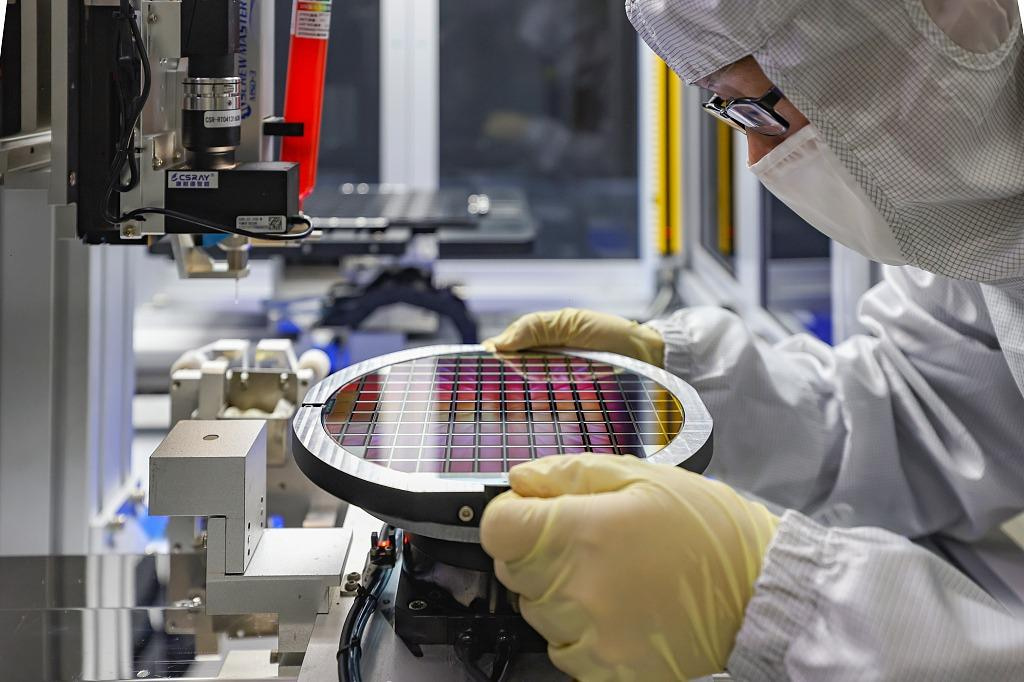
Semiconductors sit at the heart of the effort. Japan still commands crucial slices of the chipmaking tool and materials market, while Europe hosts advanced fabrication and design houses. The two agreed to cooperate on research into next-generation chips below two nanometres, pooling scientists and budgets rather than racing each other into the same costly corner.

Raw materials form the second pillar. China processes the overwhelming share of the rare earths, lithium and other inputs that both economies need for magnets, batteries and defence hardware, and both have already felt the sting of export curbs. By deepening cooperation on supply chains, Tokyo and Brussels hope to diversify sourcing, coordinate stockpiles and avoid bidding against each other whenever a supplier tightens the taps.

The logic runs deeper than commerce. Both partners face the same strategic picture: a more assertive China, a less predictable Washington, and a war in Europe that turned energy and materials into weapons. Neither Tokyo nor Brussels can decouple from China without wrecking its own industry, so they are choosing the middle path that planners now call de-risking, cutting the dangerous dependencies while keeping the profitable trade.

Turning communiques into resilience will test both sides. Early warning systems work only if governments share commercially sensitive data quickly, and companies guard that information jealously. Stockpiles cost money that finance ministries would rather spend elsewhere. And a partnership between two trading giants on opposite ends of Eurasia depends on political will surviving each change of government in Tokyo, Brussels and the national capitals in between.

Still, the direction is clear. Europe and Japan have decided that economic security is no longer a defensive afterthought but a joint enterprise worth building institutions around. If the early warning net holds when the next shock arrives, the two will have shown that middle powers can pool their resilience instead of facing the storm alone.