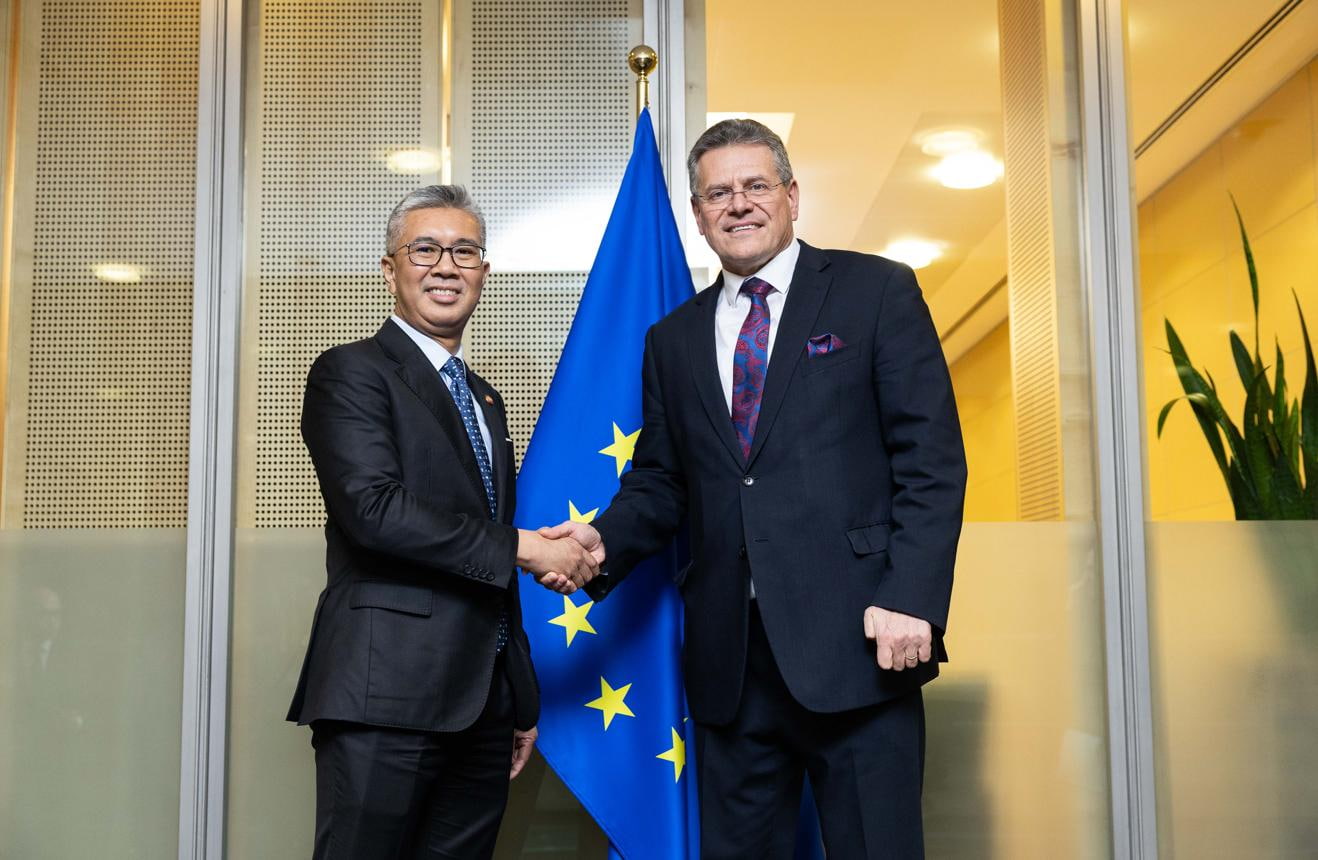
Kuala Lumpur: The Malaysia EU trade talks now have a target date, with International Trade and Industry Minister Johari Abdul Ghani saying on 13 October 2026 that negotiations will likely finish by June 2027. He spoke at a joint media conference on the sidelines of the third EU-Malaysia Business Day at the Kuala Lumpur Convention Centre, which drew around 700 participants.
Johari admitted that a few unresolved issues still need discussion. The Star reported that palm oil and the automotive sector are among them, although neither side has published a list of open chapters. He added that Malaysia must also weigh the positions of other countries involved in the talks, and that further progress is only a matter of time.
The date matters because earlier timelines kept slipping. Talks restarted after a long pause, and Malaysian coverage in June 2026 already pointed to a finish in 2027. In August, Chris Humphrey of the EU-ASEAN Business Council said a deal could be sealed by late 2027, so the minister’s June goal is more ambitious than the business community’s own estimate.
Commissioner Jozef Síkela, who handles international partnerships, framed the relationship in terms of shared values at the same event. He told the audience that the EU’s goal is to empower, not impose, and he listed semiconductors, renewable energy, digitalisation, green ports and cross-border electricity systems as priorities. He noted that Malaysia accounts for around 13 percent of global assembly, testing and packaging and over 7 percent of semiconductor trade.
Palm oil is the clearest friction. EU rules on deforestation and sustainability have long irritated Kuala Lumpur, which treats palm oil as a strategic export, while European farm and environmental groups remain wary of easier access. The sources reviewed do not explain how negotiators plan to bridge that gap, so any claim that the Malaysia EU trade talks are close to compromise on palm oil would be premature. Automotive access usually involves tariff phase-outs and local-content rules, so a compromise there will also need careful drafting.
Johari also addressed labour. Malaysia will keep allowing foreign workers, he said, but their employment should concentrate on dirty, dangerous and difficult jobs as the economy moves toward higher-value activity. That domestic agenda overlaps with what European investors want from the Malaysia EU trade talks, namely predictable rules for skilled staff and stable supply chains in electronics.
What happens next depends on whether the two sides publish a round schedule and name the chapters that remain open. If they close palm oil and automotive access by early 2027, the Malaysia EU trade talks could reach legal scrubbing before mid-year. If not, June 2027 will join the long list of missed targets, and the Malaysia EU trade talks will move into a year when political attention in Brussels and Kuala Lumpur may drift.