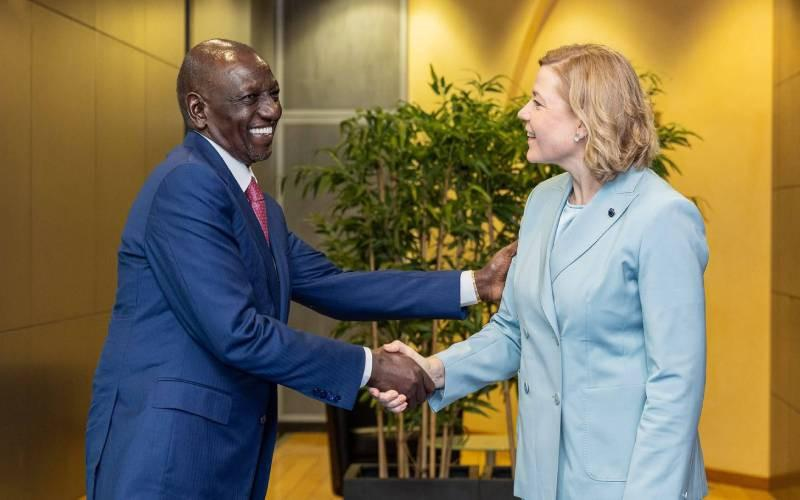
Podgorica: Montenegro EU accession moved decisively forward on 12 October 2026, when an intergovernmental conference in Luxembourg provisionally closed three more negotiating chapters and brought the total to 21 of 33. The chapters on economic and monetary policy, statistics, and social policy and employment now join those on competition policy and customs union, which closed at the previous conference on 14 July.
Enlargement Commissioner Marta Kos told reporters that the finish line is within reach and urged all political forces in Montenegro to deliver the remaining reforms without delay. Her message carries a warning as well as encouragement. With 12 chapters still open, the hardest ones sit in the final stretch, and the Commission has made clear that the EU can reopen closed chapters if reforms slip back.
Prime Minister Milojko Spajic said his government has met its obligations for this phase and voiced hope for agreement at other levels, repeating the target of full membership in 2028. That date is ambitious. Membership requires not only the closure of all chapters but also an accession treaty, ratification by every member state and, in many capitals, a political appetite that has been missing for a decade. The Irish presidency called enlargement a geopolitical necessity, a framing that shows how security concerns now drive a process once treated as technical.
The treaty work has already started. In April 2026 the Committee of Permanent Representatives approved a Council working party to draft Montenegro’s accession treaty, the first concrete step of this kind since 2014. European Council President Antonio Costa called it a key turning point. Commissioner Kos has also said the future treaty will include stronger protections against backsliding on the rule of law and fundamental values, which signals that Brussels wants guarantees that outlast the negotiations.
The remaining chapters of Montenegro EU accession will test the country’s institutions rather than its legislation. Rule of law, judiciary and fundamental rights, together with justice, freedom and security, are the areas where candidate countries historically stumble, because results depend on prosecutors, courts and administrations that take years to change. Montenegro has opened every chapter, so the pace now depends on delivery rather than on the opening of new files.
Other candidates are watching Montenegro EU accession closely. Albania has closed four chapters, Moldova is racing to open its clusters, and Serbia’s talks have restarted after a political shift. If Montenegro EU accession proceeds on schedule, it will prove that merit-based enlargement still works and give wavering capitals a reason to support the next candidate in line.
The next intergovernmental conferences will show whether momentum for Montenegro EU accession holds. A steady pace of closures, a visible drop in political friction at home and an advancing treaty text would make 2028 plausible. Any stumble on the rule of law would remind Brussels why it insists on safeguards. For now, Montenegro EU accession remains the clearest test of the Union’s promise to the Western Balkans.