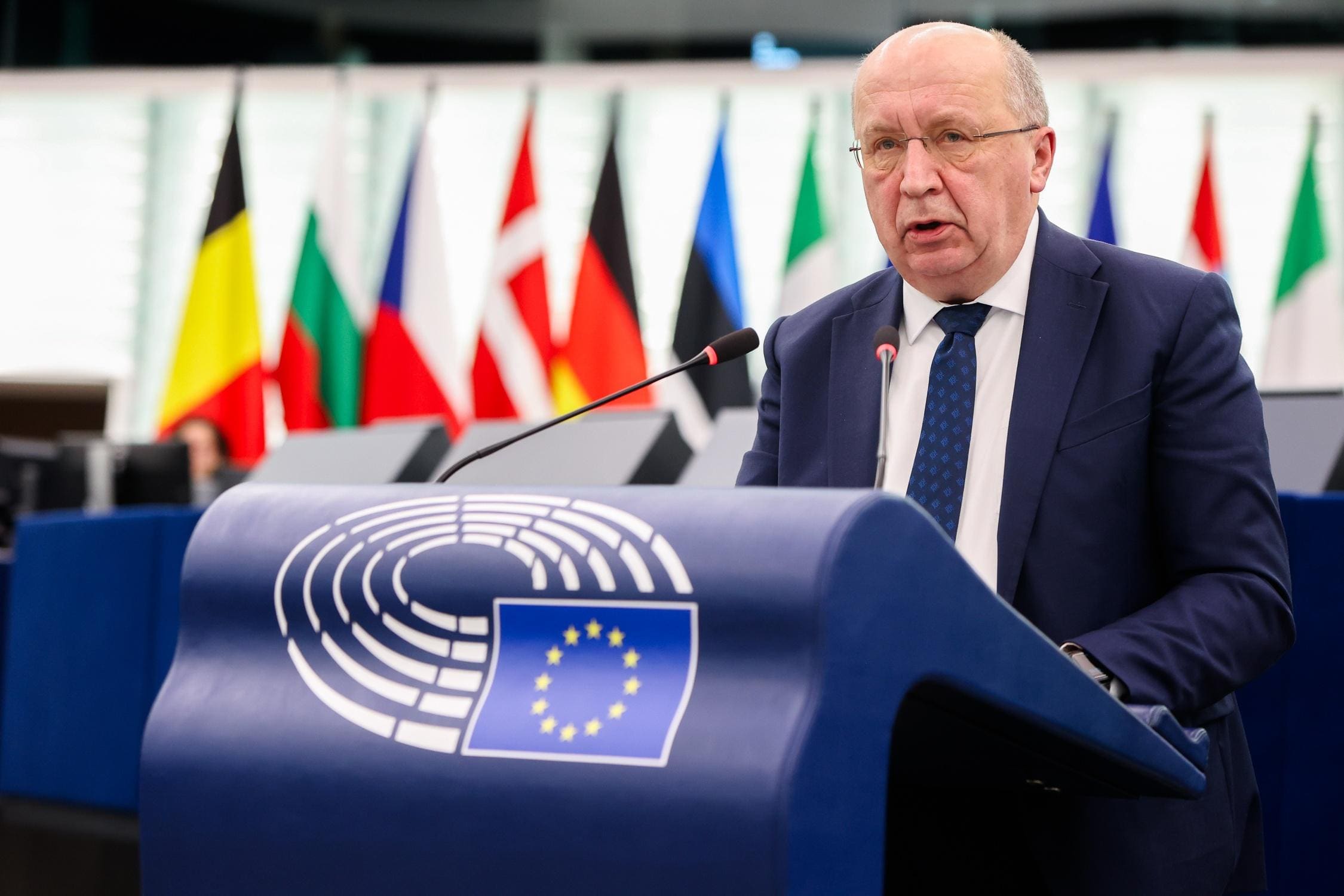
The first five defence projects of common interest approved by the Council give the European Union a new way to pool money, procurement and political will behind shared military capabilities. Commissioner Andrius Kubilius presented the package to the European Parliament’s Security and Defence Committee, and he framed it as proof that rearmament can move beyond national shopping lists. The projects cover drone and counter-drone defence, space-based capabilities, integrated maritime and seabed defence, federated air and missile defence, and the Eastern Flank Watch.
Each of the defence projects of common interest rests on the European Defence Industry Programme, known as EDIP. The Commission has so far allocated EUR 325 million of the programme’s EUR 1.5 billion to the five projects, according to Kubilius. That is a modest sum next to the ambition, because the Commission sees the combined funding for these projects reaching around EUR 190 billion by 2036 once national budgets join in.
Participation looks broad. On average 18 member states back each project, and Ukraine takes part in four of the five. That detail matters politically, since it ties Kyiv’s industry to the European market at a time when Ukraine faces a budget deficit of roughly EUR 23 billion this year. The Commission says all weapons schedules under the 2026 Ukraine Support Loan are now approved, totalling EUR 28.3 billion, and about EUR 11.7 billion has already been disbursed.
Money alone will not fix the supply problem, and Kubilius said so openly. EDIP sets aside EUR 160 million for producers of critical ammunition components, and he named nitro-cellulose and magnets as the bottlenecks that slow output. Those shortages explain why the Commission wants the defence projects of common interest to start with capabilities where European factories can scale quickly, rather than with the most complex platforms.
The wider readiness picture is less comfortable. A Defence Readiness Report drawn up by the European Defence Agency, the Commission and the European External Action Service has been discussed behind closed doors and remains unpublished. Kubilius also pointed to press reporting that the Union is not rearming fast enough to meet its 2030 readiness goal, and he did not dispute the concern. Those gaps would threaten the defence projects of common interest if industry cannot deliver on time.
Kubilius used the same hearing to float a bigger institutional idea. He described a possible European Security Council and a European Defence Union that could include the United Kingdom, Ukraine, Norway and Canada, while stressing that it was his personal view and that member states will decide the final shape. He also urged decisive progress on Article 42(7) of the Treaty on European Union, the mutual assistance clause that many capitals still read cautiously.
Industry will watch the next legislative step closely. The Commission is preparing a defence market package that includes a revision of the Defence Procurement Directive, and it holds about EUR 20 billion in unused SAFE loans earmarked for a second call. Together those tools could decide whether the defence projects of common interest attract real orders or stay a political label.
For citizens, the practical question is simple: will shared projects deliver capabilities faster than separate national programmes? The first five defence projects of common interest give Brussels a test case in 2026, and the answer will shape how the Union spends its next defence euro.