Astana: The Middle Corridor has long been a promise of European officials and a puzzle for freight forwarders, but September 2026 brought early signs that private capital is starting to move. Kazakh President Kassym-Jomart Tokayev visited Berlin on 29 September, held talks with Chancellor Friedrich Merz and left with more than 30 commercial agreements worth about 2 billion dollars, according to regional trade monitors.
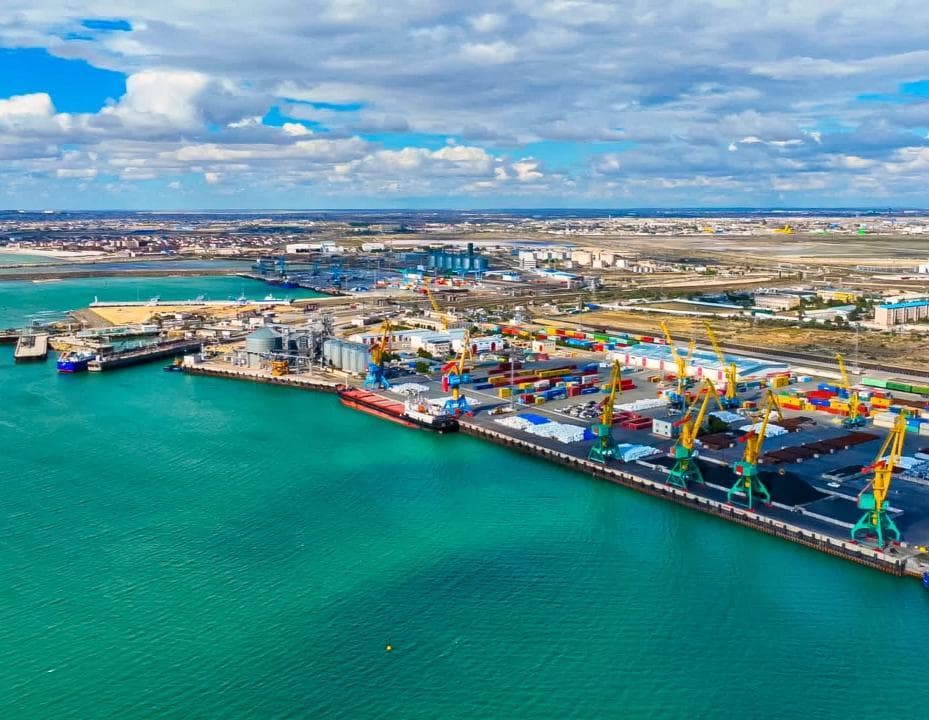
The most concrete item for Europe is a plan by the German logistics group Rhenus and the port of Aktau to build a multimodal terminal of at least 30 hectares. It would add roughly 150,000 twenty-foot containers of annual capacity on the Caspian shore. Kazakh officials also discussed linking the Belgian port of Antwerp-Bruges with Aktau and Kuryk, which would give the Middle Corridor an Atlantic gateway as well as a German one.
These deals matter because the route is long and fragile. The Trans-Caspian corridor runs for about 6,500 kilometres from China through Central Asia, the Caspian Sea and the South Caucasus to Europe, avoiding Russian territory. Its weak points are ferry capacity across the Caspian, port handling and customs paperwork at several borders, far more than any lack of political declarations.
The European Union has tried to answer with money. In April 2025, Brussels pledged 12 billion euros of Global Gateway investment linked to Central Asian connectivity, with about 3 billion euros earmarked for the Middle Corridor. Public funding of that size is meant to de-risk terminals, rail upgrades and digital customs, so that companies such as Rhenus can commit their own capital.
The competition is real. China-Central Asia trade reached a record 94.8 billion dollars in 2024, and Beijing has its own rail and road links across the region that do not depend on European approval. A projection reported from a World Bank connectivity forum in Tbilisi puts Middle Corridor freight at 3.6 times today’s volume by 2040, but forecasts of that kind only matter if reliability improves first.
For EU trade policy, the lesson is that corridors are won on service quality. Brussels can use its trade and Global Gateway tools to push for single-window customs, predictable transit tariffs and shared cargo tracking along the Middle Corridor. It should also keep Central Asian governments close through partnership agreements, so that European companies are seen as long-term partners rather than occasional visitors.
The Berlin agreements show that demand exists. Whether the Middle Corridor becomes a dependable trade artery will depend on how quickly Kazakhstan, Azerbaijan, Georgia and the EU turn pledges into working terminals and shorter border delays over the next two years.