September 16, 2026
LATEST
Software Makers Face Europe’s Product Liability Deadline in DecemberCage-Free Promises Land Before the Transport File Is FinishedTwo New Calls Will Test How Flexible Horizon Europe Really IsEurope’s Innovation Act Counts 10 Billion It Has Not Found YetProcurement Is the Chapter That Could Stall the Thailand DealMobility Week Returns With a Test of Intergenerational FairnessMinisters Debate the Chips Act Next Week With No Money AttachedTaiwan Wants Tax Treaties That Brussels Has No Power to SignNorth Korea Now Earns From Europe Without Shipping AnythingPalm Oil Is the Last Hard Question Before the Indonesia SigningCan One Year Deliver Both a Trade Deal and a Sea CodeVietnam Reached Europe’s Top Partnership Tier With Little DetailLeaked Draft Puts Europe’s Social Media Age Limit at FifteenA Ceuta Debate Whose Title Has Already Reached a VerdictFP10 Clears Committee and the Budget Gap Stays Wide OpenEurope’s New Merger Guidelines Face a Council Test Next WeekEurope’s Culture Capitals Face Their Biggest Rewrite Since 1985Only Italy Has a Bill as Platform Work Deadline NearsCustoms Fraud Charges Land in Germany Over Wrecked CarsCar Tariffs Show Why the India Deal Still Needs Two VotesSoftware Makers Face Europe’s Product Liability Deadline in DecemberCage-Free Promises Land Before the Transport File Is FinishedTwo New Calls Will Test How Flexible Horizon Europe Really IsEurope’s Innovation Act Counts 10 Billion It Has Not Found YetProcurement Is the Chapter That Could Stall the Thailand DealMobility Week Returns With a Test of Intergenerational FairnessMinisters Debate the Chips Act Next Week With No Money AttachedTaiwan Wants Tax Treaties That Brussels Has No Power to SignNorth Korea Now Earns From Europe Without Shipping AnythingPalm Oil Is the Last Hard Question Before the Indonesia SigningCan One Year Deliver Both a Trade Deal and a Sea CodeVietnam Reached Europe’s Top Partnership Tier With Little DetailLeaked Draft Puts Europe’s Social Media Age Limit at FifteenA Ceuta Debate Whose Title Has Already Reached a VerdictFP10 Clears Committee and the Budget Gap Stays Wide OpenEurope’s New Merger Guidelines Face a Council Test Next WeekEurope’s Culture Capitals Face Their Biggest Rewrite Since 1985Only Italy Has a Bill as Platform Work Deadline NearsCustoms Fraud Charges Land in Germany Over Wrecked CarsCar Tariffs Show Why the India Deal Still Needs Two Votes
September 16, 2026
LATEST
Software Makers Face Europe’s Product Liability Deadline in DecemberCage-Free Promises Land Before the Transport File Is FinishedTwo New Calls Will Test How Flexible Horizon Europe Really IsEurope’s Innovation Act Counts 10 Billion It Has Not Found YetProcurement Is the Chapter That Could Stall the Thailand DealMobility Week Returns With a Test of Intergenerational FairnessMinisters Debate the Chips Act Next Week With No Money AttachedTaiwan Wants Tax Treaties That Brussels Has No Power to SignNorth Korea Now Earns From Europe Without Shipping AnythingPalm Oil Is the Last Hard Question Before the Indonesia SigningCan One Year Deliver Both a Trade Deal and a Sea CodeVietnam Reached Europe’s Top Partnership Tier With Little DetailLeaked Draft Puts Europe’s Social Media Age Limit at FifteenA Ceuta Debate Whose Title Has Already Reached a VerdictFP10 Clears Committee and the Budget Gap Stays Wide OpenEurope’s New Merger Guidelines Face a Council Test Next WeekEurope’s Culture Capitals Face Their Biggest Rewrite Since 1985Only Italy Has a Bill as Platform Work Deadline NearsCustoms Fraud Charges Land in Germany Over Wrecked CarsCar Tariffs Show Why the India Deal Still Needs Two VotesSoftware Makers Face Europe’s Product Liability Deadline in DecemberCage-Free Promises Land Before the Transport File Is FinishedTwo New Calls Will Test How Flexible Horizon Europe Really IsEurope’s Innovation Act Counts 10 Billion It Has Not Found YetProcurement Is the Chapter That Could Stall the Thailand DealMobility Week Returns With a Test of Intergenerational FairnessMinisters Debate the Chips Act Next Week With No Money AttachedTaiwan Wants Tax Treaties That Brussels Has No Power to SignNorth Korea Now Earns From Europe Without Shipping AnythingPalm Oil Is the Last Hard Question Before the Indonesia SigningCan One Year Deliver Both a Trade Deal and a Sea CodeVietnam Reached Europe’s Top Partnership Tier With Little DetailLeaked Draft Puts Europe’s Social Media Age Limit at FifteenA Ceuta Debate Whose Title Has Already Reached a VerdictFP10 Clears Committee and the Budget Gap Stays Wide OpenEurope’s New Merger Guidelines Face a Council Test Next WeekEurope’s Culture Capitals Face Their Biggest Rewrite Since 1985Only Italy Has a Bill as Platform Work Deadline NearsCustoms Fraud Charges Land in Germany Over Wrecked CarsCar Tariffs Show Why the India Deal Still Needs Two Votes

The Middle Corridor Moves Five Million Tonnes and Needs Far More

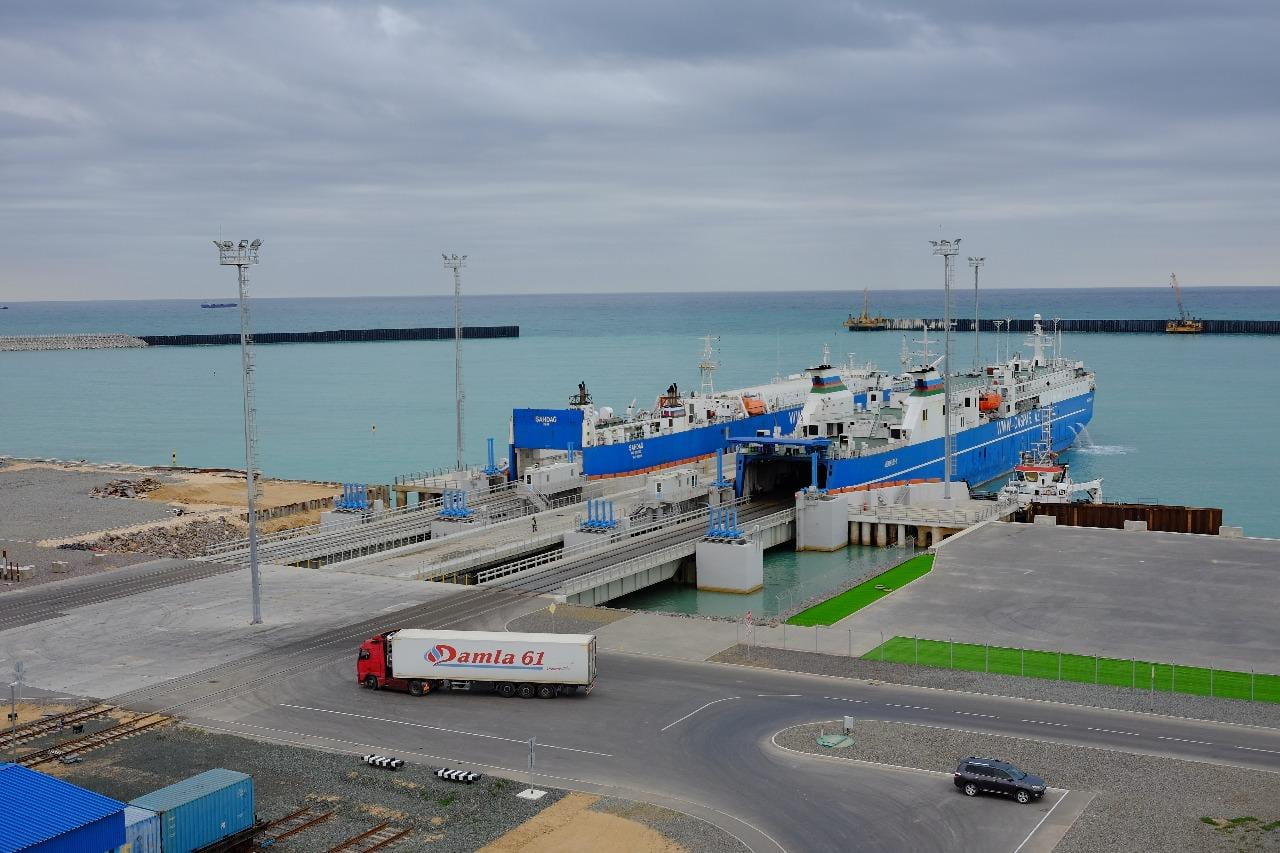
Aktau: Cranes on Kazakhstan’s Caspian shore lift containers onto ferries that cross to Baku, and the volume they handle explains why Europe keeps writing large cheques for a route that still carries small cargo. The Middle Corridor moved roughly five million tonnes and about 77,000 containers in its most recent full year. European ambition for it runs an order of magnitude higher.

The money arrived first. The European Union pledged a twelve billion euro Global Gateway package for Central Asia, splitting it across transport, critical raw materials, water, energy and climate. European and international financial institutions separately committed around ten billion euros to corridor infrastructure. In August the Commission launched a connectivity platform linking Europe to Central Asia through the Black Sea and the South Caucasus, with roughly two billion euros aimed at that stretch. The Commission describes the transport pillar on its Central Asia connectivity page.

Geography explains the enthusiasm. The corridor runs some 6,500 kilometres from China to Europe across Kazakhstan, the Caspian, the South Caucasus and Turkey, and it avoids Russian territory entirely. Since 2022 that single feature has turned a marginal freight route into a strategic asset for governments that want trade with Asia without a Russian transit dependency.

Physics complicates the enthusiasm. Aktau and Kuryk together handle around 21.6 million tonnes a year, which sounds ample until you count the ferries, the loading windows and the Caspian weather that closes them. A container leaving western China crosses at least two border regimes, changes mode twice and waits for vessel availability at a port with a fixed berth count. Corridor capacity depends on the slowest link, and the slowest link sits on the water.

Kazakhstan has started fixing what it controls. A World Bank guarantee of 846 million dollars underpinned about 1.4 billion dollars of financing for the national railway operator this year, tied to operational reforms at the Caspian ports. Track and rolling stock respond to capital. Customs harmonisation, tariff transparency and single-window paperwork respond to politics, and five governments must agree before any of that improves.

Brussels has built the diplomatic scaffolding accordingly. The first EU-Central Asia summit in Samarkand upgraded the relationship, ministers met in Ashgabat, and the third economic forum in Tashkent turned pledges into project lists, as the forum deliverables record.

The uncomfortable question is what Europe buys. Even a corridor running at several times today’s volume would carry a modest share of EU-China trade, because ships remain cheaper for bulk and aircraft faster for value. The return sits elsewhere. The route gives Central Asian governments a commercial alternative to Moscow and Beijing, and it gives European firms a path to Kazakh uranium, Uzbek copper and the critical minerals that the raw materials pillar targets. Judged as a freight investment the corridor looks expensive. Judged as leverage in a region where Europe had almost none, twelve billion euros starts to look like a reasonable price.