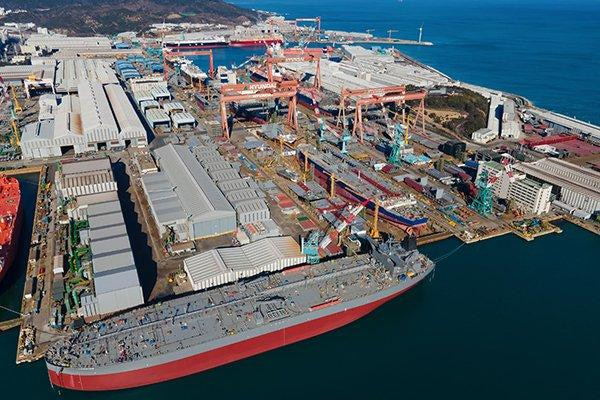
Ulsan: Green shipping cooperation between the European Union and South Korea gained a visible push when eighteen EU member state heads of mission and the EU Ambassador ended their annual retreat at the HD Hyundai Heavy Industries shipyard on 3 November 2026. The two-day visit to Busan and Ulsan took European diplomats out of Seoul and into the industrial heartland of Korea’s maritime economy.
The choice of venue was deliberate. Korea ranks among the world’s two largest shipbuilders, and its yards build many of the LNG carriers, container ships and tankers that call at European ports. The EU Delegation said the Union is pressing to decarbonise shipping and regards Korea as a key partner in green technology, which places green shipping cooperation near the top of the bilateral agenda.
European rules explain the urgency. Shipping has been covered by the EU Emissions Trading System since 2024, and the FuelEU Maritime regulation has required ships calling at EU ports to cut the greenhouse gas intensity of their energy use since January 2025. Owners now need vessels that can run on ammonia, methanol or other low-carbon fuels, and Korean yards are among the few able to deliver them at scale, which gives green shipping cooperation a hard commercial logic.
Global talks add another layer. Negotiations at the International Maritime Organization on a net-zero framework for shipping were postponed in October 2025 after opposition from several states. That delay leaves regional rules such as the EU’s in the lead, and it makes practical green shipping cooperation with a major builder like Korea more valuable to Brussels.
The Busan leg showed how broad the maritime agenda has become. The diplomats met Busan Mayor Chun Jae-soo and presented the EU’s new Arctic Strategy, a topic of growing interest for a port city that hopes to serve northern sea routes. They also met Chang Myoin, Director General of the Korea Hydrographic and Oceanographic Agency, which has joined the ocean observation alliance co-led by the EU and Canada.
Industry and research featured as well. The group toured Renault Korea’s Busan car plant and joined an EU-Korea Green Industry seminar on decarbonisation. At Pusan National University they met President Choi Jae Weon to discuss student and researcher exchanges, and visited the IBS Center for Climate Physics, which recently won a Horizon Europe grant.
Security was on the programme too. On the second day the delegation visited the French frigate Vendémiaire at the Busan Naval Base, a sign of growing European naval engagement in the Indo-Pacific. Safe sea lanes and clean ships are increasingly treated as parts of the same maritime policy.
The visit produced no new agreement, and its impact will depend on follow-up. Possible next steps for green shipping cooperation include joint research on alternative fuels, alignment of standards for ammonia and methanol bunkering, and port partnerships linking Busan with European hubs such as Rotterdam and Antwerp. Each would turn diplomatic goodwill into commercial contracts.
For the EU, the lesson of Busan and Ulsan is that decarbonisation targets mean little without the yards that build the ships. Sustained green shipping cooperation with Korea could help European operators meet their FuelEU obligations while giving Korean builders a stable market for zero-emission vessels.