Beijing: The EU-China financial dialogue returned to the Chinese capital on Monday 23 November 2026, and this time the exchange rate sat closer to the centre of the table than at any round in recent memory. Maarten Verwey, the European Commission’s Director-General for Economic and Financial Affairs, co-chaired the 17th session with China’s Vice Minister of Finance Liao Min.
The formal agenda of the EU-China financial dialogue looked familiar. Both delegations reviewed macroeconomic conditions, compared policy settings and discussed cooperation in the G20 finance track. China’s Ministry of Finance said the meeting followed a consensus reached by leaders in July 2025, when the two sides marked fifty years of diplomatic relations at a tense summit.
Liao used the session to argue that major economies should defend an open world economy, coordinate macroeconomic policy and keep supply chains stable. He also asked Brussels to respect market principles and to give Chinese companies a fair and non-discriminatory business environment, a pointed reference to the growing list of EU trade defence cases and foreign subsidy probes.
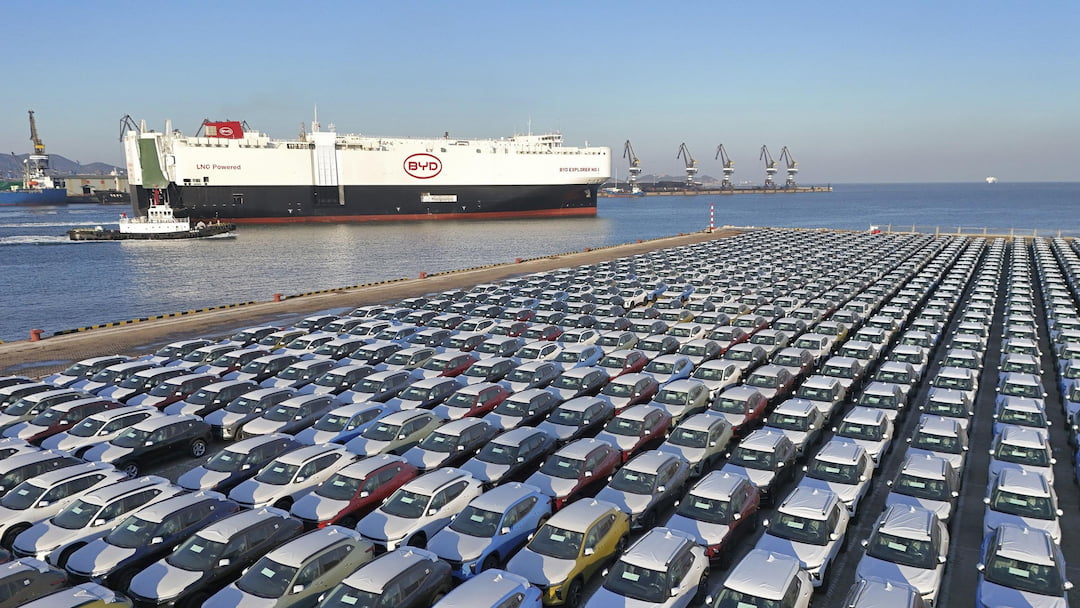
The European side chose different words. It described the EU and China as each other’s second-largest trading partners and called for reciprocal openness and an orderly rebalancing of economic relations. In Brussels that phrase is shorthand for a goods deficit with China that topped €300 billion in 2024 and has kept widening as Chinese exporters redirect output away from the United States.
Currency is the quiet core of that argument. Reporting before the meeting indicated that EU finance officials planned to tell Beijing that the renminbi is undervalued, after having persuaded China to accept a cap on hybrid car exports. A weak yuan makes Chinese machinery, chemicals and vehicles cheaper for European buyers at a moment when manufacturers in Germany and Italy face high energy costs and soft demand. That is why this EU-China financial dialogue carries more weight than its technocratic format suggests.
Monetary authorities joined the conversation on the same day. People’s Bank of China Governor Pan Gongsheng met Verwey, European Central Bank Executive Board member Piero Cipollone and Eurogroup Working Group President Tuomas Saarenheimo. According to the central bank, they discussed the Chinese and euro area economies, monetary policy, exchange rates and G20 cooperation, with the European visitors stressing the value of regular contact between macro authorities.
The contrast with Moscow was hard to miss. Also on 23 November, Finance Minister Lan Fo’an and Russian Finance Minister Anton Siluanov held the 12th China-Russia Financial Dialogue and issued a joint statement pledging coordination in the G20, BRICS, the SCO and APEC. No comparable joint text emerged from the EU-China financial dialogue, which suggests that the two sides still struggle to agree even on a shared diagnosis.
Brussels has few direct levers on currency policy. The Union can open anti-dumping and anti-subsidy cases, use the Foreign Subsidies Regulation and, in extreme cases, the Anti-Coercion Instrument, but none of these tools addresses exchange rates. Persuasion through regular macroeconomic contact remains the only channel, which is why the EU-China financial dialogue has turned into a venue for currency diplomacy that works slowly.
The next test comes soon. A joint visit by officials from the ECB, the Eurogroup and the Commission is planned around the turn of the year, although no date has been fixed. Whether the EU-China financial dialogue can move from exchanging views to shifting policy will depend on Beijing’s willingness to accept that currency management is now a trade issue in European eyes.