
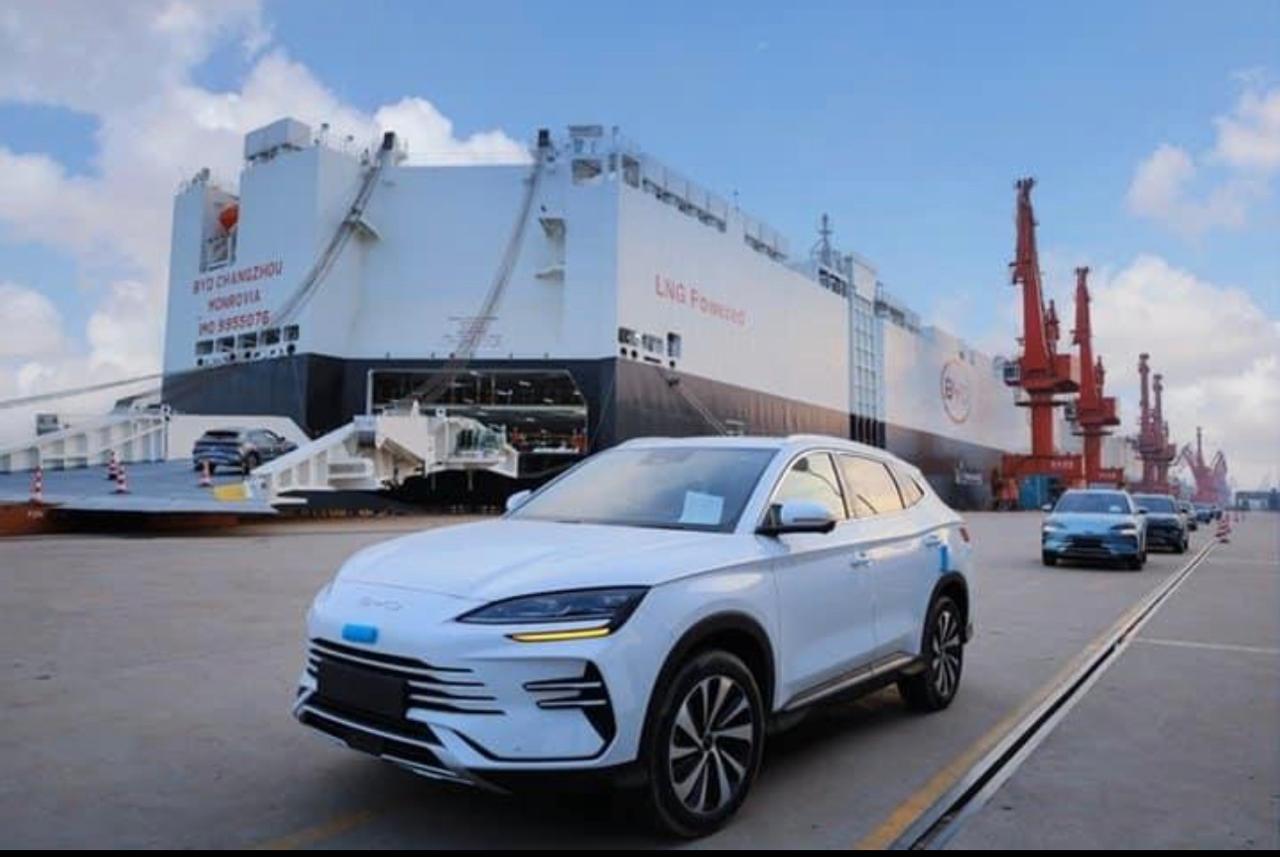

The EU request that China cap exports of Chinese hybrid cars answers a real gap in the 2024 tariffs. It also seeks an instrument the WTO prohibits, and one Europe was the last member to give up.
The numbers explain the hurry, though not all of them are yet on the public record. According to the Financial Times, which cited people familiar with the talks, monthly imports of Chinese hybrid cars rose from about 3,800 in October 2024 to roughly 50,000 in July 2026, while average prices fell. The same report says the Commission wants Beijing to hold China’s share of EU hybrid sales to around 15 per cent, against more than a third today, and quotes an EU official: “If they will not limit their exports to our market then we will.”
The Commission has not confirmed the request and declined to comment on the report. China’s commerce ministry, for its part, responded to the press reports rather than to any demand it acknowledged receiving.
The timetable, by contrast, is documented. The joint statement from the first EU-China Trade and Investment Consultations on 29 June committed Trade Commissioner Maroš Šefčovič and Commerce Minister Wang Wentao to meet again at ministerial level this autumn. After a video call between the two on 17 September, the Commission said they had discussed the management of Chinese exports to the EU and fixed the second session for Beijing on 8 and 9 October, where it expects first results that are “credible.”
The pressure is justified. The instrument is not. A voluntary export restraint is exactly the kind of arrangement the Union undertook in 1994 never to seek, and Beijing has already said so in public.
How the 2024 Electric Vehicle Duties Left Hybrids Uncovered
The 2024 countervailing duties had a narrow scope. Implementing Regulation (EU) 2024/2754 covers new battery electric vehicles driven solely by electric motors, including models fitted with a combustion range extender. Plug-in and full hybrids sit outside it and pay only the standard 10 per cent car tariff, against combined rates of up to 45 per cent on the Chinese electric models the investigation examined.
The timing points to the tariff schedule. On the reported figures, the climb begins in the month the electric vehicle duties took effect, and it runs through the one product line they left at 10 per cent. That is the most plausible reading of the surge in Chinese hybrid cars, though not the only force behind it. ACEA records plug-in registrations rising steeply in Italy, Spain, and Germany, and credits the wider market to national support measures. China’s vehicle exports to all destinations also rose by about two-thirds year on year in August, according to the China Association of Automobile Manufacturers. The duty gap best explains why the growth landed in hybrids; it does not prove the gap caused it.
Registration data sharpen the picture and expose a problem in the reported figures. ACEA counted 2,198,148 hybrid and 577,735 plug-in hybrid registrations in the EU in the first half of 2026, together about 462,000 a month. At 50,000 a month, Chinese imports would be roughly one hybrid in nine. The “more than a third” share fits only if it refers to plug-in hybrids, where the same flow would come close to half. Market analysts at Dataforce put Chinese brands at 34 per cent of Europe’s plug-in hybrid market in June, which suggests that is the market the report meant. Imports and registrations never match month for month, but a gap of this size is not a timing effect. Which market the 15 per cent applies to is the first thing the Commission needs to state.
The Case for a Negotiated Export Cap
The argument for a negotiated cap deserves a fair hearing. The electric vehicle case opened in October 2023 and took nine months to reach provisional duties and just over a year to reach definitive ones. As recently as January, the Commission’s trade spokesman told a Brussels briefing that there was no ongoing investigation into hybrid imports from China, and that under WTO rules any tariff action would require one first. A fresh anti-subsidy case on Chinese hybrid cars, opened now and run on the electric vehicle timetable, would not reach definitive duties before late 2027.
The political clock runs faster. In her State of the Union address on 16 September, Ursula von der Leyen put the trade deficit with China at a billion euros a day and said it had “reached a tipping point.” A cap agreed with Beijing could also avoid a repeat of the cases China opened against European brandy, pork, and dairy while the electric vehicle investigation ran. Read that way, the request is industrial policy delivered through diplomacy, faster and quieter than a tariff.
Article 11 and the Ban on Voluntary Export Restraints
The difficulty is legal before it is economic. Article 11.1(b) of the WTO Agreement on Safeguards states that a member “shall not seek, take or maintain any voluntary export restraints.” The first verb carries the weight. The prohibition reaches asking, not only imposing, and it extends to arrangements agreed between two or more members.
Europe knows this provision better than most. When grey-area measures were wound down after the Uruguay Round, members could keep one of them for an extra year. The WTO’s own account of the agreement records that only the European Union used that allowance, for restrictions on imports of cars from Japan, which ran until the end of 1999. The last car restraint in the multilateral system was European.
Beijing has noticed. China’s commerce ministry stated on 18 September that such restraints “seriously violate WTO rules” and that any settlement must comply with them. A government that has spent years defending its subsidy practices against WTO criticism is now citing the rulebook at Brussels, and on this narrow point the text supports it.
What a Quota on Chinese Hybrid Cars Would Deliver
Set the legal problem aside and the economics still point the wrong way. A quota administered by the exporting country hands the scarcity value of each permitted car to the exporter. With volumes fixed, producers gain every reason to lift prices and move up the range, and that margin stays in China rather than reaching European budgets as duty revenue would.
A cap also gives Beijing the pen on allocation. Chinese authorities would decide which manufacturers fill the permitted quota of Chinese hybrid cars, an arrangement that tends to favour established exporters over newer entrants. Brussels would be delegating a decision about the European car market to the ministry whose industrial policy produced the overcapacity it objects to.
Scope is unresolved as well. A limit on China-made hybrids would reach European and joint-venture brands that assemble in China for export, not only Chinese marques. A limit on Chinese brands would miss the output those brands assemble inside Europe. Neither version has been set out in public.
Price Undertakings as the WTO-Compatible Alternative
The lawful alternatives are slower, not closed. An ex officio anti-subsidy investigation into Chinese plug-in hybrids could draw on the evidence the Commission already gathered on the electric vehicle value chain. It also carries a negotiated exit Brussels has designed once before. In January the Commission published guidance on price undertakings for Chinese electric vehicles, covering minimum import prices, sales channels, cross-compensation, and future investment in the EU, to be assessed on a non-discriminatory basis and in line with WTO rules. Reporting on the document noted that it was also meant to stop exporters sidestepping the duties by shipping hybrids instead. The first offer, examined in a review opened in December 2025, reportedly paired a minimum price with an annual import quota.
That is volume discipline and an investment incentive, the two things the hybrid cap is said to be for, delivered inside a proceeding the WTO recognises. The instrument Brussels needs for hybrids is one it has already drafted for electric cars.
A general safeguard under GATT Article XIX is the other route. It demands proof of serious injury, must be time-limited, and would apply to hybrids from every origin, including Japan and South Korea. That last feature explains the appeal of a China-only arrangement. A discriminatory limit, however, is precisely what the safeguard discipline was written to exclude.
What the Commission Should Do Before the Beijing Talks
Beijing is not waiting. According to ministry readouts, Wang held calls on 21 September with the president of ACEA and the head of Germany’s VDA, pressing European carmakers to help keep the market open. Two steps would return the Union to firm ground before Šefčovič lands. The Commission should open an anti-subsidy investigation into Chinese hybrid cars now, so that any negotiated outcome takes the shape of undertakings inside a proceeding rather than a side letter outside one. A formal case also signals resolve more credibly than an unattributed warning in a newspaper.
The Commission should also put its request on the record: the market the 15 per cent refers to, plug-ins alone or all hybrids, and whether the limit follows the factory or the brand. Member states in the Trade Policy Committee are entitled to that account, and its legal basis, in writing before the talks begin.
The industrial concern is real, and the tariff gap on Chinese hybrid cars is of Europe’s own making. The repair should not be a measure the Union spent the 1990s unwinding. Asking Beijing for a restraint hands China the argument it rarely gets to make in this dispute: that Europe, not China, is the party stepping outside the rules.
Note on the record: the article’s normative position, that the pressure on Beijing is warranted but the proposed instrument is not, is the author’s. The import figures, the 15 per cent target, the “more than a third” share, and the official’s quotation come from the Financial Times report of 17 September and have not been confirmed by the Commission. The January remark by the Commission’s trade spokesman, the 17 September call readout, the description of the first undertaking offer, and the 21 September calls are taken from reporting. Four passages are the author’s judgement: that the tariff gap is the most plausible explanation for why the growth landed in hybrids, given rising EU plug-in demand and China’s global export growth as other drivers; that the reported share cannot be reconciled with ACEA registrations unless it refers to plug-in hybrids, a reading Dataforce’s brand-share figure supports but which measures brands rather than country of manufacture; that discrimination explains the preference for a China-only cap; and that a cap would raise prices and move margin to exporters, which rests on the general economics of export restraints rather than observed Chinese pricing.
Source Register:
- European Commission, Access2Markets: Implementing Regulation (EU) 2024/2754, countervailing duties on Chinese battery electric vehicles, applicable 30 October 2024
- European Commission: provisional countervailing duties on Chinese battery electric vehicles, 4 July 2024
- European Commission: definitive duties on Chinese battery electric vehicles, 30 October 2024
- ACEA: New car registrations, first half of 2026, 23 July 2026
- European Commission: joint press statement by Commissioner Šefčovič and Minister Wang, 29 June 2026
- Ministry of Commerce of the People’s Republic of China: joint press statement of the China-EU Trade and Investment Consultations
- European Commission: State of the Union 2026
- European Commission, DG Trade: guidance on price undertaking offers for battery electric vehicles from China, 12 January 2026
- World Trade Organization: Agreement on Safeguards, legal text, Article 11
- World Trade Organization: Understanding the WTO, anti-dumping, subsidies, safeguards
- Xinhua: Ministry of Commerce spokesperson on hybrid vehicle export restrictions, 18 September 2026
- Financial Times, report on the EU hybrid export request, 17 September 2026 (secondary; not independently confirmed)
ABOUT THE AUTHOR
Leon Hartmann is an opinion contributor specialising in trade, international economics, industrial policy, and market regulation. He is a contributor to The European Post.