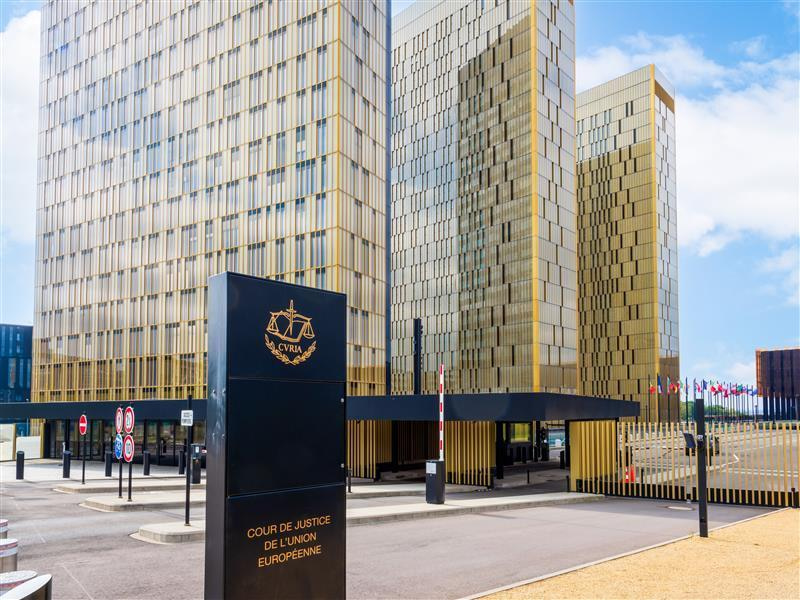
Rome: The EU energy solidarity contribution has survived its first serious legal test. On 22 October 2026, Advocate General Athanasios Rantos advised the Court of Justice that Regulation (EU) 2022/1854 is valid, according to a Danish legal portal and a KPMG tax flash dated 26 October 2026. The opinion is not binding, but judges often follow it.
The central question was the legal basis. Rantos said Article 122(1) TFEU is a proper foundation for the energy solidarity contribution, so the Council did not need unanimity under Article 115 TFEU. That matters because a wrong legal basis could have voided the levy, which the Council adopted on 6 October 2022 and which entered into force two days later. The regulation covers 2022 and 2023 profits that exceed the four-year average by more than 20 percent.
Three referrals brought the questions to Luxembourg. They are C-153/25 (Acea Produzione and others, from the Italian Constitutional Court), C-358/24 (Varo Energy Belgium and others, from the Belgian Constitutional Court) and C-533/24 (Vermilion Energy Ireland and others, from the Irish High Court). The companies argued that the energy solidarity contribution, as the EU measure is known, disguised a national tax and violated property rights.
The Advocate General rejected those arguments against the energy solidarity contribution. He found no breach of property rights or of the freedom to conduct a business, and he saw no retroactivity in the regulation itself. The levy is neither a charge equivalent to a customs duty under Article 30 TFEU nor discriminatory internal taxation under Article 110, and it does not count as State aid. Irish law, which took effect in August 2023 with a 75 percent rate and an effective rate of 25.2 percent on 2022 profits, is retroactive, but he found that justified because the measure is exceptional and temporary.
Member states keep room to extend equivalent national levies. According to KPMG, Belgium’s measure must raise at least as much as a 33 percent rate on surplus profits would, and a volume-based calculation can qualify. The Belgian and Italian courts still have to check some points, including the compensation mechanism and how the levy interacts with the market revenue cap.
The sources leave gaps. The Court has published no judgment date, and I could not open the Curia press release, so the details come from KPMG and the Danish portal. KPMG also says finance ministers agreed in October to examine windfall tax approaches further, but I found no Council source for that, so I have left it out. A separate Romanian referral, C-588/25, on the scope of the NACE codes remains pending.
Energy companies and treasuries will now wait for the judges. If the Court follows Rantos, the energy solidarity contribution stands and member states keep their windfall tools, and member states gain confidence that they can use Article 122 for emergency measures without unanimity. If the Court disagrees, refund claims could follow in several capitals. The judgment, whenever it arrives, will define how far the Union can go with emergency taxation.