
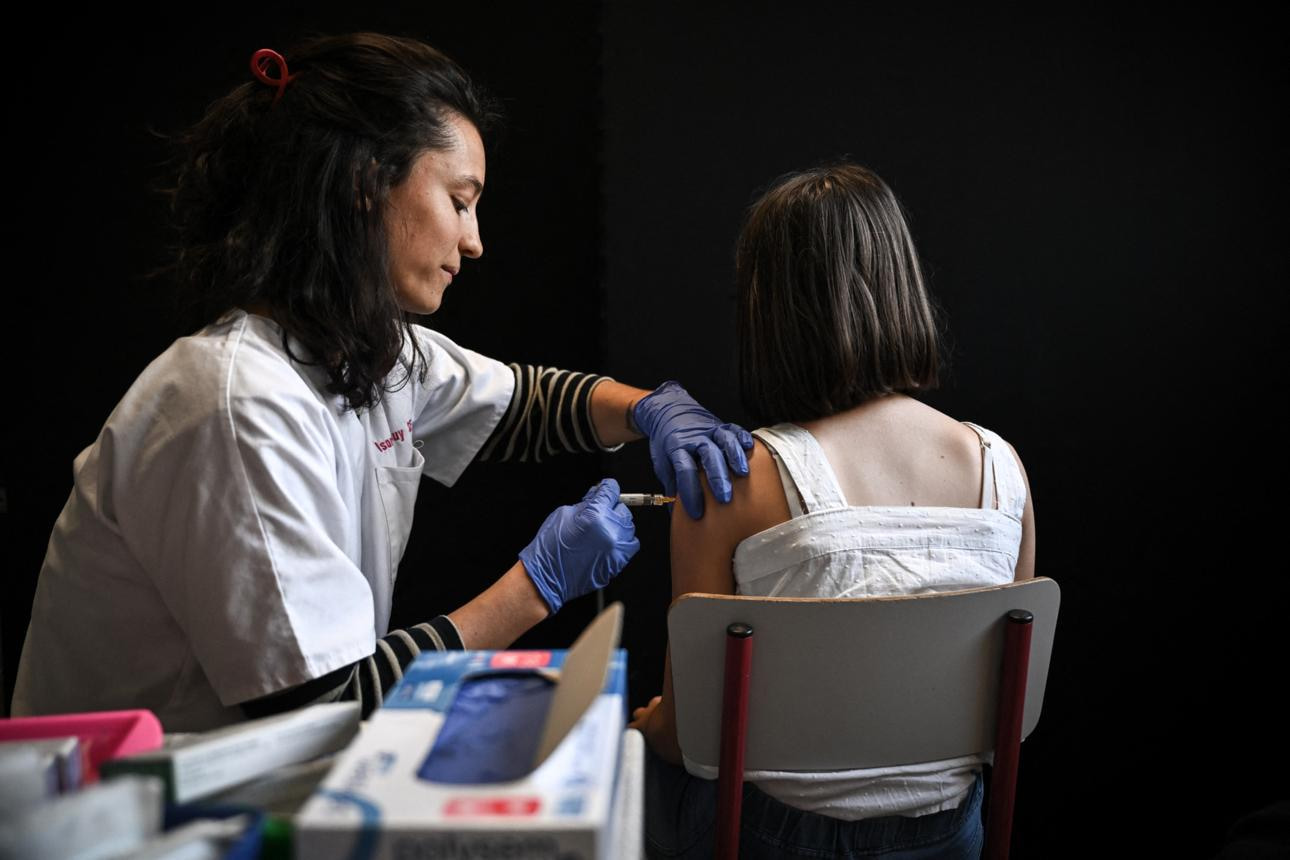
Stockholm: Europe is quietly winning ground against a cancer it has the tools to prevent. New monitoring from the European Centre for Disease Prevention and Control shows that HPV vaccination programmes now reach a wider share of adolescents than at any point since the shots entered national schedules, even as wide gaps between member states persist.
The agency paired its latest assessment of the state of HPV vaccination programmes across the EU and EEA with a redesigned public vaccination coverage dashboard. The tool lets health ministries and the public track uptake for human papillomavirus alongside hepatitis B, measles and rubella, turning what used to be a patchwork of national statistics into a single comparable picture.
The stakes are concrete. HPV causes almost all cervical cancers and a rising share of throat and anal cancers, and the vaccine, given before exposure, blocks the infection that starts the disease. Countries that pushed coverage above 80 percent in girls a decade ago are now recording steep falls in pre-cancerous lesions, evidence that the strategy works when it reaches enough teenagers early.
ECDC found that several countries have closed much of the gap between girls and boys after extending programmes to both sexes, a shift that broadens protection and helps interrupt transmission. Gender-neutral vaccination, once a minority approach, has become the norm across most of the bloc.
The weak spots remain stubborn. Uptake still varies sharply between and within countries, with rural districts and lower-income neighbourhoods trailing well behind national averages. Supply hiccups, school-based delivery that stalled during past health emergencies, and pockets of hesitancy all drag on the numbers. The agency warns that headline figures can mask communities where coverage sits far below the level needed to shield a generation.
To close those gaps, ECDC urges governments to fold HPV shots into routine school visits, send reminders to families who miss appointments, and publish district-level data so laggards cannot hide inside a flattering national total. Its report on HPV programmes frames the vaccine as one of the most cost-effective cancer measures available to European health systems.
The World Health Organization has set a target of vaccinating 90 percent of girls by the age of 15 on the path to eliminating cervical cancer as a public health problem. Europe is closer to that goal than most regions, yet the agency cautions that momentum can reverse quickly if budgets tighten or attention drifts. For now, the direction of travel points the right way, and a rising cohort of protected teenagers stands to feel the benefit for decades.


