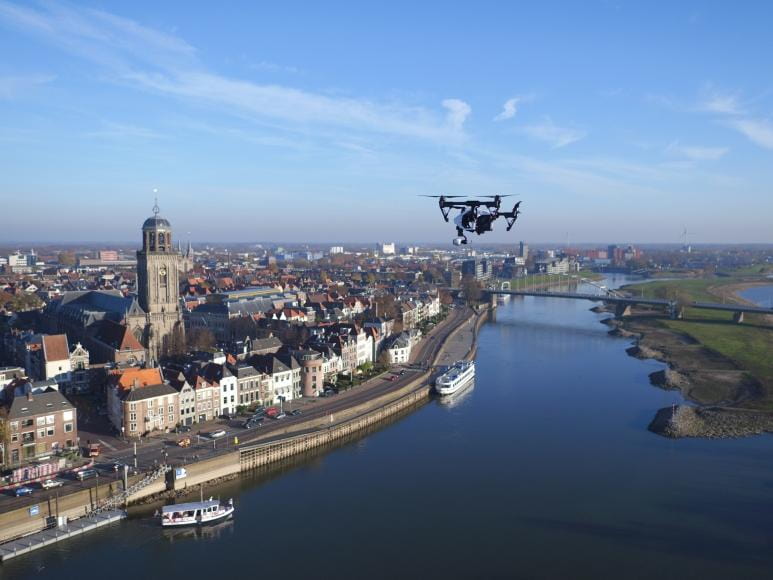
Cologne: A pilot certified to fly a drone in one member state can now carry that permission across the whole union, as Europe’s patchwork of national permits finally gives way to one shared code. From its Cologne headquarters, the European Union Aviation Safety Agency has completed the rollout of a single framework that governs how, where, and by whom small aircraft may take to the sky.
The new drone rules rest on a common classification. Every machine now carries a class marking from C0 to C6 that signals its weight, speed, and safety features, and those markings decide which flights a pilot may attempt. A featherweight camera drone faces light-touch oversight, while heavier craft meet stricter conditions.
Standard scenarios replace the old tangle of one-off national approvals. One covers flights within the operator’s line of sight over populated areas, another allows operations beyond visual range over sparsely populated ground, and both apply identically from Lisbon to Helsinki. Operators no longer reapply each time they cross a border.
Pilots earn their credentials through standardised theory and practical exams, and the resulting certificate travels with them anywhere in the bloc. For delivery firms, film crews, surveyors, and emergency services that work across several countries, the change removes a bureaucratic tax that once slowed every cross-border job.
Behind the licences sits a quieter revolution in air-traffic control. The union’s U-space framework uses digital tools to track drones in shared airspace, separate them from one another, and weave them safely around crewed aircraft. That plumbing will matter more as delivery and inspection flights multiply.
The harmonised regime does not erase every local difference. National authorities keep the power to draw no-fly zones around airports, prisons, and sensitive sites, so a route legal in one region may still hit a wall in another. Operators must check local maps before every mission.
The economic prize drives the harmonisation. Analysts value the European drone market in the billions and expect it to swell as parcel carriers, energy firms, and farmers put small aircraft to work. A fragmented rulebook, industry argued, was throttling that growth by forcing operators to relearn the law at every frontier.
The agency has gathered the requirements on its civil drones portal. By trading dozens of national rulebooks for one, Europe bets that clearer skies will spur an industry it has watched grow faster than its old regulations could handle. If the bet pays off, a courier in Porto and a surveyor in Tallinn will finally work under one set of expectations rather than twenty-seven.