September 16, 2026
LATEST
Software Makers Face Europe’s Product Liability Deadline in DecemberCage-Free Promises Land Before the Transport File Is FinishedTwo New Calls Will Test How Flexible Horizon Europe Really IsEurope’s Innovation Act Counts 10 Billion It Has Not Found YetProcurement Is the Chapter That Could Stall the Thailand DealMobility Week Returns With a Test of Intergenerational FairnessMinisters Debate the Chips Act Next Week With No Money AttachedTaiwan Wants Tax Treaties That Brussels Has No Power to SignNorth Korea Now Earns From Europe Without Shipping AnythingPalm Oil Is the Last Hard Question Before the Indonesia SigningCan One Year Deliver Both a Trade Deal and a Sea CodeVietnam Reached Europe’s Top Partnership Tier With Little DetailLeaked Draft Puts Europe’s Social Media Age Limit at FifteenA Ceuta Debate Whose Title Has Already Reached a VerdictFP10 Clears Committee and the Budget Gap Stays Wide OpenEurope’s New Merger Guidelines Face a Council Test Next WeekEurope’s Culture Capitals Face Their Biggest Rewrite Since 1985Only Italy Has a Bill as Platform Work Deadline NearsCustoms Fraud Charges Land in Germany Over Wrecked CarsCar Tariffs Show Why the India Deal Still Needs Two VotesSoftware Makers Face Europe’s Product Liability Deadline in DecemberCage-Free Promises Land Before the Transport File Is FinishedTwo New Calls Will Test How Flexible Horizon Europe Really IsEurope’s Innovation Act Counts 10 Billion It Has Not Found YetProcurement Is the Chapter That Could Stall the Thailand DealMobility Week Returns With a Test of Intergenerational FairnessMinisters Debate the Chips Act Next Week With No Money AttachedTaiwan Wants Tax Treaties That Brussels Has No Power to SignNorth Korea Now Earns From Europe Without Shipping AnythingPalm Oil Is the Last Hard Question Before the Indonesia SigningCan One Year Deliver Both a Trade Deal and a Sea CodeVietnam Reached Europe’s Top Partnership Tier With Little DetailLeaked Draft Puts Europe’s Social Media Age Limit at FifteenA Ceuta Debate Whose Title Has Already Reached a VerdictFP10 Clears Committee and the Budget Gap Stays Wide OpenEurope’s New Merger Guidelines Face a Council Test Next WeekEurope’s Culture Capitals Face Their Biggest Rewrite Since 1985Only Italy Has a Bill as Platform Work Deadline NearsCustoms Fraud Charges Land in Germany Over Wrecked CarsCar Tariffs Show Why the India Deal Still Needs Two Votes
September 16, 2026
LATEST
Software Makers Face Europe’s Product Liability Deadline in DecemberCage-Free Promises Land Before the Transport File Is FinishedTwo New Calls Will Test How Flexible Horizon Europe Really IsEurope’s Innovation Act Counts 10 Billion It Has Not Found YetProcurement Is the Chapter That Could Stall the Thailand DealMobility Week Returns With a Test of Intergenerational FairnessMinisters Debate the Chips Act Next Week With No Money AttachedTaiwan Wants Tax Treaties That Brussels Has No Power to SignNorth Korea Now Earns From Europe Without Shipping AnythingPalm Oil Is the Last Hard Question Before the Indonesia SigningCan One Year Deliver Both a Trade Deal and a Sea CodeVietnam Reached Europe’s Top Partnership Tier With Little DetailLeaked Draft Puts Europe’s Social Media Age Limit at FifteenA Ceuta Debate Whose Title Has Already Reached a VerdictFP10 Clears Committee and the Budget Gap Stays Wide OpenEurope’s New Merger Guidelines Face a Council Test Next WeekEurope’s Culture Capitals Face Their Biggest Rewrite Since 1985Only Italy Has a Bill as Platform Work Deadline NearsCustoms Fraud Charges Land in Germany Over Wrecked CarsCar Tariffs Show Why the India Deal Still Needs Two VotesSoftware Makers Face Europe’s Product Liability Deadline in DecemberCage-Free Promises Land Before the Transport File Is FinishedTwo New Calls Will Test How Flexible Horizon Europe Really IsEurope’s Innovation Act Counts 10 Billion It Has Not Found YetProcurement Is the Chapter That Could Stall the Thailand DealMobility Week Returns With a Test of Intergenerational FairnessMinisters Debate the Chips Act Next Week With No Money AttachedTaiwan Wants Tax Treaties That Brussels Has No Power to SignNorth Korea Now Earns From Europe Without Shipping AnythingPalm Oil Is the Last Hard Question Before the Indonesia SigningCan One Year Deliver Both a Trade Deal and a Sea CodeVietnam Reached Europe’s Top Partnership Tier With Little DetailLeaked Draft Puts Europe’s Social Media Age Limit at FifteenA Ceuta Debate Whose Title Has Already Reached a VerdictFP10 Clears Committee and the Budget Gap Stays Wide OpenEurope’s New Merger Guidelines Face a Council Test Next WeekEurope’s Culture Capitals Face Their Biggest Rewrite Since 1985Only Italy Has a Bill as Platform Work Deadline NearsCustoms Fraud Charges Land in Germany Over Wrecked CarsCar Tariffs Show Why the India Deal Still Needs Two Votes

Labour Intermediaries Drew Their First Coordinated Inspection Week

Bratislava: A worker recruited in Slovakia, employed on paper by an agency registered in one member state and sent to a warehouse in another, can end up with a payslip that no single national inspectorate fully understands. That gap is the reason enforcement authorities agreed to inspect together.

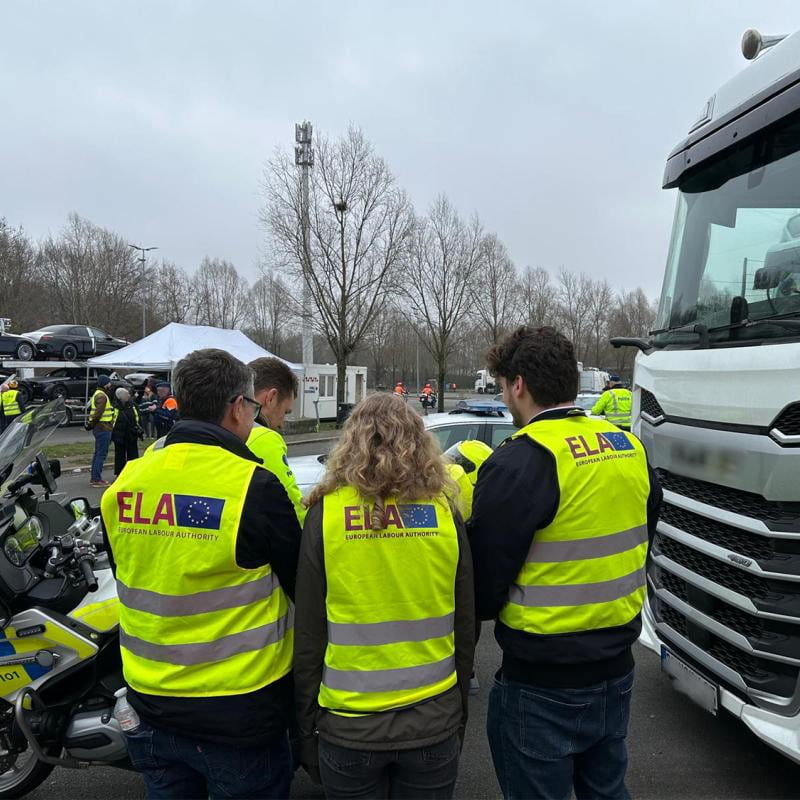
The European Labour Authority coordinated its first week of action devoted to temporary employment agencies and other labour intermediaries in June. Authorities from fourteen member states took part, checking around seventy companies and close to 2,800 workers. The numbers look modest against a sector that places millions of people across the Union each year, and the agency has never claimed otherwise. Concerted inspections serve mainly to test whether national bodies can share information fast enough to follow a chain of subcontracting across a border.

Intermediaries occupy the hardest corner of Union labour law. A posting arrangement lets a company send workers to another member state temporarily while they remain covered by the social security system of the sending country. The rules assume genuine economic activity in that country. Letterbox agencies exist to break the assumption, registering where contributions are cheapest and supplying labour where wages are higher. Inspectors who suspect such an arrangement need documents held by an authority they cannot instruct, and the posting framework depends on cooperation that varies sharply between capitals.

Undeclared work compounds the problem. Three separate types of body usually hold the relevant pieces. Labour inspectorates look at conditions and safety, social security inspectorates chase unpaid contributions, and tax authorities pursue evasion. In several member states those bodies answer to different ministries and share data reluctantly. The European Platform tackling undeclared work was folded into the authority partly to force them into the same room.

Construction, agriculture, road transport and warehousing account for most of the cases. Warehousing has grown fastest, driven by distribution networks that expanded around online retail and that run on agency labour precisely because demand swings by season and by week. A worker in that model may pass through three legal entities between the person who recruited them and the person who directs their shift, and each transition offers a place to lose an obligation.

The authority still lacks the power that would change the picture. It coordinates, mediates and supports. It cannot open its own investigation, issue a penalty or compel a national body to act, and its founding regulation deliberately kept it that way because member states guard labour inspection as a national competence. A review of that mandate has circulated in policy discussion for several years without producing a proposal.

The Commission separately announced measures in May aimed at protecting migrant workers and tackling illegal employment, which touches the same territory from the migration side. Whether the two strands converge into a stronger enforcement instrument or remain parallel exercises will determine what the next week of action can achieve. Seventy companies is a pilot. The sector needs an audit.