
September 24, 2026
LATEST
Rights Groups Test the EU Civil Society Strategy as Pressure MountsJudges Weigh EU Staff Nationality Quotas in Parliament Hiring CasePatents Could Unlock Startup Loans Under the European Innovation ActHungary EU Funds Move Closer as Commission Lifts Rule of Law FreezeMinisters Debate Chips Act 2.0 as Europe Pushes for More Chip OutputMontenegro Waits on a Dutch Vote as the EU Enlargement Sprint StallsGlobal Green Bond Initiative Bets on Private Money for PartnersEurope Draws a Line on Strait of Hormuz Tolls as Iran Talks ResumeStrasbourg Lets the European Defence Fund Pay for Tests in UkraineCSAM Regulation Talks Hinge on Scanning Private MessagesGoogle GDPR Fine of €403 Million Puts Location Data on TrialMFF 2028-2034 Talks Stall as Ministers Hold Their Red LinesBanks Contest Key Parts of the EU Banking Competitiveness PlanEMFAF Amendment Offers Fishers Simpler Rules and a Quota Cut CushionTeachers Trail Pupils as AI in Education Reports Expose a Training GapMacron Presses Brussels to Relax EU Fuel Quality Rules Before WinterEurostat Fuel Prices Jump 23.8 Per Cent as Diesel Leads August RiseData Centre Rating Scheme Puts Energy and Water Use on the EU RecordEU Indo-Pacific Security Partnerships Move From Paper to the SeaEU Thailand Free Trade Agreement Heads to Phuket for Its Final ThirdRights Groups Test the EU Civil Society Strategy as Pressure MountsJudges Weigh EU Staff Nationality Quotas in Parliament Hiring CasePatents Could Unlock Startup Loans Under the European Innovation ActHungary EU Funds Move Closer as Commission Lifts Rule of Law FreezeMinisters Debate Chips Act 2.0 as Europe Pushes for More Chip OutputMontenegro Waits on a Dutch Vote as the EU Enlargement Sprint StallsGlobal Green Bond Initiative Bets on Private Money for PartnersEurope Draws a Line on Strait of Hormuz Tolls as Iran Talks ResumeStrasbourg Lets the European Defence Fund Pay for Tests in UkraineCSAM Regulation Talks Hinge on Scanning Private MessagesGoogle GDPR Fine of €403 Million Puts Location Data on TrialMFF 2028-2034 Talks Stall as Ministers Hold Their Red LinesBanks Contest Key Parts of the EU Banking Competitiveness PlanEMFAF Amendment Offers Fishers Simpler Rules and a Quota Cut CushionTeachers Trail Pupils as AI in Education Reports Expose a Training GapMacron Presses Brussels to Relax EU Fuel Quality Rules Before WinterEurostat Fuel Prices Jump 23.8 Per Cent as Diesel Leads August RiseData Centre Rating Scheme Puts Energy and Water Use on the EU RecordEU Indo-Pacific Security Partnerships Move From Paper to the SeaEU Thailand Free Trade Agreement Heads to Phuket for Its Final Third
September 24, 2026
LATEST
Rights Groups Test the EU Civil Society Strategy as Pressure MountsJudges Weigh EU Staff Nationality Quotas in Parliament Hiring CasePatents Could Unlock Startup Loans Under the European Innovation ActHungary EU Funds Move Closer as Commission Lifts Rule of Law FreezeMinisters Debate Chips Act 2.0 as Europe Pushes for More Chip OutputMontenegro Waits on a Dutch Vote as the EU Enlargement Sprint StallsGlobal Green Bond Initiative Bets on Private Money for PartnersEurope Draws a Line on Strait of Hormuz Tolls as Iran Talks ResumeStrasbourg Lets the European Defence Fund Pay for Tests in UkraineCSAM Regulation Talks Hinge on Scanning Private MessagesGoogle GDPR Fine of €403 Million Puts Location Data on TrialMFF 2028-2034 Talks Stall as Ministers Hold Their Red LinesBanks Contest Key Parts of the EU Banking Competitiveness PlanEMFAF Amendment Offers Fishers Simpler Rules and a Quota Cut CushionTeachers Trail Pupils as AI in Education Reports Expose a Training GapMacron Presses Brussels to Relax EU Fuel Quality Rules Before WinterEurostat Fuel Prices Jump 23.8 Per Cent as Diesel Leads August RiseData Centre Rating Scheme Puts Energy and Water Use on the EU RecordEU Indo-Pacific Security Partnerships Move From Paper to the SeaEU Thailand Free Trade Agreement Heads to Phuket for Its Final ThirdRights Groups Test the EU Civil Society Strategy as Pressure MountsJudges Weigh EU Staff Nationality Quotas in Parliament Hiring CasePatents Could Unlock Startup Loans Under the European Innovation ActHungary EU Funds Move Closer as Commission Lifts Rule of Law FreezeMinisters Debate Chips Act 2.0 as Europe Pushes for More Chip OutputMontenegro Waits on a Dutch Vote as the EU Enlargement Sprint StallsGlobal Green Bond Initiative Bets on Private Money for PartnersEurope Draws a Line on Strait of Hormuz Tolls as Iran Talks ResumeStrasbourg Lets the European Defence Fund Pay for Tests in UkraineCSAM Regulation Talks Hinge on Scanning Private MessagesGoogle GDPR Fine of €403 Million Puts Location Data on TrialMFF 2028-2034 Talks Stall as Ministers Hold Their Red LinesBanks Contest Key Parts of the EU Banking Competitiveness PlanEMFAF Amendment Offers Fishers Simpler Rules and a Quota Cut CushionTeachers Trail Pupils as AI in Education Reports Expose a Training GapMacron Presses Brussels to Relax EU Fuel Quality Rules Before WinterEurostat Fuel Prices Jump 23.8 Per Cent as Diesel Leads August RiseData Centre Rating Scheme Puts Energy and Water Use on the EU RecordEU Indo-Pacific Security Partnerships Move From Paper to the SeaEU Thailand Free Trade Agreement Heads to Phuket for Its Final Third

Civil Society Groups Line Up for Europe’s New CERV Money

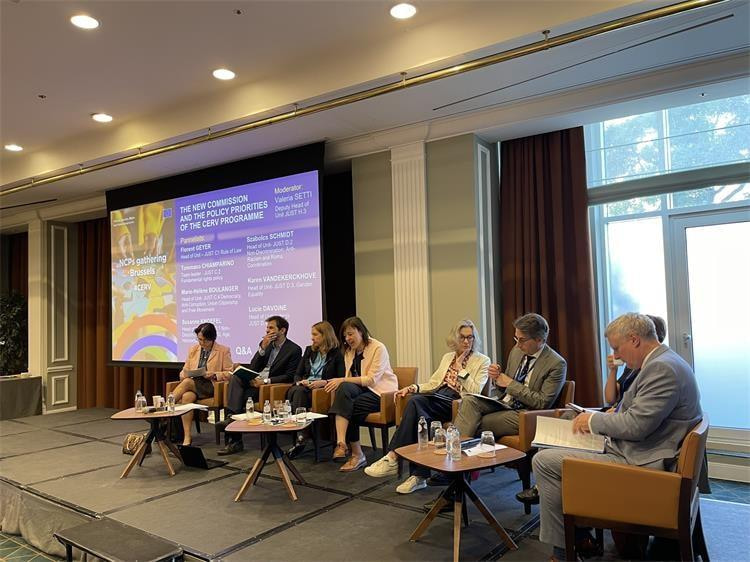
Strasbourg: The European Union has reopened its main funding line for civil society, and the competition for a modest pot looks fierce. The Citizens, Equality, Rights and Values programme, better known as CERV, published its first 2026 calls for proposals on the Commission’s Funding and Tenders Portal, with more openings promised in the coming months. For thousands of associations that defend rights, fight discrimination and keep local democracy alive, the CERV funding round is the moment when annual survival often gets decided.

CERV runs from 2021 to 2027 and sits inside the wider Justice, Rights and Values Fund. Its purpose reads directly from the EU Treaties and the Charter of Fundamental Rights: protect equality, defend the rule of law, and support a civil society that operates at local, regional, national and transnational level. In practice the programme bankrolls the unglamorous work that governments rarely fund themselves, from legal aid clinics and anti-racism networks to town-twinning schemes and remembrance projects.

A widening mandate meets a fixed budget

The 2026 calls carry real money. The Commission estimates a budget of around 26 million euros for at least one of the strands, channelled through the European Education and Culture Executive Agency that manages the grants. Applicants range from a single community group to cross-border consortia spanning several member states. The programme framework spreads that funding across four pillars covering Union values, equality and rights, citizen engagement, and the Daphne strand that tackles gender-based violence.

The arithmetic is unforgiving. Demand for rights-based funding keeps climbing as national governments in several capitals trim their own support for advocacy groups, yet the CERV envelope has not grown to match. Organisations that watch democratic backsliding, monitor courts or shelter migrants increasingly treat these grants as a lifeline rather than a top-up, which pushes success rates down and administrative strain up. Many small groups lack the grant-writing staff that larger federations deploy, so a single competitive call can quietly widen the gap between professionalised NGOs and the volunteers who do the frontline work.

What the 2026 round actually funds

The agency’s own guidance stresses citizen participation and the protection of Union rights. Groups can seek money to run democratic-participation projects, build networks of towns, defend Charter rights before national authorities, or preserve the memory of Europe’s twentieth-century upheavals. The common thread is capacity: keeping small organisations staffed, trained and legally equipped between election cycles, when public attention fades but the work does not.

The timing matters. As the Union drafts its next long-term budget, campaigners fear that rights and values spending will be folded into larger, less visible funds where it competes with defence and industry. A strong 2026 uptake gives the programme a record to defend when those negotiations sharpen, and gives national governments fewer reasons to argue that Brussels overfunds advocacy.

For the Commission, CERV is a quiet test of whether Brussels can fund the values it preaches without steering the groups it pays. For applicants, it is a reminder that Europe’s rights architecture rests on volunteers and short contracts as much as on treaties. The 2026 calls will not resolve that tension, but they will decide which corners of civil society can plan past next year.