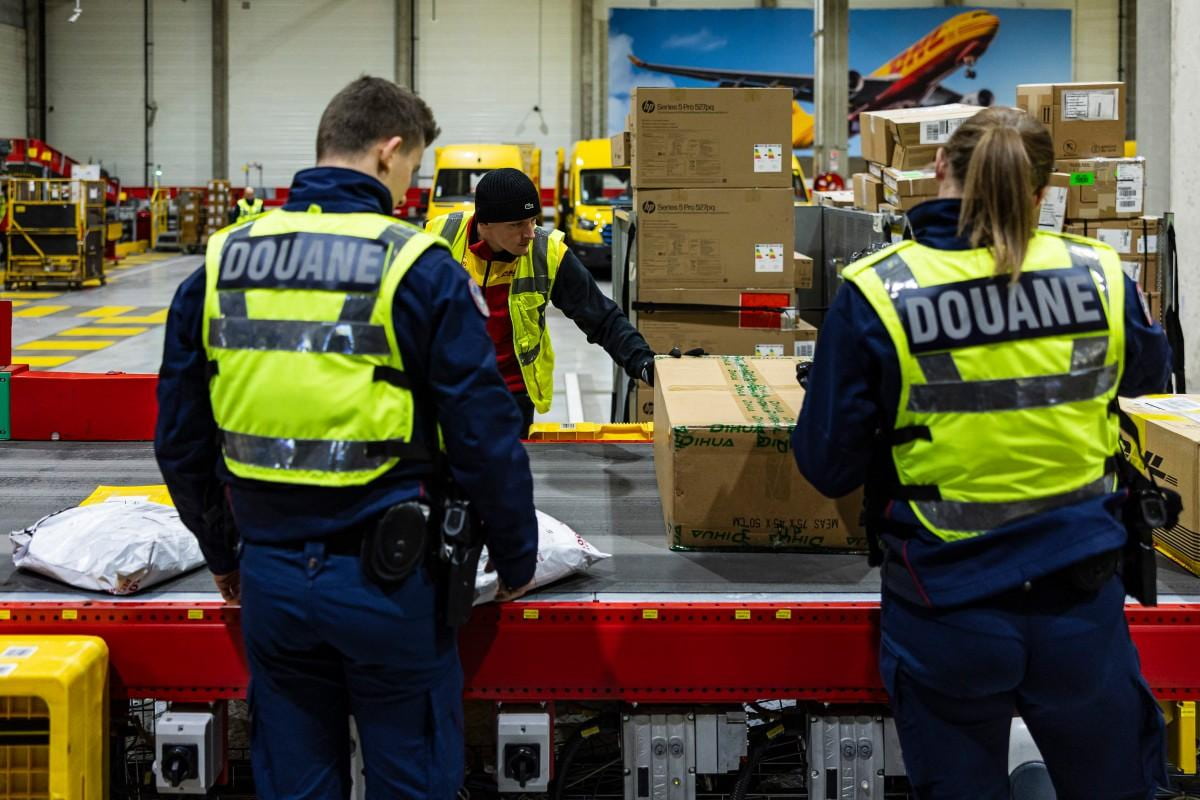
The European Parliament’s final vote on 16 September completed the legislative passage of the most consequential rewrite of the Union Customs Code since it took effect a decade ago. The Council had given its own green light on 3 September, following the political agreement struck between the co-legislators in March. What emerges is not a tidying exercise. It is an attempt to make a customs system designed for containers work for a trade flow made of billions of individual envelopes.
The scale problem is the origin of everything else in the file. A customs union built to inspect consignments at ports now processes a parcel stream in which the median declared value is a few tens of euros and the administrative cost of handling each item is largely fixed. Under those conditions, ad valorem duty raises revenue in rough proportion to value while the cost of collection stays flat. On low-value goods the arithmetic inverts: processing can cost more than the duty collected.
The reform attacks that in two steps, and it is worth keeping them distinct because they are frequently conflated.
The first is fiscal. The €150 duty-free threshold ceased to apply from 1 July 2026, replaced in the interim by a flat €3 charge per item on parcels below that value. The second is administrative. From 1 November 2026, member states begin collecting a separate handling fee, its level to be fixed by the Commission and reviewed every two years so that it tracks actual processing costs. Legally, the fee is owed by whoever is liable for the other customs debts attaching to the parcel – a drafting choice intended to place the burden on the platform or declarant rather than the individual buyer.
That intention deserves scrutiny. Statutory incidence and economic incidence are different things, and the legislature can determine only the first. A per-unit charge on a low-value parcel is, in proportional terms, a steeply regressive cost: a fee of a few euros is negligible on a €140 order and material on a €6 one. Whether it lands on the platform’s margin or the consumer’s basket depends on the elasticity of demand in the relevant product segment and on how much competitive pressure the platform faces. In highly price-sensitive categories where shipping is already a visible line item, expecting the charge to be absorbed rather than passed through is optimistic.
The more interesting consequence is behavioural. Because the fee is levied per item rather than per value, it creates a direct financial incentive to consolidate. Sellers who currently ship each order individually from outside the Union gain a reason to bulk-ship into European fulfilment centres and clear customs once on a consolidated basis. If that reorganisation happens at scale, the reform will have changed the physical geography of European e-commerce logistics far more than it changed anyone’s tax bill. Whether that constitutes success depends on the objective. As a means of reducing the parcel count that customs must individually handle, it works. As a revenue measure, it may yield considerably less than static projections suggest.
The institutional half of the package is where the real risk sits. The reform establishes an EU Customs Authority, to be seated in Lille and moving to full operations from the start of 2028, and an EU Customs Data Hub intended to replace the more than 111 national systems currently in use. The Data Hub is scheduled to go live for e-commerce goods on 1 July 2028, with a phased extension to all goods movements running to 1 March 2034.
Those dates are the file’s exposed flank. An eight-year phased migration of twenty-seven national customs infrastructures onto a single platform is a systems integration undertaking of a kind the Union’s record does not obviously recommend. Until the Hub functions, the interim measures – the flat charge, the handling fee – do the work, and interim measures have a tendency to become the regime. Traders will plan for a decade of parallel operation, because that is what the timetable describes.
There is also an enforcement question the legislation cannot resolve on its own. Making platforms deemed importers, responsible for duty at the point of sale, is coherent for the large operators that value access to the single market. It is far less coherent for the long tail of small sellers reaching European consumers through intermediaries with no European establishment. The reform’s effectiveness will be set at that margin, not in the text.
What the Parliament approved is a serious answer to a genuine structural mismatch. Its central assumption – that the Union can build the shared infrastructure the design requires, on schedule – remains untested.