
September 24, 2026
LATEST
Rights Groups Test the EU Civil Society Strategy as Pressure MountsJudges Weigh EU Staff Nationality Quotas in Parliament Hiring CasePatents Could Unlock Startup Loans Under the European Innovation ActHungary EU Funds Move Closer as Commission Lifts Rule of Law FreezeMinisters Debate Chips Act 2.0 as Europe Pushes for More Chip OutputMontenegro Waits on a Dutch Vote as the EU Enlargement Sprint StallsGlobal Green Bond Initiative Bets on Private Money for PartnersEurope Draws a Line on Strait of Hormuz Tolls as Iran Talks ResumeStrasbourg Lets the European Defence Fund Pay for Tests in UkraineCSAM Regulation Talks Hinge on Scanning Private MessagesGoogle GDPR Fine of €403 Million Puts Location Data on TrialMFF 2028-2034 Talks Stall as Ministers Hold Their Red LinesBanks Contest Key Parts of the EU Banking Competitiveness PlanEMFAF Amendment Offers Fishers Simpler Rules and a Quota Cut CushionTeachers Trail Pupils as AI in Education Reports Expose a Training GapMacron Presses Brussels to Relax EU Fuel Quality Rules Before WinterEurostat Fuel Prices Jump 23.8 Per Cent as Diesel Leads August RiseData Centre Rating Scheme Puts Energy and Water Use on the EU RecordEU Indo-Pacific Security Partnerships Move From Paper to the SeaEU Thailand Free Trade Agreement Heads to Phuket for Its Final ThirdRights Groups Test the EU Civil Society Strategy as Pressure MountsJudges Weigh EU Staff Nationality Quotas in Parliament Hiring CasePatents Could Unlock Startup Loans Under the European Innovation ActHungary EU Funds Move Closer as Commission Lifts Rule of Law FreezeMinisters Debate Chips Act 2.0 as Europe Pushes for More Chip OutputMontenegro Waits on a Dutch Vote as the EU Enlargement Sprint StallsGlobal Green Bond Initiative Bets on Private Money for PartnersEurope Draws a Line on Strait of Hormuz Tolls as Iran Talks ResumeStrasbourg Lets the European Defence Fund Pay for Tests in UkraineCSAM Regulation Talks Hinge on Scanning Private MessagesGoogle GDPR Fine of €403 Million Puts Location Data on TrialMFF 2028-2034 Talks Stall as Ministers Hold Their Red LinesBanks Contest Key Parts of the EU Banking Competitiveness PlanEMFAF Amendment Offers Fishers Simpler Rules and a Quota Cut CushionTeachers Trail Pupils as AI in Education Reports Expose a Training GapMacron Presses Brussels to Relax EU Fuel Quality Rules Before WinterEurostat Fuel Prices Jump 23.8 Per Cent as Diesel Leads August RiseData Centre Rating Scheme Puts Energy and Water Use on the EU RecordEU Indo-Pacific Security Partnerships Move From Paper to the SeaEU Thailand Free Trade Agreement Heads to Phuket for Its Final Third
September 24, 2026
LATEST
Rights Groups Test the EU Civil Society Strategy as Pressure MountsJudges Weigh EU Staff Nationality Quotas in Parliament Hiring CasePatents Could Unlock Startup Loans Under the European Innovation ActHungary EU Funds Move Closer as Commission Lifts Rule of Law FreezeMinisters Debate Chips Act 2.0 as Europe Pushes for More Chip OutputMontenegro Waits on a Dutch Vote as the EU Enlargement Sprint StallsGlobal Green Bond Initiative Bets on Private Money for PartnersEurope Draws a Line on Strait of Hormuz Tolls as Iran Talks ResumeStrasbourg Lets the European Defence Fund Pay for Tests in UkraineCSAM Regulation Talks Hinge on Scanning Private MessagesGoogle GDPR Fine of €403 Million Puts Location Data on TrialMFF 2028-2034 Talks Stall as Ministers Hold Their Red LinesBanks Contest Key Parts of the EU Banking Competitiveness PlanEMFAF Amendment Offers Fishers Simpler Rules and a Quota Cut CushionTeachers Trail Pupils as AI in Education Reports Expose a Training GapMacron Presses Brussels to Relax EU Fuel Quality Rules Before WinterEurostat Fuel Prices Jump 23.8 Per Cent as Diesel Leads August RiseData Centre Rating Scheme Puts Energy and Water Use on the EU RecordEU Indo-Pacific Security Partnerships Move From Paper to the SeaEU Thailand Free Trade Agreement Heads to Phuket for Its Final ThirdRights Groups Test the EU Civil Society Strategy as Pressure MountsJudges Weigh EU Staff Nationality Quotas in Parliament Hiring CasePatents Could Unlock Startup Loans Under the European Innovation ActHungary EU Funds Move Closer as Commission Lifts Rule of Law FreezeMinisters Debate Chips Act 2.0 as Europe Pushes for More Chip OutputMontenegro Waits on a Dutch Vote as the EU Enlargement Sprint StallsGlobal Green Bond Initiative Bets on Private Money for PartnersEurope Draws a Line on Strait of Hormuz Tolls as Iran Talks ResumeStrasbourg Lets the European Defence Fund Pay for Tests in UkraineCSAM Regulation Talks Hinge on Scanning Private MessagesGoogle GDPR Fine of €403 Million Puts Location Data on TrialMFF 2028-2034 Talks Stall as Ministers Hold Their Red LinesBanks Contest Key Parts of the EU Banking Competitiveness PlanEMFAF Amendment Offers Fishers Simpler Rules and a Quota Cut CushionTeachers Trail Pupils as AI in Education Reports Expose a Training GapMacron Presses Brussels to Relax EU Fuel Quality Rules Before WinterEurostat Fuel Prices Jump 23.8 Per Cent as Diesel Leads August RiseData Centre Rating Scheme Puts Energy and Water Use on the EU RecordEU Indo-Pacific Security Partnerships Move From Paper to the SeaEU Thailand Free Trade Agreement Heads to Phuket for Its Final Third

Europe’s Disaster Fund Pays Late and Prevents Nothing

Limassol: The Union’s instrument of last resort for natural disasters was built in 2002 to do one thing, and twenty-four years later it still does only that thing. The European Union Solidarity Fund reimburses. It arrives after the fire has burned out, after the water has receded, and after a national ministry has counted what it lost, valued it, and filed the paperwork in Brussels. In May the Commission proposed 144 million euro for Spain, Romania and Cyprus to recover from disasters that struck them in 2025. The interval between the event and the transfer is the most instructive figure in the entire file, and it is measured in seasons rather than weeks.

The arithmetic of the fund is easy to state and uncomfortable to look at. Since it was created after the Elbe floods, it has paid out somewhat more than ten billion euro across 147 disaster events in twenty-five member states and six accession countries. That works out at roughly sixty-eight million euro per event spread over a generation. Set against the reconstruction bills that individual member states now file after a single bad August, the figure reads less like compensation and more like acknowledgement.

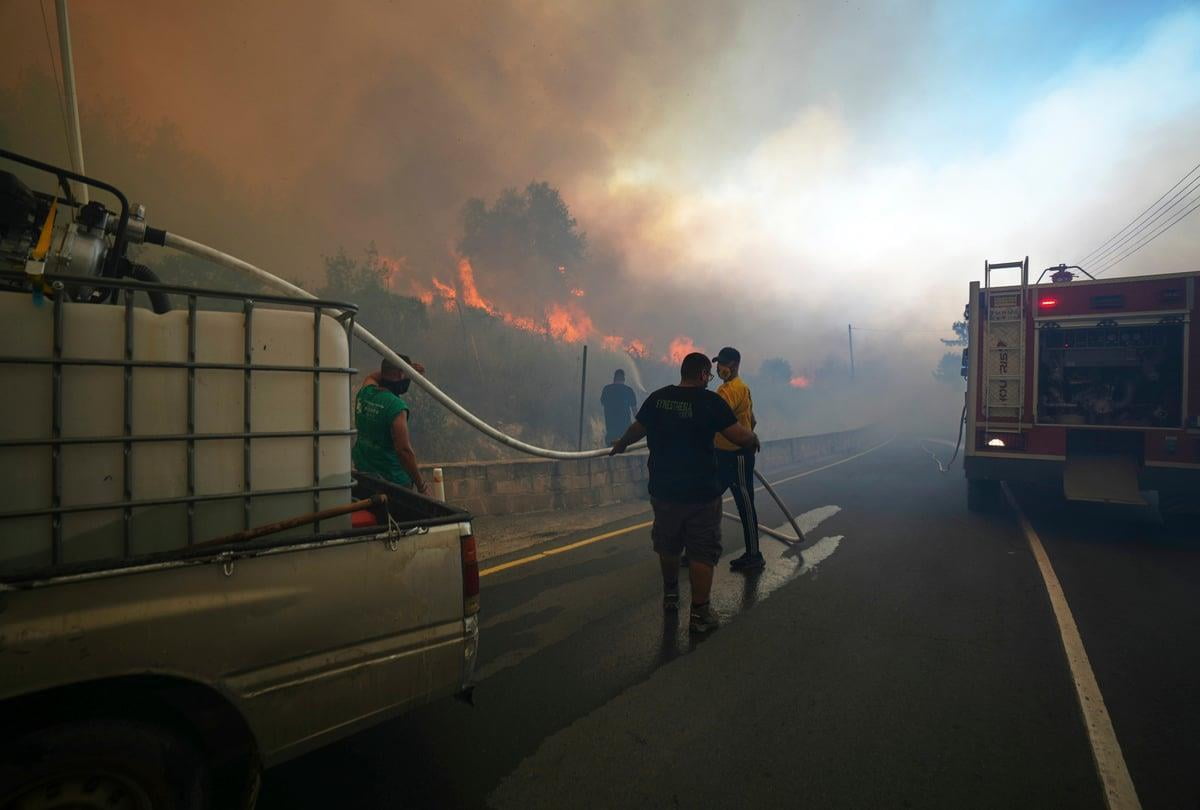
Summer 2026 has made the mismatch harder to argue away. Air and sea temperatures across southern Europe exceeded records that had stood for the length of the fund’s existence, and the wildfire season ran long enough that public health bodies issued statements of a kind normally reserved for epidemics. None of that damage is inside the 144 million euro proposed in May. It will be assessed through the autumn, submitted over the winter, and paid, if the thresholds are met, some time in 2027.

Those thresholds are the second structural problem. The fund is triggered either when damage exceeds a fixed share of a country’s gross national income, or under a regional criterion for events concentrated in a single territory. The design favours small member states, where a severe local event registers nationally, and disadvantages large ones, where a catastrophic regional fire can be statistically invisible at the level of the whole economy. A valley in a large member state and an island in a small one can suffer identical losses and receive entirely different answers. That is not a flaw in the administration of the fund. It is what the fund was written to do.

The third constraint is budgetary and largely unspoken. The Solidarity Fund does not have a dedicated envelope of its own. It draws on the Solidarity and Emergency Aid Reserve, which also carries the Union’s response to emergencies outside its borders. A humanitarian crisis in a third country and a flood in a member region therefore compete for the same ceiling. In years when both are severe, the reserve does what any capped instrument does under pressure, which is to reduce the rate at which applications are honoured. Applicants do not learn what they will receive until the Commission has seen the full year’s claims.

Parliament has been explicit about the consequence. Its standing position is that the fund is a curative instrument, that extreme weather will increase in frequency and intensity, and that the available resources should rise. The first two statements are analytically uncontroversial. The third has never survived contact with the budget negotiation, which is precisely where the file now sits. Ministers for European affairs open their policy debate on the 2028 to 2034 Multiannual Financial Framework on 22 September, and the future shape of the reserve is part of it.

What makes the debate interesting is that the Union’s actual prevention capacity has grown considerably while the Solidarity Fund has not. The Commission presented an integrated approach to wildfire risk management in March. Cohesion programmes finance flood defences and water retention. The rescEU reserve prepositions aircraft and pumps. Research programmes fund the drought and heat modelling that lets a prefecture know where to put a firebreak. None of this is the Solidarity Fund, and none of it carries the fund’s political visibility.

That is the genuine question in front of ministers, and it is not really about the ceiling. A reimbursement instrument that pays a fraction of damage two years after the fact is a reasonable thing for a union of states to maintain. It is a strange thing for that union to keep presenting as its answer to a changing climate. Either the fund is rebuilt with advance payments, a wider regional trigger and its own line, or the Union stops treating it as the headline and starts pointing at the instruments that actually reduce the damage before it is counted.