August 7, 2026
LATEST
New Zealand Trade With Europe Hits a Record in Its First YearEurope Locks Chinese Medical Devices Out of Its Public TendersHow Far Can Europe and Japan Take Their New Security Pact NowSeoul’s Gamble on Europe’s Research Money Is Starting to Pay OffEurope Freezes Its Retaliatory Tariffs on the US IndefinitelyAir Passenger Rights Get Their First Big Rewrite in 20 YearsFive Joint Defence Projects Win Brussels Backing and Shared CashTobacco Tax Overhaul Stalls as Governments Block UnanimityCritical Medicines Act Heads for Final Adoption This AutumnMoldova Accession Reaches Its Foreign-Policy ChapterMercosur Tariffs Fall as Europe’s Farmers Watch the GaugesWhy Europe’s Digital Fairness Act Worries Online RetailersErasmus+ Faces a Budget Fight Before Its 2028 RelaunchMedia Freedom Rules Turn One as Enforcement LagsPlatform Work Rules Push Member States Toward a December ReckoningSingle Ticket Plan Would Let One Booking Cover Europe by RailHungary Races an August Deadline to Unlock Its Recovery FundsCapitals Race a September Deadline to Restore NatureEuro-Zone Inflation Nudges Back Up as Energy Bills ClimbRed Bull Case Tests a New Frontier in EU AntitrustNew Zealand Trade With Europe Hits a Record in Its First YearEurope Locks Chinese Medical Devices Out of Its Public TendersHow Far Can Europe and Japan Take Their New Security Pact NowSeoul’s Gamble on Europe’s Research Money Is Starting to Pay OffEurope Freezes Its Retaliatory Tariffs on the US IndefinitelyAir Passenger Rights Get Their First Big Rewrite in 20 YearsFive Joint Defence Projects Win Brussels Backing and Shared CashTobacco Tax Overhaul Stalls as Governments Block UnanimityCritical Medicines Act Heads for Final Adoption This AutumnMoldova Accession Reaches Its Foreign-Policy ChapterMercosur Tariffs Fall as Europe’s Farmers Watch the GaugesWhy Europe’s Digital Fairness Act Worries Online RetailersErasmus+ Faces a Budget Fight Before Its 2028 RelaunchMedia Freedom Rules Turn One as Enforcement LagsPlatform Work Rules Push Member States Toward a December ReckoningSingle Ticket Plan Would Let One Booking Cover Europe by RailHungary Races an August Deadline to Unlock Its Recovery FundsCapitals Race a September Deadline to Restore NatureEuro-Zone Inflation Nudges Back Up as Energy Bills ClimbRed Bull Case Tests a New Frontier in EU Antitrust
August 7, 2026
LATEST
New Zealand Trade With Europe Hits a Record in Its First YearEurope Locks Chinese Medical Devices Out of Its Public TendersHow Far Can Europe and Japan Take Their New Security Pact NowSeoul’s Gamble on Europe’s Research Money Is Starting to Pay OffEurope Freezes Its Retaliatory Tariffs on the US IndefinitelyAir Passenger Rights Get Their First Big Rewrite in 20 YearsFive Joint Defence Projects Win Brussels Backing and Shared CashTobacco Tax Overhaul Stalls as Governments Block UnanimityCritical Medicines Act Heads for Final Adoption This AutumnMoldova Accession Reaches Its Foreign-Policy ChapterMercosur Tariffs Fall as Europe’s Farmers Watch the GaugesWhy Europe’s Digital Fairness Act Worries Online RetailersErasmus+ Faces a Budget Fight Before Its 2028 RelaunchMedia Freedom Rules Turn One as Enforcement LagsPlatform Work Rules Push Member States Toward a December ReckoningSingle Ticket Plan Would Let One Booking Cover Europe by RailHungary Races an August Deadline to Unlock Its Recovery FundsCapitals Race a September Deadline to Restore NatureEuro-Zone Inflation Nudges Back Up as Energy Bills ClimbRed Bull Case Tests a New Frontier in EU AntitrustNew Zealand Trade With Europe Hits a Record in Its First YearEurope Locks Chinese Medical Devices Out of Its Public TendersHow Far Can Europe and Japan Take Their New Security Pact NowSeoul’s Gamble on Europe’s Research Money Is Starting to Pay OffEurope Freezes Its Retaliatory Tariffs on the US IndefinitelyAir Passenger Rights Get Their First Big Rewrite in 20 YearsFive Joint Defence Projects Win Brussels Backing and Shared CashTobacco Tax Overhaul Stalls as Governments Block UnanimityCritical Medicines Act Heads for Final Adoption This AutumnMoldova Accession Reaches Its Foreign-Policy ChapterMercosur Tariffs Fall as Europe’s Farmers Watch the GaugesWhy Europe’s Digital Fairness Act Worries Online RetailersErasmus+ Faces a Budget Fight Before Its 2028 RelaunchMedia Freedom Rules Turn One as Enforcement LagsPlatform Work Rules Push Member States Toward a December ReckoningSingle Ticket Plan Would Let One Booking Cover Europe by RailHungary Races an August Deadline to Unlock Its Recovery FundsCapitals Race a September Deadline to Restore NatureEuro-Zone Inflation Nudges Back Up as Energy Bills ClimbRed Bull Case Tests a New Frontier in EU Antitrust

Why Europe’s Plan to Age-Check the Internet Will Be Tested

Brussels: Europe has decided that the internet should be able to tell a child from an adult. Turning that decision into a system that protects minors without surveilling everyone else is the harder part.

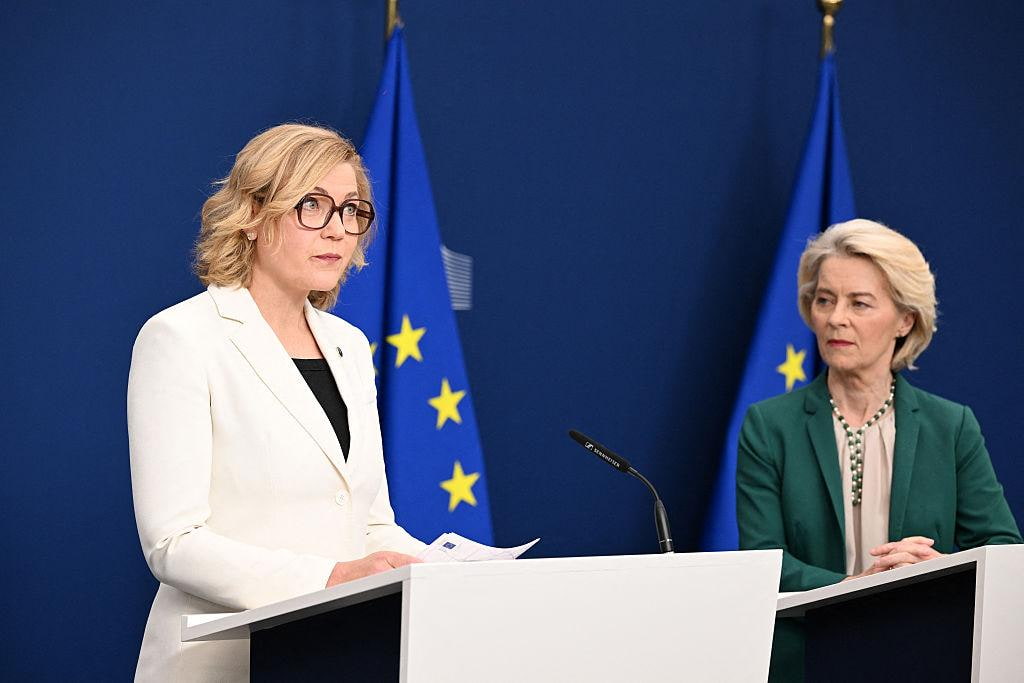
On 13 July 2026 an expert committee on child safety online handed its report to Commission President Ursula von der Leyen. The panel recommended a minimum age of 13 for social media, with under-13s allowed only under parental supervision or in schools. The Commission plans to review the findings over the summer and present a binding legislative proposal straight after the recess, according to reporting on the initiative.

The enforcement machinery is already taking shape. In April, von der Leyen and Executive Vice-President Henna Virkkunen said the Union’s age verification app was technically ready. Officials describe it as free, anonymous and available on any device, letting a user prove they are old enough for a service without handing over more data than the check requires. Member states have been told to roll it out by the end of 2026, alongside tougher enforcement of the Digital Services Act.

The rights problem at the core

The design tries to square two rights that usually pull against each other. Children have a right to protection from harmful content and manipulative design. Everyone, children included, has a right to privacy and to speak without being tracked. A clumsy age check threatens the second right in the name of the first, because verifying age can mean identifying users, and identification is the opposite of anonymity online.

The Commission’s answer is a zero-knowledge approach that confirms a threshold, over 13 or over 18, without revealing identity. Users can set the app up with a passport or ID card and then present only the yes-or-no result. If it works as promised, it protects minors while limiting what platforms learn. If it leaks or gets tied to other data, it becomes a new tracking layer that courts will not tolerate.

Where the plan meets resistance

Fragmentation is the first threat. Several member states have floated their own social media bans and national schemes, and the Commission has pushed back to keep a single framework intact. A patchwork of incompatible rules would confuse families and hand platforms an excuse to comply with the weakest one.

Effectiveness is the second. Age assurance is easy to promise and hard to deliver, because determined teenagers borrow credentials, use older siblings’ devices, or route around checks entirely. A system that inconveniences ordinary users while barely slowing motivated minors would fail on its own terms, and critics will measure it against that risk.

Then comes the legal test. Any mandatory verification must satisfy the proportionality standard that European courts apply to fundamental rights, and a binding law that reaches every platform will invite challenge. The Commission has to show that the benefit to children justifies the burden on privacy, and that the tool collects no more than it must.

Supporters argue the alternative is worse. Voluntary self-declaration has plainly failed, harmful design keeps reaching young users, and a shared, privacy-preserving check is the least intrusive way to enforce an age limit that most parents want. On that view, a well-built app is a shield, not a surveillance tool.

The proposal after the summer will reveal which instinct prevailed. If it pairs a strict age floor with genuine anonymity and a single Union-wide standard, Europe may set a global template. If it drifts toward blanket identification, the plan meant to protect children could end up on trial itself.