August 10, 2026
LATEST
Europe’s Air Quality Improves but WHO Limits LoomTwelve New EU Medicines Win a Green Light from EMAFIFA Agent Rules Must Answer to Europe’s CourtsTachograph Rules Now Reach Vans Crossing Europe’s BordersNature Restoration Plans Come Due as a Hard Deadline NearsBrussels Opens a State Aid Probe Into Spain’s Renewables PayoutBrussels Extends Its Tariff Suspension on US Goods IndefinitelyFarmers Win Stronger Contract Rights Across the EU Supply ChainEurope Finally Locks In Its 348-Satellite Answer to StarlinkPlatform Work Rules Face a National Scramble Before DecemberDuty-Free Parcels Reach the End of the Line for EU ShoppersAfter Nine Years, Europe and Australia Seal a Trade PactBeijing Answers Europe’s Russia Sanctions in KindOne Year On, the EU-Japan Alliance Faces Its First TestEurope’s Chip Ambitions Still Run Through Taiwan’s FabsWhy South Korea Bet Its Research Future on Europe’s ProgrammeEurope and Japan Deepen Their Economic Alliance as Rivals CircleFive Joint Defence Projects Launch Europe’s Military ShieldElectrification Plan Aims to Make Europe First Electro ContinentHorizon Europe Budget Fight Heats Up as Ministers Push BackEurope’s Air Quality Improves but WHO Limits LoomTwelve New EU Medicines Win a Green Light from EMAFIFA Agent Rules Must Answer to Europe’s CourtsTachograph Rules Now Reach Vans Crossing Europe’s BordersNature Restoration Plans Come Due as a Hard Deadline NearsBrussels Opens a State Aid Probe Into Spain’s Renewables PayoutBrussels Extends Its Tariff Suspension on US Goods IndefinitelyFarmers Win Stronger Contract Rights Across the EU Supply ChainEurope Finally Locks In Its 348-Satellite Answer to StarlinkPlatform Work Rules Face a National Scramble Before DecemberDuty-Free Parcels Reach the End of the Line for EU ShoppersAfter Nine Years, Europe and Australia Seal a Trade PactBeijing Answers Europe’s Russia Sanctions in KindOne Year On, the EU-Japan Alliance Faces Its First TestEurope’s Chip Ambitions Still Run Through Taiwan’s FabsWhy South Korea Bet Its Research Future on Europe’s ProgrammeEurope and Japan Deepen Their Economic Alliance as Rivals CircleFive Joint Defence Projects Launch Europe’s Military ShieldElectrification Plan Aims to Make Europe First Electro ContinentHorizon Europe Budget Fight Heats Up as Ministers Push Back
August 10, 2026
LATEST
Europe’s Air Quality Improves but WHO Limits LoomTwelve New EU Medicines Win a Green Light from EMAFIFA Agent Rules Must Answer to Europe’s CourtsTachograph Rules Now Reach Vans Crossing Europe’s BordersNature Restoration Plans Come Due as a Hard Deadline NearsBrussels Opens a State Aid Probe Into Spain’s Renewables PayoutBrussels Extends Its Tariff Suspension on US Goods IndefinitelyFarmers Win Stronger Contract Rights Across the EU Supply ChainEurope Finally Locks In Its 348-Satellite Answer to StarlinkPlatform Work Rules Face a National Scramble Before DecemberDuty-Free Parcels Reach the End of the Line for EU ShoppersAfter Nine Years, Europe and Australia Seal a Trade PactBeijing Answers Europe’s Russia Sanctions in KindOne Year On, the EU-Japan Alliance Faces Its First TestEurope’s Chip Ambitions Still Run Through Taiwan’s FabsWhy South Korea Bet Its Research Future on Europe’s ProgrammeEurope and Japan Deepen Their Economic Alliance as Rivals CircleFive Joint Defence Projects Launch Europe’s Military ShieldElectrification Plan Aims to Make Europe First Electro ContinentHorizon Europe Budget Fight Heats Up as Ministers Push BackEurope’s Air Quality Improves but WHO Limits LoomTwelve New EU Medicines Win a Green Light from EMAFIFA Agent Rules Must Answer to Europe’s CourtsTachograph Rules Now Reach Vans Crossing Europe’s BordersNature Restoration Plans Come Due as a Hard Deadline NearsBrussels Opens a State Aid Probe Into Spain’s Renewables PayoutBrussels Extends Its Tariff Suspension on US Goods IndefinitelyFarmers Win Stronger Contract Rights Across the EU Supply ChainEurope Finally Locks In Its 348-Satellite Answer to StarlinkPlatform Work Rules Face a National Scramble Before DecemberDuty-Free Parcels Reach the End of the Line for EU ShoppersAfter Nine Years, Europe and Australia Seal a Trade PactBeijing Answers Europe’s Russia Sanctions in KindOne Year On, the EU-Japan Alliance Faces Its First TestEurope’s Chip Ambitions Still Run Through Taiwan’s FabsWhy South Korea Bet Its Research Future on Europe’s ProgrammeEurope and Japan Deepen Their Economic Alliance as Rivals CircleFive Joint Defence Projects Launch Europe’s Military ShieldElectrification Plan Aims to Make Europe First Electro ContinentHorizon Europe Budget Fight Heats Up as Ministers Push Back

Mandatory Border Screening Begins As Asylum Pact Takes Full Force

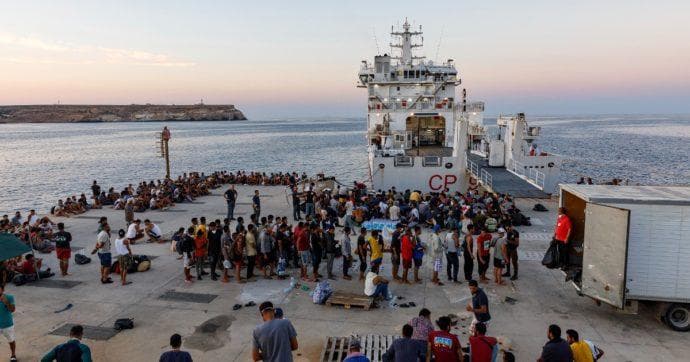
Lampedusa: On this small Sicilian island, where rescue boats still arrive faster than the paperwork can keep up, the rules governing what happens to a new arrival changed fundamentally on 12 June. After a decade of deadlock that began with the 2015 refugee crisis and ended only with the 2024 compromise, the European Union’s Pact on Migration and Asylum is now fully applicable in all participating member states.

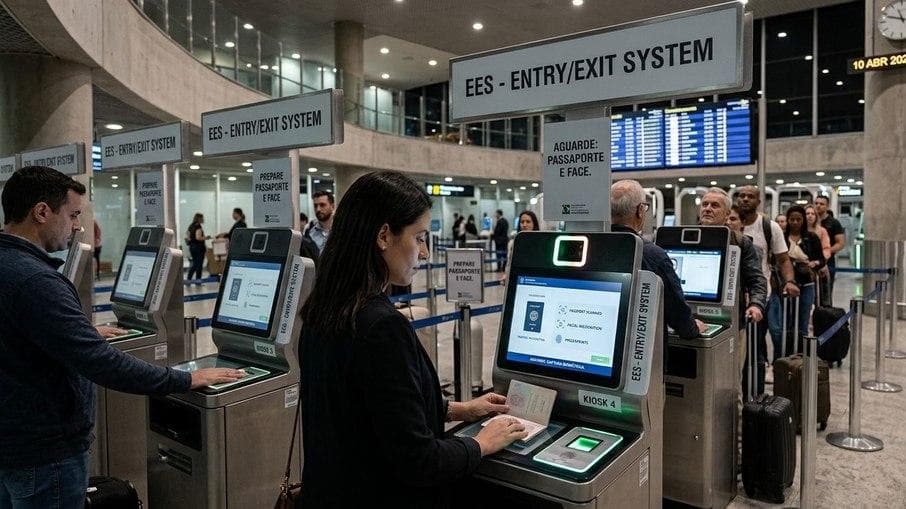
The headline change is procedural rather than rhetorical. Every person crossing an external border irregularly must now pass through a mandatory screening of identity, health and security within seven days, before any decision is taken on whether they can enter the asylum system at all. Applicants judged to have little chance of protection, or deemed a security concern, are channelled into an accelerated border procedure that can be concluded close to the frontier rather than after transfer inland. The Commission frames this as the end of a system in which arrivals disappeared into national bureaucracies for years.

Underpinning the new architecture is a solidarity mechanism intended to soften the long-standing grievance of frontline states such as Italy, Greece and Spain, which argued that geography forced them to carry a disproportionate share. Under the mechanism, other member states can choose between relocating a quota of applicants, paying into a common fund, or providing operational support. The Commission has set aside roughly three billion euros to help capitals build reception capacity, train border guards and connect national databases.

Whether the scaffolding holds is the open question. Researchers and rights bodies have warned for months that the screening and border procedures presuppose physical space to hold people humanely while checks are completed, and that many countries simply lack it. The European Union Agency for Fundamental Rights has flagged the risk that accelerated procedures compress the time available to identify vulnerable applicants, including unaccompanied minors and victims of trafficking, who are entitled to additional safeguards. Several frontline governments counter that without firm procedures the political consensus behind any asylum system collapses entirely.

The numbers explain the stakes. The Commission’s own progress reporting acknowledges that some member states began rewriting national law and hiring staff only in the final months before the deadline, leaving uneven readiness across the bloc. A procedure that functions in one country and stalls in another reopens precisely the secondary-movement problem the Pact was meant to close, as applicants gravitate toward jurisdictions where the system is slower or more generous.

For Lampedusa, the change is concrete and immediate. The island’s hotspot becomes a test of whether a screening designed far away can be executed on a quayside in the central Mediterranean within the week the law allows. Officials concede that 12 June was a starting line rather than a finishing one, and that the credibility of the entire reform will be judged not by the elegance of the regulation but by what happens to the next boat. The coming summer, when arrivals traditionally peak, will deliver the first honest verdict.