August 11, 2026
LATEST
Air Passenger Rights Get Their First Overhaul in Two DecadesDeforestation Regulation Nears Its December Compliance DeadlineHealth Data Space Enters Its First Operational PhaseBroken Appliances Now Come With a Right to Be FixedScorched Fields Leave Europe Counting Its Harvest LossesEurope Courts Central Asia to Break Its Reliance on Russian TransitMercosur Deal Takes Effect in Limbo as Judges Weigh Its FateEurope’s Air Quality Improves but WHO Limits LoomTwelve New EU Medicines Win a Green Light from EMAFIFA Agent Rules Must Answer to Europe’s CourtsTachograph Rules Now Reach Vans Crossing Europe’s BordersNature Restoration Plans Come Due as a Hard Deadline NearsBrussels Opens a State Aid Probe Into Spain’s Renewables PayoutBrussels Extends Its Tariff Suspension on US Goods IndefinitelyFarmers Win Stronger Contract Rights Across the EU Supply ChainEurope Finally Locks In Its 348-Satellite Answer to StarlinkPlatform Work Rules Face a National Scramble Before DecemberDuty-Free Parcels Reach the End of the Line for EU ShoppersAfter Nine Years, Europe and Australia Seal a Trade PactBeijing Answers Europe’s Russia Sanctions in KindAir Passenger Rights Get Their First Overhaul in Two DecadesDeforestation Regulation Nears Its December Compliance DeadlineHealth Data Space Enters Its First Operational PhaseBroken Appliances Now Come With a Right to Be FixedScorched Fields Leave Europe Counting Its Harvest LossesEurope Courts Central Asia to Break Its Reliance on Russian TransitMercosur Deal Takes Effect in Limbo as Judges Weigh Its FateEurope’s Air Quality Improves but WHO Limits LoomTwelve New EU Medicines Win a Green Light from EMAFIFA Agent Rules Must Answer to Europe’s CourtsTachograph Rules Now Reach Vans Crossing Europe’s BordersNature Restoration Plans Come Due as a Hard Deadline NearsBrussels Opens a State Aid Probe Into Spain’s Renewables PayoutBrussels Extends Its Tariff Suspension on US Goods IndefinitelyFarmers Win Stronger Contract Rights Across the EU Supply ChainEurope Finally Locks In Its 348-Satellite Answer to StarlinkPlatform Work Rules Face a National Scramble Before DecemberDuty-Free Parcels Reach the End of the Line for EU ShoppersAfter Nine Years, Europe and Australia Seal a Trade PactBeijing Answers Europe’s Russia Sanctions in Kind
August 11, 2026
LATEST
Air Passenger Rights Get Their First Overhaul in Two DecadesDeforestation Regulation Nears Its December Compliance DeadlineHealth Data Space Enters Its First Operational PhaseBroken Appliances Now Come With a Right to Be FixedScorched Fields Leave Europe Counting Its Harvest LossesEurope Courts Central Asia to Break Its Reliance on Russian TransitMercosur Deal Takes Effect in Limbo as Judges Weigh Its FateEurope’s Air Quality Improves but WHO Limits LoomTwelve New EU Medicines Win a Green Light from EMAFIFA Agent Rules Must Answer to Europe’s CourtsTachograph Rules Now Reach Vans Crossing Europe’s BordersNature Restoration Plans Come Due as a Hard Deadline NearsBrussels Opens a State Aid Probe Into Spain’s Renewables PayoutBrussels Extends Its Tariff Suspension on US Goods IndefinitelyFarmers Win Stronger Contract Rights Across the EU Supply ChainEurope Finally Locks In Its 348-Satellite Answer to StarlinkPlatform Work Rules Face a National Scramble Before DecemberDuty-Free Parcels Reach the End of the Line for EU ShoppersAfter Nine Years, Europe and Australia Seal a Trade PactBeijing Answers Europe’s Russia Sanctions in KindAir Passenger Rights Get Their First Overhaul in Two DecadesDeforestation Regulation Nears Its December Compliance DeadlineHealth Data Space Enters Its First Operational PhaseBroken Appliances Now Come With a Right to Be FixedScorched Fields Leave Europe Counting Its Harvest LossesEurope Courts Central Asia to Break Its Reliance on Russian TransitMercosur Deal Takes Effect in Limbo as Judges Weigh Its FateEurope’s Air Quality Improves but WHO Limits LoomTwelve New EU Medicines Win a Green Light from EMAFIFA Agent Rules Must Answer to Europe’s CourtsTachograph Rules Now Reach Vans Crossing Europe’s BordersNature Restoration Plans Come Due as a Hard Deadline NearsBrussels Opens a State Aid Probe Into Spain’s Renewables PayoutBrussels Extends Its Tariff Suspension on US Goods IndefinitelyFarmers Win Stronger Contract Rights Across the EU Supply ChainEurope Finally Locks In Its 348-Satellite Answer to StarlinkPlatform Work Rules Face a National Scramble Before DecemberDuty-Free Parcels Reach the End of the Line for EU ShoppersAfter Nine Years, Europe and Australia Seal a Trade PactBeijing Answers Europe’s Russia Sanctions in Kind

Seoul and Brussels Sign a Digital Trade Pact Built for AI

Seoul: When the European Union and the Republic of Korea put their signatures to a Digital Trade Agreement on 10 June, they did something rarer than another trade communique. They wrote rules for the part of commerce that the original 2011 free trade deal never imagined, namely the cross-border movement of data, code and computing power that now underpins almost every traded good.

The agreement is narrow on paper and broad in consequence. It guarantees that data can flow between the two markets without arbitrary localisation demands, and it prohibits governments from forcing companies to hand over source code as the price of market access. For European firms selling cloud services, financial software or connected machinery into Korea, that converts an informal understanding into legal certainty. For Korean exporters, it removes the fear that Brussels might one day weaponise its own data rules against them.

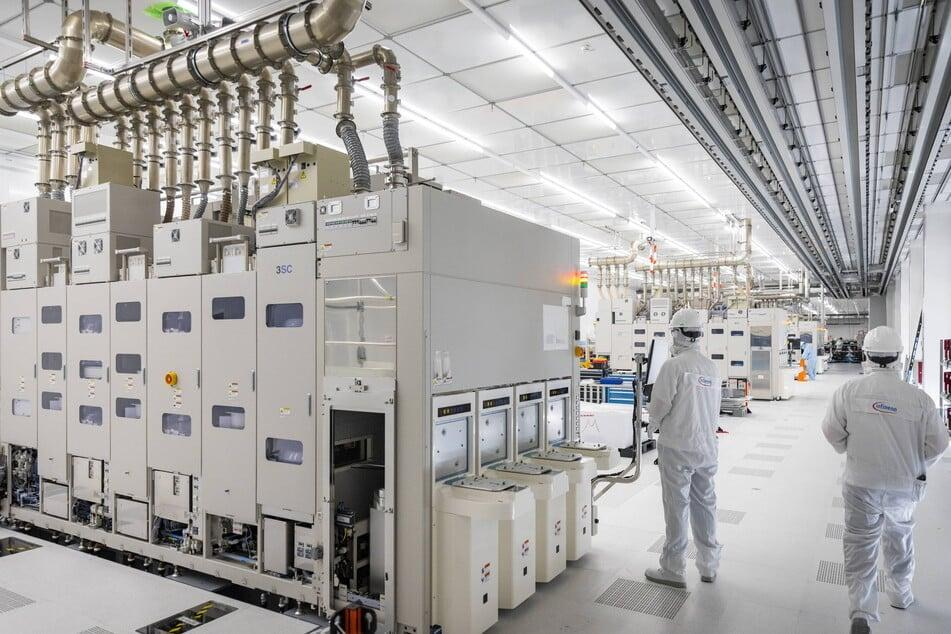
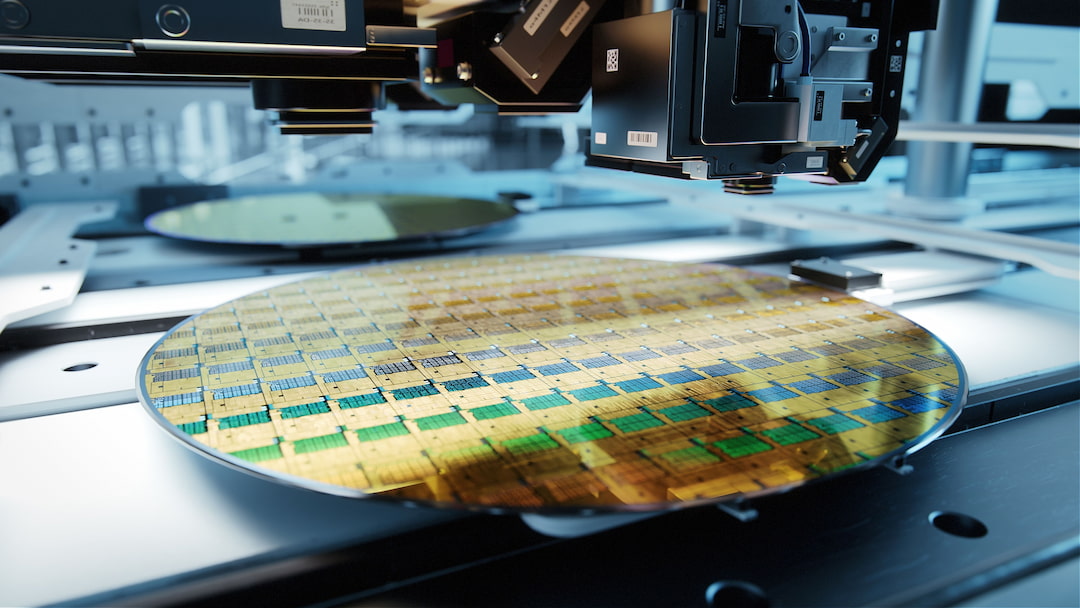
What makes the pact more than housekeeping is the company it keeps. It arrives alongside a new EU-Korea competitiveness partnership and a high-level dialogue on supply chain resilience, both aimed at the same vulnerability, namely a shared dependence on inputs that flow, ultimately, through China. Korea holds a genuine global lead in advanced semiconductors, and European officials have been candid that this is where the relationship pays. Joint research on neuromorphic computing and heterogeneous chip integration, begun in late 2024, is now folded into a wider effort to build chips efficient enough for artificial intelligence and automated driving without leaning on a single dominant supplier.

The logic is defensive as much as commercial. Europe has spent three years learning that openness without resilience is a liability, and that the cost of diversification is paid up front while the benefit arrives slowly. A digital trade agreement cannot manufacture a single wafer, but it lowers the friction for the firms that will, and it signals to investors that the regulatory ground beneath them will not shift. That predictability is itself a scarce commodity in 2026.

There are limits worth naming. Digital trade rules are only as strong as the willingness to enforce them, and the agreement leaves untouched the thornier questions of how each side polices artificial intelligence, content moderation and platform liability. Korea and the EU have built broadly compatible privacy regimes, but compatibility is not convergence, and a future dispute over algorithmic transparency or data held by state-linked firms could test the text quickly. Critics in the European Parliament will also ask whether a deal that prizes free data flows sits comfortably with the bloc’s instinct to regulate technology tightly at home.

Yet the direction is unmistakable. Brussels is assembling a lattice of like-minded partners in the Indo-Pacific, each agreement modest on its own but cumulatively a hedge against a world where supply chains are treated as instruments of coercion. Japan signed a competitiveness alliance last summer, Australia concluded a trade deal in spring, and Korea now adds the digital layer. The question for European policymakers is whether this patchwork can be made coherent before the next shock, or whether it remains a collection of bilateral comforts. For now, Seoul has given Brussels something durable, and in the current climate durability counts for a great deal.