August 10, 2026
LATEST
Europe’s Air Quality Improves but WHO Limits LoomTwelve New EU Medicines Win a Green Light from EMAFIFA Agent Rules Must Answer to Europe’s CourtsTachograph Rules Now Reach Vans Crossing Europe’s BordersNature Restoration Plans Come Due as a Hard Deadline NearsBrussels Opens a State Aid Probe Into Spain’s Renewables PayoutBrussels Extends Its Tariff Suspension on US Goods IndefinitelyFarmers Win Stronger Contract Rights Across the EU Supply ChainEurope Finally Locks In Its 348-Satellite Answer to StarlinkPlatform Work Rules Face a National Scramble Before DecemberDuty-Free Parcels Reach the End of the Line for EU ShoppersAfter Nine Years, Europe and Australia Seal a Trade PactBeijing Answers Europe’s Russia Sanctions in KindOne Year On, the EU-Japan Alliance Faces Its First TestEurope’s Chip Ambitions Still Run Through Taiwan’s FabsWhy South Korea Bet Its Research Future on Europe’s ProgrammeEurope and Japan Deepen Their Economic Alliance as Rivals CircleFive Joint Defence Projects Launch Europe’s Military ShieldElectrification Plan Aims to Make Europe First Electro ContinentHorizon Europe Budget Fight Heats Up as Ministers Push BackEurope’s Air Quality Improves but WHO Limits LoomTwelve New EU Medicines Win a Green Light from EMAFIFA Agent Rules Must Answer to Europe’s CourtsTachograph Rules Now Reach Vans Crossing Europe’s BordersNature Restoration Plans Come Due as a Hard Deadline NearsBrussels Opens a State Aid Probe Into Spain’s Renewables PayoutBrussels Extends Its Tariff Suspension on US Goods IndefinitelyFarmers Win Stronger Contract Rights Across the EU Supply ChainEurope Finally Locks In Its 348-Satellite Answer to StarlinkPlatform Work Rules Face a National Scramble Before DecemberDuty-Free Parcels Reach the End of the Line for EU ShoppersAfter Nine Years, Europe and Australia Seal a Trade PactBeijing Answers Europe’s Russia Sanctions in KindOne Year On, the EU-Japan Alliance Faces Its First TestEurope’s Chip Ambitions Still Run Through Taiwan’s FabsWhy South Korea Bet Its Research Future on Europe’s ProgrammeEurope and Japan Deepen Their Economic Alliance as Rivals CircleFive Joint Defence Projects Launch Europe’s Military ShieldElectrification Plan Aims to Make Europe First Electro ContinentHorizon Europe Budget Fight Heats Up as Ministers Push Back
August 10, 2026
LATEST
Europe’s Air Quality Improves but WHO Limits LoomTwelve New EU Medicines Win a Green Light from EMAFIFA Agent Rules Must Answer to Europe’s CourtsTachograph Rules Now Reach Vans Crossing Europe’s BordersNature Restoration Plans Come Due as a Hard Deadline NearsBrussels Opens a State Aid Probe Into Spain’s Renewables PayoutBrussels Extends Its Tariff Suspension on US Goods IndefinitelyFarmers Win Stronger Contract Rights Across the EU Supply ChainEurope Finally Locks In Its 348-Satellite Answer to StarlinkPlatform Work Rules Face a National Scramble Before DecemberDuty-Free Parcels Reach the End of the Line for EU ShoppersAfter Nine Years, Europe and Australia Seal a Trade PactBeijing Answers Europe’s Russia Sanctions in KindOne Year On, the EU-Japan Alliance Faces Its First TestEurope’s Chip Ambitions Still Run Through Taiwan’s FabsWhy South Korea Bet Its Research Future on Europe’s ProgrammeEurope and Japan Deepen Their Economic Alliance as Rivals CircleFive Joint Defence Projects Launch Europe’s Military ShieldElectrification Plan Aims to Make Europe First Electro ContinentHorizon Europe Budget Fight Heats Up as Ministers Push BackEurope’s Air Quality Improves but WHO Limits LoomTwelve New EU Medicines Win a Green Light from EMAFIFA Agent Rules Must Answer to Europe’s CourtsTachograph Rules Now Reach Vans Crossing Europe’s BordersNature Restoration Plans Come Due as a Hard Deadline NearsBrussels Opens a State Aid Probe Into Spain’s Renewables PayoutBrussels Extends Its Tariff Suspension on US Goods IndefinitelyFarmers Win Stronger Contract Rights Across the EU Supply ChainEurope Finally Locks In Its 348-Satellite Answer to StarlinkPlatform Work Rules Face a National Scramble Before DecemberDuty-Free Parcels Reach the End of the Line for EU ShoppersAfter Nine Years, Europe and Australia Seal a Trade PactBeijing Answers Europe’s Russia Sanctions in KindOne Year On, the EU-Japan Alliance Faces Its First TestEurope’s Chip Ambitions Still Run Through Taiwan’s FabsWhy South Korea Bet Its Research Future on Europe’s ProgrammeEurope and Japan Deepen Their Economic Alliance as Rivals CircleFive Joint Defence Projects Launch Europe’s Military ShieldElectrification Plan Aims to Make Europe First Electro ContinentHorizon Europe Budget Fight Heats Up as Ministers Push Back

Sudan’s Catastrophe Outpaces Every Euro Europe Sends

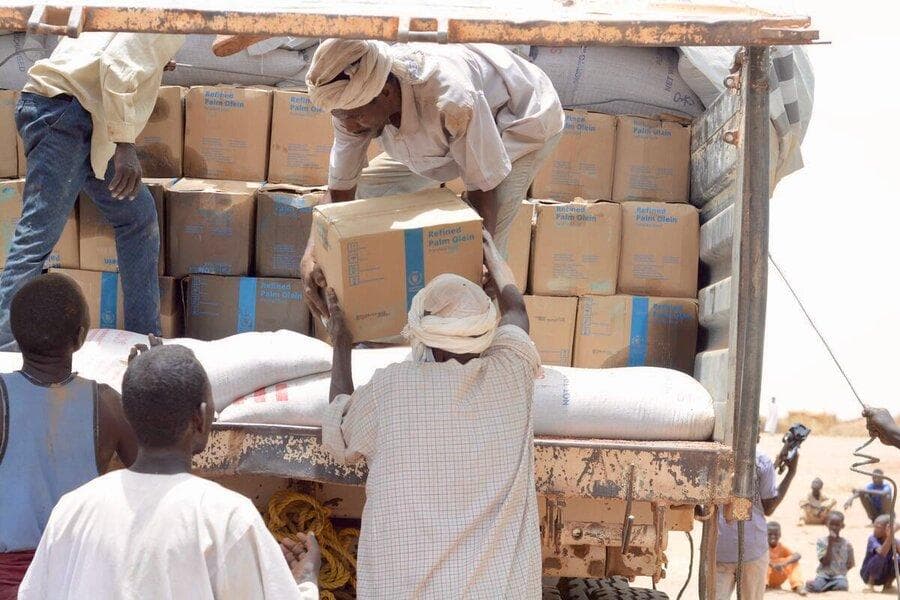
Brussels: The numbers attached to Sudan have become almost too large to absorb. The United Nations counts more than 30 million people in need of humanitarian assistance, close to 25 million facing acute hunger, and some two million at risk of famine, in what aid agencies now describe without hyperbole as the worst humanitarian crisis on earth. Against that backdrop, the European Union and its member states pledged more than 812 million euros at an April 2026 conference, of which the Commission’s own share was around 361 million. It is a serious sum. It is also, set beside the scale of the catastrophe, conspicuously not enough.

This is the uncomfortable arithmetic of European humanitarian policy in 2026. The EU remains one of the largest donors to Sudan, with its total contribution inside the country and across neighbouring states reaching roughly 276 million euros for this year alone. Yet the global response plan is barely half funded, and the gap is widening as donors elsewhere, most visibly Washington, retreat from foreign aid. Brussels finds itself trying to hold a collapsing system together with resources that were never designed to cover other governments’ withdrawals.

The war itself offers no relief. Since fighting between the Sudanese Armed Forces and the paramilitary Rapid Support Forces erupted in April 2023, the country has been carved into rival fiefdoms. The RSF’s capture of El Fasher in October 2025, after an eighteen-month siege, was followed by reports of mass killings and sexual violence that the EU’s own statements at the UN Human Rights Council have condemned. Now the same pattern threatens El-Obeid, where drone strikes have put hundreds of thousands of civilians at immediate risk. Each new front displaces more people and pushes more aid out of reach.

Money is only part of Europe’s problem. Humanitarian access inside Sudan is controlled by the very forces accused of starving civilians, and no amount of European funding guarantees that food reaches the camps where famine has been confirmed. The EU has leverage it has been reluctant to use fully: sanctions on commanders and their financiers, pressure on the Gulf and other states alleged to arm the combatants, and conditions on the post-war reconstruction both sides crave. Deploying that leverage means treating Sudan as a strategic priority rather than a charitable obligation.

There is also a credibility cost to inaction that Brussels rarely acknowledges aloud. African governments and publics have noticed the contrast between the speed and scale of European support for Ukraine and the slower, thinner response to a war that has uprooted more people than any conflict since the Second World War. That perception shapes how the Union is received across a continent it claims as a partner.

The pledges made in April were necessary and welcome. But pledges are not delivery, and delivery is not the same as protection. For Europe, the Sudan crisis is becoming a test not of generosity, which it has shown, but of seriousness, which is measured in whether the money arrives, the access opens, and the pressure is finally applied where it counts.