August 7, 2026
LATEST
New Zealand Trade With Europe Hits a Record in Its First YearEurope Locks Chinese Medical Devices Out of Its Public TendersHow Far Can Europe and Japan Take Their New Security Pact NowSeoul’s Gamble on Europe’s Research Money Is Starting to Pay OffEurope Freezes Its Retaliatory Tariffs on the US IndefinitelyAir Passenger Rights Get Their First Big Rewrite in 20 YearsFive Joint Defence Projects Win Brussels Backing and Shared CashTobacco Tax Overhaul Stalls as Governments Block UnanimityCritical Medicines Act Heads for Final Adoption This AutumnMoldova Accession Reaches Its Foreign-Policy ChapterMercosur Tariffs Fall as Europe’s Farmers Watch the GaugesWhy Europe’s Digital Fairness Act Worries Online RetailersErasmus+ Faces a Budget Fight Before Its 2028 RelaunchMedia Freedom Rules Turn One as Enforcement LagsPlatform Work Rules Push Member States Toward a December ReckoningSingle Ticket Plan Would Let One Booking Cover Europe by RailHungary Races an August Deadline to Unlock Its Recovery FundsCapitals Race a September Deadline to Restore NatureEuro-Zone Inflation Nudges Back Up as Energy Bills ClimbRed Bull Case Tests a New Frontier in EU AntitrustNew Zealand Trade With Europe Hits a Record in Its First YearEurope Locks Chinese Medical Devices Out of Its Public TendersHow Far Can Europe and Japan Take Their New Security Pact NowSeoul’s Gamble on Europe’s Research Money Is Starting to Pay OffEurope Freezes Its Retaliatory Tariffs on the US IndefinitelyAir Passenger Rights Get Their First Big Rewrite in 20 YearsFive Joint Defence Projects Win Brussels Backing and Shared CashTobacco Tax Overhaul Stalls as Governments Block UnanimityCritical Medicines Act Heads for Final Adoption This AutumnMoldova Accession Reaches Its Foreign-Policy ChapterMercosur Tariffs Fall as Europe’s Farmers Watch the GaugesWhy Europe’s Digital Fairness Act Worries Online RetailersErasmus+ Faces a Budget Fight Before Its 2028 RelaunchMedia Freedom Rules Turn One as Enforcement LagsPlatform Work Rules Push Member States Toward a December ReckoningSingle Ticket Plan Would Let One Booking Cover Europe by RailHungary Races an August Deadline to Unlock Its Recovery FundsCapitals Race a September Deadline to Restore NatureEuro-Zone Inflation Nudges Back Up as Energy Bills ClimbRed Bull Case Tests a New Frontier in EU Antitrust
August 7, 2026
LATEST
New Zealand Trade With Europe Hits a Record in Its First YearEurope Locks Chinese Medical Devices Out of Its Public TendersHow Far Can Europe and Japan Take Their New Security Pact NowSeoul’s Gamble on Europe’s Research Money Is Starting to Pay OffEurope Freezes Its Retaliatory Tariffs on the US IndefinitelyAir Passenger Rights Get Their First Big Rewrite in 20 YearsFive Joint Defence Projects Win Brussels Backing and Shared CashTobacco Tax Overhaul Stalls as Governments Block UnanimityCritical Medicines Act Heads for Final Adoption This AutumnMoldova Accession Reaches Its Foreign-Policy ChapterMercosur Tariffs Fall as Europe’s Farmers Watch the GaugesWhy Europe’s Digital Fairness Act Worries Online RetailersErasmus+ Faces a Budget Fight Before Its 2028 RelaunchMedia Freedom Rules Turn One as Enforcement LagsPlatform Work Rules Push Member States Toward a December ReckoningSingle Ticket Plan Would Let One Booking Cover Europe by RailHungary Races an August Deadline to Unlock Its Recovery FundsCapitals Race a September Deadline to Restore NatureEuro-Zone Inflation Nudges Back Up as Energy Bills ClimbRed Bull Case Tests a New Frontier in EU AntitrustNew Zealand Trade With Europe Hits a Record in Its First YearEurope Locks Chinese Medical Devices Out of Its Public TendersHow Far Can Europe and Japan Take Their New Security Pact NowSeoul’s Gamble on Europe’s Research Money Is Starting to Pay OffEurope Freezes Its Retaliatory Tariffs on the US IndefinitelyAir Passenger Rights Get Their First Big Rewrite in 20 YearsFive Joint Defence Projects Win Brussels Backing and Shared CashTobacco Tax Overhaul Stalls as Governments Block UnanimityCritical Medicines Act Heads for Final Adoption This AutumnMoldova Accession Reaches Its Foreign-Policy ChapterMercosur Tariffs Fall as Europe’s Farmers Watch the GaugesWhy Europe’s Digital Fairness Act Worries Online RetailersErasmus+ Faces a Budget Fight Before Its 2028 RelaunchMedia Freedom Rules Turn One as Enforcement LagsPlatform Work Rules Push Member States Toward a December ReckoningSingle Ticket Plan Would Let One Booking Cover Europe by RailHungary Races an August Deadline to Unlock Its Recovery FundsCapitals Race a September Deadline to Restore NatureEuro-Zone Inflation Nudges Back Up as Energy Bills ClimbRed Bull Case Tests a New Frontier in EU Antitrust

Firefighting Fleet Stretches Thin as Summer Blazes Spread

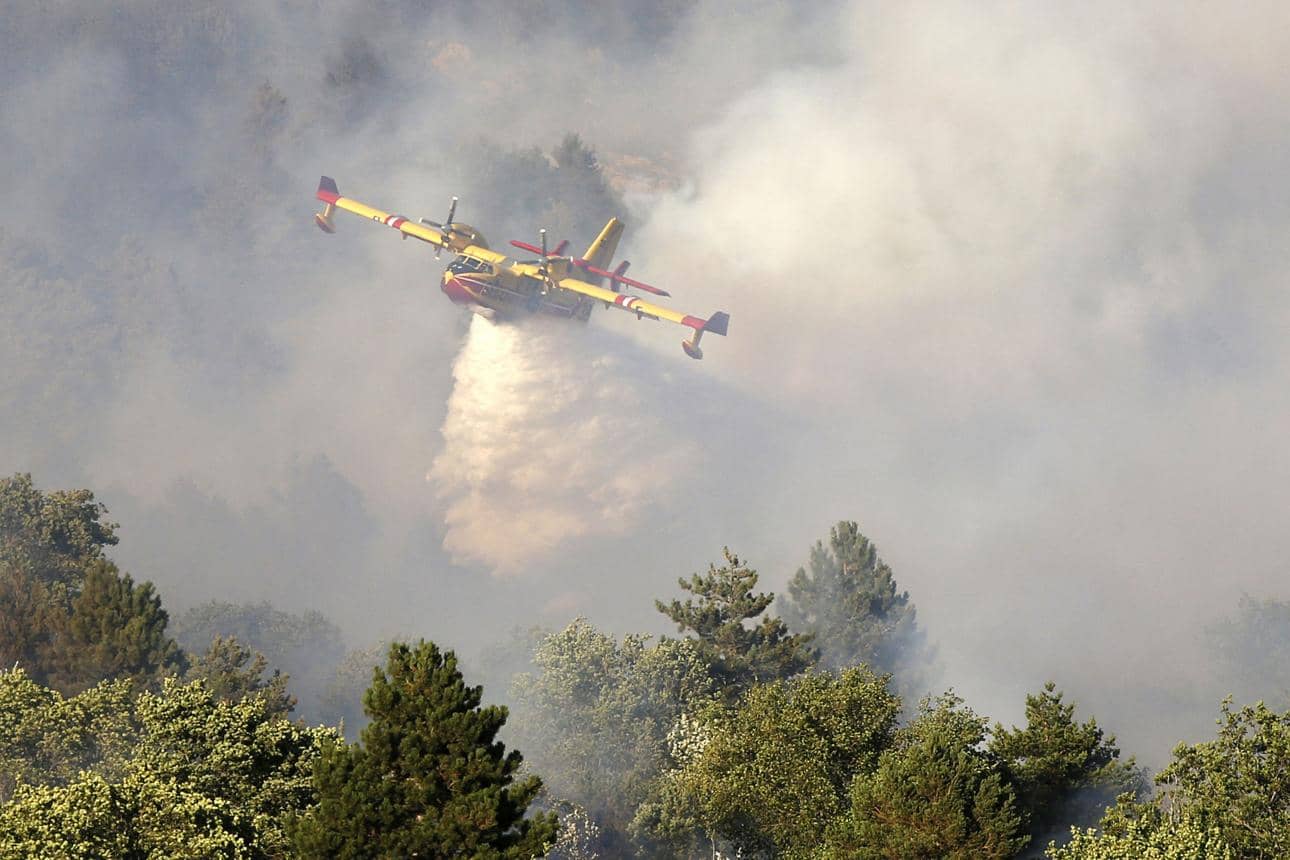
Nîmes: As flames tore through swathes of southern Europe this summer, the bloc’s shared emergency machinery swung into motion, ferrying aircraft and crews across borders to shore up national forces buckling under a punishing wildfire season. The response tested a system built precisely for summers like this.

France triggered the European Union’s Civil Protection Mechanism in early July as fires outran its own resources. The call brought firefighting planes and helicopters from countries far from the blaze, a solidarity arrangement that lets any member state ask for help once its national fleet is stretched past its limit.

The mechanics are less abstract than they sound. When a country asks for aid, a coordination centre in Brussels canvasses the continent for spare aircraft, helicopters and crews, then helps pay to move them. In late July that meant Air Tractor planes from Portugal, a water-scooping fleet from Sweden, Canadair aircraft from Croatia and Black Hawk helicopters from Slovakia and Czechia, all converging on French airfields within days.

Underpinning the effort is rescEU, a reserve fleet the Union keeps on standby for exactly these moments. This season the bloc held a transitional fleet of 22 aeroplanes and five helicopters ready to deploy, positioned so that no single national fire service has to face a bad year alone. The reserve is meant to catch the overflow when several countries burn at once.

The Union is also spending to make the safety net permanent. Roughly 600 million euros is going toward a standing fleet of a dozen new firefighting aircraft, stationed across France, Spain, Portugal, Italy, Greece and Croatia. The aim is to stop leaning on ageing planes borrowed at the last minute and instead own dedicated aircraft that answer to the shared mechanism.

Prevention runs alongside the firefighting. This year 777 firefighters from fourteen countries were pre-positioned in high-risk regions before the peak, a bet that stationing crews ahead of the flames beats scrambling once a fire takes hold. The logic mirrors how hospitals staff up before a heatwave rather than after the ambulances start arriving.

Officials are candid that the pressure keeps rising. Hotter, drier summers lengthen the danger window and push fires into regions that rarely burned before, straining a fleet that was never sized for simultaneous emergencies across the map. Each severe season reopens the argument over whether the shared reserve is large enough.

For now the borrowed planes and pre-positioned crews are holding the line, and the cross-border deployments show the arrangement working as designed. The Commission detailed its latest deployments in an operational update. Whether the system can keep pace with a warming climate is the question every summer now asks a little more sharply.