August 22, 2026
LATEST
Can an Indonesia Trade Deal Survive Two Years of RatifyingCross-Border Data Orders Went Live Before the Plumbing DidPlatform Work Rules Take Effect in December and Few Are ReadyCan Europe’s Firefighting Fleet Keep Pace With EU WildfiresThe AI Act Deadline Passed on 2 August and Nothing BitWhy Construction Keeps Shrinking While Confidence ImprovesAccession Talks Stall Again and September 1 Is the TestBrussels Applied a Trade Deal It Cannot Yet RatifyAfrica’s Power Market Now Needs Money More Than BlueprintsLong-Term Budget Talks Enter Autumn Without a Council LineForeign Subsidies Enforcement Now Turns on a Dublin RaidWho Writes Europe’s Telecom Rules Once Copper DisappearsDisability Cards Exist on Paper and Nowhere Else Until 2028Losing Visa-Free Travel Now Takes a Thirty Percent SwingTwenty Flagship Actions Will Test Whether the Culture Compass WorksEurope’s Quality Jobs Act Now Rests on What Unions Do by SeptemberDoes a Three Euro Parcel Duty Change Anything About Cheap ImportsEurope’s Satellite Constellation Grew by 66 Before a Single LaunchCan Europe’s Defence Industry Absorb 1.5 Billion by FebruaryJapan Joined a Research Programme That Has Two Years Left to RunCan an Indonesia Trade Deal Survive Two Years of RatifyingCross-Border Data Orders Went Live Before the Plumbing DidPlatform Work Rules Take Effect in December and Few Are ReadyCan Europe’s Firefighting Fleet Keep Pace With EU WildfiresThe AI Act Deadline Passed on 2 August and Nothing BitWhy Construction Keeps Shrinking While Confidence ImprovesAccession Talks Stall Again and September 1 Is the TestBrussels Applied a Trade Deal It Cannot Yet RatifyAfrica’s Power Market Now Needs Money More Than BlueprintsLong-Term Budget Talks Enter Autumn Without a Council LineForeign Subsidies Enforcement Now Turns on a Dublin RaidWho Writes Europe’s Telecom Rules Once Copper DisappearsDisability Cards Exist on Paper and Nowhere Else Until 2028Losing Visa-Free Travel Now Takes a Thirty Percent SwingTwenty Flagship Actions Will Test Whether the Culture Compass WorksEurope’s Quality Jobs Act Now Rests on What Unions Do by SeptemberDoes a Three Euro Parcel Duty Change Anything About Cheap ImportsEurope’s Satellite Constellation Grew by 66 Before a Single LaunchCan Europe’s Defence Industry Absorb 1.5 Billion by FebruaryJapan Joined a Research Programme That Has Two Years Left to Run
August 22, 2026
LATEST
Can an Indonesia Trade Deal Survive Two Years of RatifyingCross-Border Data Orders Went Live Before the Plumbing DidPlatform Work Rules Take Effect in December and Few Are ReadyCan Europe’s Firefighting Fleet Keep Pace With EU WildfiresThe AI Act Deadline Passed on 2 August and Nothing BitWhy Construction Keeps Shrinking While Confidence ImprovesAccession Talks Stall Again and September 1 Is the TestBrussels Applied a Trade Deal It Cannot Yet RatifyAfrica’s Power Market Now Needs Money More Than BlueprintsLong-Term Budget Talks Enter Autumn Without a Council LineForeign Subsidies Enforcement Now Turns on a Dublin RaidWho Writes Europe’s Telecom Rules Once Copper DisappearsDisability Cards Exist on Paper and Nowhere Else Until 2028Losing Visa-Free Travel Now Takes a Thirty Percent SwingTwenty Flagship Actions Will Test Whether the Culture Compass WorksEurope’s Quality Jobs Act Now Rests on What Unions Do by SeptemberDoes a Three Euro Parcel Duty Change Anything About Cheap ImportsEurope’s Satellite Constellation Grew by 66 Before a Single LaunchCan Europe’s Defence Industry Absorb 1.5 Billion by FebruaryJapan Joined a Research Programme That Has Two Years Left to RunCan an Indonesia Trade Deal Survive Two Years of RatifyingCross-Border Data Orders Went Live Before the Plumbing DidPlatform Work Rules Take Effect in December and Few Are ReadyCan Europe’s Firefighting Fleet Keep Pace With EU WildfiresThe AI Act Deadline Passed on 2 August and Nothing BitWhy Construction Keeps Shrinking While Confidence ImprovesAccession Talks Stall Again and September 1 Is the TestBrussels Applied a Trade Deal It Cannot Yet RatifyAfrica’s Power Market Now Needs Money More Than BlueprintsLong-Term Budget Talks Enter Autumn Without a Council LineForeign Subsidies Enforcement Now Turns on a Dublin RaidWho Writes Europe’s Telecom Rules Once Copper DisappearsDisability Cards Exist on Paper and Nowhere Else Until 2028Losing Visa-Free Travel Now Takes a Thirty Percent SwingTwenty Flagship Actions Will Test Whether the Culture Compass WorksEurope’s Quality Jobs Act Now Rests on What Unions Do by SeptemberDoes a Three Euro Parcel Duty Change Anything About Cheap ImportsEurope’s Satellite Constellation Grew by 66 Before a Single LaunchCan Europe’s Defence Industry Absorb 1.5 Billion by FebruaryJapan Joined a Research Programme That Has Two Years Left to Run

Can Europe’s Firefighting Fleet Keep Pace With EU Wildfires

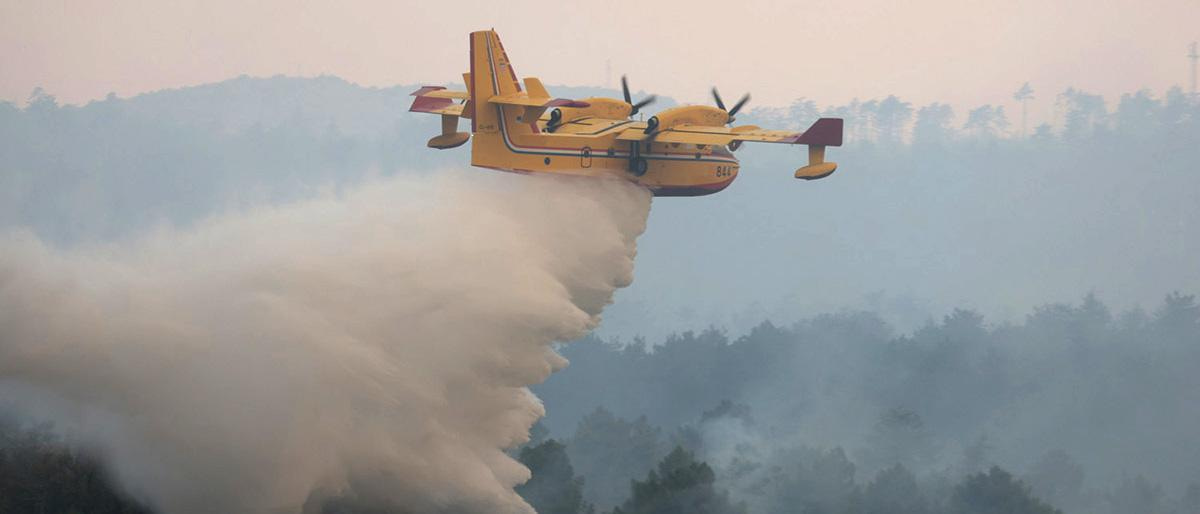
Brussels: The European Commission dispatched rescEU firefighting aircraft to Belgium and French ground crews to Spain over the weekend of 15 August 2026, after both governments activated the EU civil protection mechanism, and the deployments confirmed that EU wildfires have stopped being a Mediterranean problem. Sweden sent two planes to the Hautes Fagnes, where more than 3,000 hectares burned, while the Netherlands, Norway and Germany each contributed two helicopters.

In Aragón, 104 French ground firefighters and 36 vehicles joined Spanish crews facing close to 16,000 hectares of active fire. The Copernicus Emergency Management Service ran rapid satellite mapping for Belgium, Spain, Greece, Germany, Montenegro, Serbia, Albania, France and Italy at the same time.

Hadja Lahbib, Commissioner for Preparedness and Crisis Management, framed the weekend as proof the system works.

No country should face wildfires alone. Through our civil protection mechanism, Europe is moving aircraft, helicopters and firefighters quickly to where they are needed most. This weekend in Belgium and Spain, European solidarity was on the ground again.

The numbers behind that statement are less reassuring. By 5 August 2026 the burnt area across the Union had reached 505,683 hectares, against 379,392 hectares at the same point in 2025, according to the Copernicus European Forest Fire Information System run by the Joint Research Centre. Last year finished as the worst season on record at 1,034,552 hectares. By the end of July, burnt area already stood at roughly 2.5 times the usual European level.

Drought is doing the work. The Joint Research Centre reported on 12 August that half the EU and UK territory sits under some level of drought, with 9% at alert level, and that the Loire, Po, Rhine and Danube all hit record low water. Forecasters expect drier than average conditions into September.

The Union entered this season better equipped than any before it. The 2026 rescEU fleet and the European Civil Protection Pool hold:

  • 22 firefighting aeroplanes, comprising 14 amphibious aircraft and 8 light aircraft.
  • 5 helicopters stationed across 12 countries.
  • 15 ground firefighting teams, plus 5 teams equipped with vehicles and one advisory and assessment team.

That pool has already been drawn down repeatedly. Portugal activated the mechanism in early July, France and Spain followed later that month, and Copernicus recorded 30 wildfire mapping activations since the start of June across eleven countries including Tunisia and Greenland. Five remained open in mid-August.

Prevention policy is catching up more slowly than the aircraft. The Commission adopted a communication on integrated wildfire risk management in March 2026, covering prevention, preparedness, response and recovery. Ministers followed on 29 June with a Council recommendation on integrated wildfire risk management. Neither instrument binds anyone. Land management, forest clearance and building codes stay in national hands, and those are the levers that decide how much fuel sits on the ground when the wind turns.

The geography of the problem has changed faster than the governance. Significant fires this year hit the United Kingdom, northern France, Germany and Belgium, all outside the traditional southern hotspots. The Emergency Response Coordination Centre now coordinates requests from countries that historically supplied help rather than asked for it, which thins the pool exactly when demand peaks. Seven mechanism activations inside Europe since January, with September still ahead, suggest the fleet will finish this season closer to its limit than any Commissioner would like to say aloud.