
Surabaya: The palm oil, footwear and electronics shipped from East Java to European buyers still pay duties that both governments agreed to remove. Jakarta now targets October for signing the Comprehensive Economic Partnership Agreement with the European Union. Even on that timetable, Indonesia trade with Europe will run under existing tariffs well into 2028, because signature and entry into force are separated by a ratification process that nobody controls.
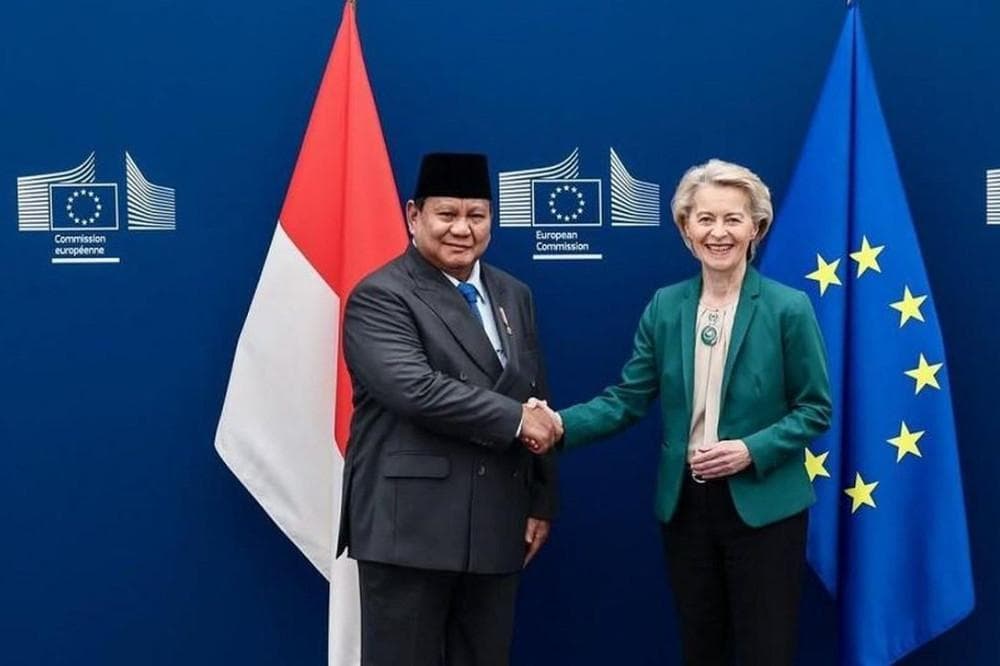
The negotiation itself took nine years and closed with a political agreement between Ursula von der Leyen and Prabowo Subianto on 13 July 2025. The Commission then presented the trade agreement and a separate investment protection agreement to the Council on 29 June. Indonesian officials have since said they want ministers in Brussels or Jakarta by late October, with senior EU visits pencilled for the turn of the month.
Splitting the package into two instruments was deliberate and consequential. The trade agreement falls largely within exclusive European Union competence, so Council approval and European Parliament consent suffice. The investment protection agreement covers areas member states share, which means every national parliament must ratify it, and several regional assemblies as well. The Canada agreement has waited nine years for that second signature and still lacks it in some capitals.
Indonesian exporters should therefore watch the first instrument only. It removes duties on 98.5 percent of tariff lines and simplifies customs procedures on both sides. Palm oil and its derivatives dominate the political argument, but the volume gain sits elsewhere, in textiles, footwear, processed fish and vehicle components where European duties currently run between four and twelve percent.
Deforestation rules complicate the celebration. Europe’s regulation on deforestation free products applies to palm oil regardless of what any trade agreement says, and Indonesian smallholders supply roughly forty percent of national output through fragmented land titles that make traceability expensive. A tariff cut that arrives alongside a compliance requirement can leave the smallest producers worse off than before. Jakarta has raised this in every round and Brussels has offered technical assistance rather than exemption.
The strategic logic still holds for both sides. Indonesia is the largest economy in Southeast Asia and Europe currently ranks well below China, Japan and the United States among its trading partners. Europe wants nickel, and Indonesian export restrictions on unprocessed ore have already produced a World Trade Organization dispute that the agreement does not settle. Both governments decided to sign anyway and litigate separately, which is unusual and probably sensible.
Parliament is the real gate. The trade committee will examine labour chapter enforcement, the deforestation interaction and the nickel dispute, and rapporteurs on Indonesia files have historically pressed hard on all three. Consent votes on Asian agreements have passed with comfortable majorities since 2019, but the Singapore and Vietnam files each took more than a year from signature.
So the October date matters less than it appears. Signature starts a clock rather than stopping one. The practical question for exporters in this port city is whether the Council schedules the decision before the autumn recess, because a slip there pushes signature into 2027 and everything downstream with it.


