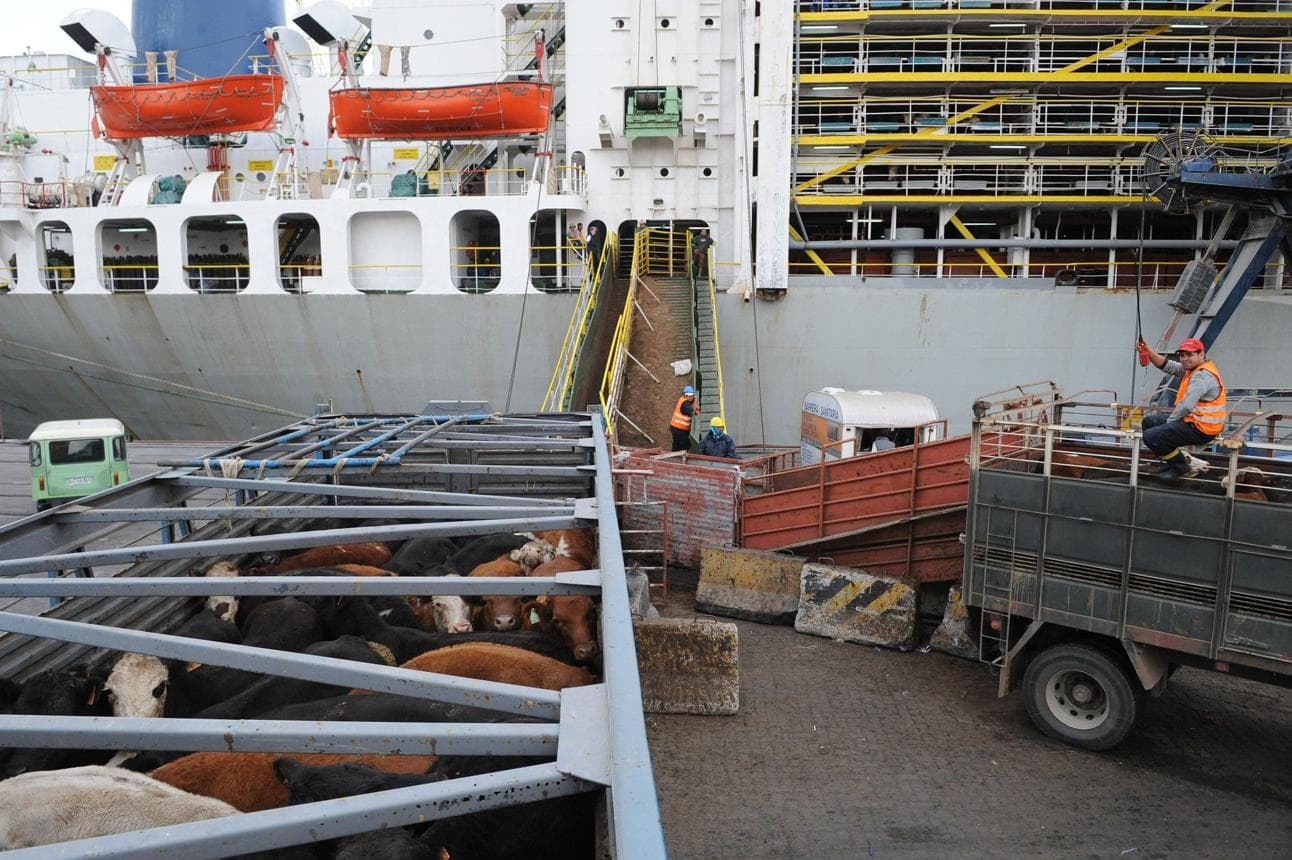
Montevideo: Uruguayan exporters have been shipping beef into Europe under preferential terms since May, and none of them can tell you whether the legal instrument granting those terms will survive the year. That is the strange condition the European Union has created for itself in South America. The interim trade agreement with Mercosur entered provisional application on 1 May 2026, cutting tariffs from day one, while the European Parliament’s own ratification clock sits frozen in Luxembourg.
Parliament put it there. On 21 January 2026 it voted, by 334 to 324 with 11 abstentions, to ask the Court of Justice whether the Mercosur package is compatible with the Treaties. Nine votes decided it. The resolution does not attack the deal’s economics, its beef quotas or its deforestation safeguards. It attacks the plumbing, asking whether the Commission chose the right legal basis when it split the association agreement into a trade pillar the Union can conclude alone and a political pillar requiring every national parliament. Advisory opinions of this kind rarely take less than a year, so the freeze runs roughly sixteen to eighteen months.
The Commission did not wait. On 27 February it confirmed it would proceed with provisional application regardless, and it had the Council behind it. The reasoning is defensible on its own terms. Provisional application of trade agreements is standard practice, the Council had already approved signature on 12 January, and Mercosur had finished its side of the work. Brazil ratified on 25 February. Paraguay, the last of the four, completed the process on 17 March. Asking four South American legislatures to sit on a completed treaty while Europe litigates its own procedure would have been a diplomatic insult few in Brasília or Asunción would have absorbed quietly.
Still, the result is a Union applying a trade regime that its directly elected chamber has formally asked a court to examine. That is not a technicality. If the Court finds the split improper, the tariff schedules already running would rest on an instrument the judges have questioned, and the Commission would face an unpicking exercise with no clean precedent. Officials privately expect the Court to bless the architecture, since the reasoning behind the split follows the logic the same Court set out in its Singapore opinion. Expectation is not certainty, and importers price uncertainty.
The deeper problem is what this episode advertises. The Union spent twenty-five years negotiating with Mercosur and closed the text in December 2024. It then spent another year fighting over who signs what. Every partner watching, and there are many at various stages of the queue, now understands that reaching agreement with the European Commission is only the opening act. The second act involves a Council vote, a Parliament that can summon the Court, twenty-seven national ratifications for anything touching investment or political dialogue, and in several member states a regional assembly with a veto of its own.
Trade partners have started to adapt by demanding the trade-only route from the beginning, which is precisely what the Commission now offers. That solves the speed problem and creates a legitimacy one. Splitting agreements to bypass national parliaments is efficient, and it hands ammunition to every politician who argues that Brussels routes around democratic consent. Parliament’s referral is best read as a shot fired in that argument rather than as an objection to South American agriculture.
The Court will answer sometime in 2027. Until then, the Union will run a trade policy in South America that works commercially and remains contested constitutionally. Officials call that manageable. Uruguayan beef exporters, and the European farmers who compete with them, might reasonably call it something else. The Council’s own explainer describes the sequence in careful, procedural prose. It does not explain why a deal a quarter of a century in the making needed one more fight before it could stand up straight.