August 22, 2026
LATEST
Can an Indonesia Trade Deal Survive Two Years of RatifyingCross-Border Data Orders Went Live Before the Plumbing DidPlatform Work Rules Take Effect in December and Few Are ReadyCan Europe’s Firefighting Fleet Keep Pace With EU WildfiresThe AI Act Deadline Passed on 2 August and Nothing BitWhy Construction Keeps Shrinking While Confidence ImprovesAccession Talks Stall Again and September 1 Is the TestBrussels Applied a Trade Deal It Cannot Yet RatifyAfrica’s Power Market Now Needs Money More Than BlueprintsLong-Term Budget Talks Enter Autumn Without a Council LineForeign Subsidies Enforcement Now Turns on a Dublin RaidWho Writes Europe’s Telecom Rules Once Copper DisappearsDisability Cards Exist on Paper and Nowhere Else Until 2028Losing Visa-Free Travel Now Takes a Thirty Percent SwingTwenty Flagship Actions Will Test Whether the Culture Compass WorksEurope’s Quality Jobs Act Now Rests on What Unions Do by SeptemberDoes a Three Euro Parcel Duty Change Anything About Cheap ImportsEurope’s Satellite Constellation Grew by 66 Before a Single LaunchCan Europe’s Defence Industry Absorb 1.5 Billion by FebruaryJapan Joined a Research Programme That Has Two Years Left to RunCan an Indonesia Trade Deal Survive Two Years of RatifyingCross-Border Data Orders Went Live Before the Plumbing DidPlatform Work Rules Take Effect in December and Few Are ReadyCan Europe’s Firefighting Fleet Keep Pace With EU WildfiresThe AI Act Deadline Passed on 2 August and Nothing BitWhy Construction Keeps Shrinking While Confidence ImprovesAccession Talks Stall Again and September 1 Is the TestBrussels Applied a Trade Deal It Cannot Yet RatifyAfrica’s Power Market Now Needs Money More Than BlueprintsLong-Term Budget Talks Enter Autumn Without a Council LineForeign Subsidies Enforcement Now Turns on a Dublin RaidWho Writes Europe’s Telecom Rules Once Copper DisappearsDisability Cards Exist on Paper and Nowhere Else Until 2028Losing Visa-Free Travel Now Takes a Thirty Percent SwingTwenty Flagship Actions Will Test Whether the Culture Compass WorksEurope’s Quality Jobs Act Now Rests on What Unions Do by SeptemberDoes a Three Euro Parcel Duty Change Anything About Cheap ImportsEurope’s Satellite Constellation Grew by 66 Before a Single LaunchCan Europe’s Defence Industry Absorb 1.5 Billion by FebruaryJapan Joined a Research Programme That Has Two Years Left to Run
August 22, 2026
LATEST
Can an Indonesia Trade Deal Survive Two Years of RatifyingCross-Border Data Orders Went Live Before the Plumbing DidPlatform Work Rules Take Effect in December and Few Are ReadyCan Europe’s Firefighting Fleet Keep Pace With EU WildfiresThe AI Act Deadline Passed on 2 August and Nothing BitWhy Construction Keeps Shrinking While Confidence ImprovesAccession Talks Stall Again and September 1 Is the TestBrussels Applied a Trade Deal It Cannot Yet RatifyAfrica’s Power Market Now Needs Money More Than BlueprintsLong-Term Budget Talks Enter Autumn Without a Council LineForeign Subsidies Enforcement Now Turns on a Dublin RaidWho Writes Europe’s Telecom Rules Once Copper DisappearsDisability Cards Exist on Paper and Nowhere Else Until 2028Losing Visa-Free Travel Now Takes a Thirty Percent SwingTwenty Flagship Actions Will Test Whether the Culture Compass WorksEurope’s Quality Jobs Act Now Rests on What Unions Do by SeptemberDoes a Three Euro Parcel Duty Change Anything About Cheap ImportsEurope’s Satellite Constellation Grew by 66 Before a Single LaunchCan Europe’s Defence Industry Absorb 1.5 Billion by FebruaryJapan Joined a Research Programme That Has Two Years Left to RunCan an Indonesia Trade Deal Survive Two Years of RatifyingCross-Border Data Orders Went Live Before the Plumbing DidPlatform Work Rules Take Effect in December and Few Are ReadyCan Europe’s Firefighting Fleet Keep Pace With EU WildfiresThe AI Act Deadline Passed on 2 August and Nothing BitWhy Construction Keeps Shrinking While Confidence ImprovesAccession Talks Stall Again and September 1 Is the TestBrussels Applied a Trade Deal It Cannot Yet RatifyAfrica’s Power Market Now Needs Money More Than BlueprintsLong-Term Budget Talks Enter Autumn Without a Council LineForeign Subsidies Enforcement Now Turns on a Dublin RaidWho Writes Europe’s Telecom Rules Once Copper DisappearsDisability Cards Exist on Paper and Nowhere Else Until 2028Losing Visa-Free Travel Now Takes a Thirty Percent SwingTwenty Flagship Actions Will Test Whether the Culture Compass WorksEurope’s Quality Jobs Act Now Rests on What Unions Do by SeptemberDoes a Three Euro Parcel Duty Change Anything About Cheap ImportsEurope’s Satellite Constellation Grew by 66 Before a Single LaunchCan Europe’s Defence Industry Absorb 1.5 Billion by FebruaryJapan Joined a Research Programme That Has Two Years Left to Run

The AI Act Deadline Passed on 2 August and Nothing Bit

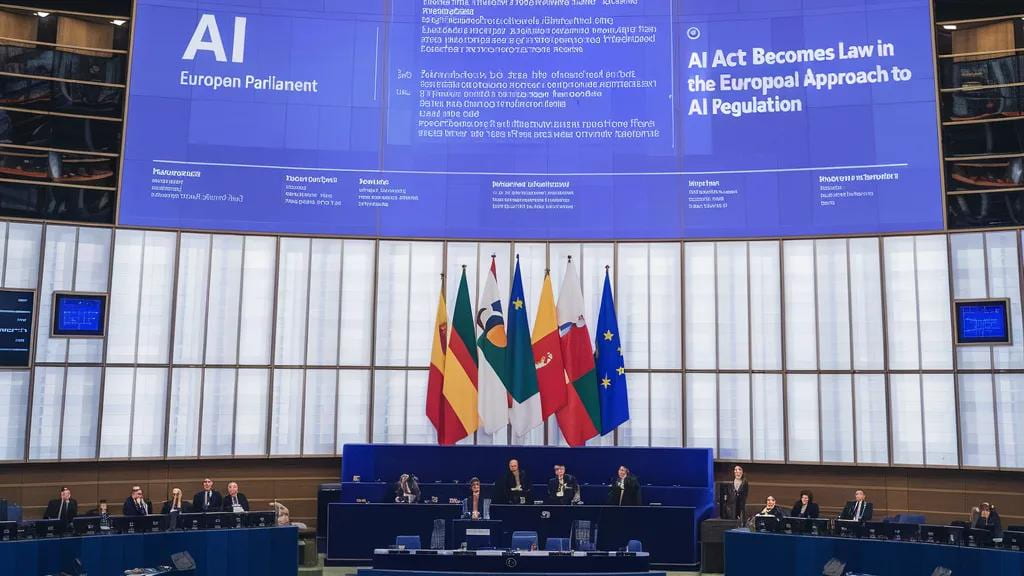
Brussels: The AI Act reached its most consequential compliance date on 2 August 2026 and almost nothing happened, because the European Parliament and the Council had already voted three weeks earlier to postpone the obligations that were supposed to bite. Regulation (EU) 2026/1744, the Digital Omnibus on AI, appeared in the Official Journal on 24 July and entered into force on 27 July.

The regulation pushes the high-risk rules back by fixed dates rather than by any performance trigger. Stand-alone high-risk systems listed in Annex III, which cover recruitment, credit scoring, education and essential services, now face 2 December 2027 instead of 2 August 2026. AI embedded in regulated products under Annex I moves from 2 August 2027 to 2 August 2028.

Lawmakers gave two reasons. National authorities were not designated in time, and the harmonised standards that companies need in order to demonstrate conformity are not finished. Providers cannot comply with a rulebook whose technical annexes do not exist yet.

Henna Virkkunen, Executive Vice-President for Tech Sovereignty, Security and Democracy, defended the package when negotiators struck the deal in May.

Our businesses and citizens want two things from AI rules. They want to be able to innovate and feel safe.

Civil society groups read the delay as capitulation. An open letter coordinated by consumer and digital rights organisations warned that reopening the AI Act barely a year after adoption would invite every future deadline to be renegotiated. The Commission counters that the omnibus tightened the law where it mattered.

Two new prohibitions enter Article 5 on 2 December 2026:

  • Generating or distributing non-consensual intimate imagery using AI systems.
  • Generating AI child sexual abuse material.

Those bans carry the AI Act’s heaviest penalty tier, and they arrive on schedule. So do the transparency duties for general-purpose models, which the Commission began enforcing on 2 August 2026 as planned. The delay applies to the high-risk classification regime, not to the whole statute, a distinction that has been lost in much of the commentary since July.

The background matters for anyone forecasting the next fight. The Commission proposed the digital omnibus in November 2025 as part of a wider simplification drive, and the original text tied the postponement to a conditional trigger: obligations would apply once the Commission confirmed that standards and support tools were ready. Parliament and Council rejected that mechanism. Legislators preferred hard dates because a conditional trigger hands the Commission discretion over when a law starts applying, which is an awkward constitutional position for a regulation that fines companies up to 7% of global turnover.

The full text sits in the Official Journal as Regulation (EU) 2026/1744, and the Council set out its reasoning when it agreed the provisional deal on 7 May 2026. Parliament adopted the text on 16 June.

Companies that built compliance programmes against the August 2026 date now hold sixteen months of slack. Some will bank it. Others have already discovered that documenting training data, logging system decisions and running conformity assessments takes longer than the extension provides, particularly for firms that operate across several Annex III categories at once. The AI Act still arrives. It simply arrives after the next European Commission work programme, which is the part Brussels will argue about next.