August 29, 2026
LATEST
Cyber Resilience Rules Give Makers 24 Hours From SeptemberWinter Stocks Test Europe’s New Gas Storage Flexibility RulesInnovation Theory Meets Merger Control in a New Commission StudyMercosur Tariffs Fell in May and the Court Has Not Ruled YetBilaterals III Now Turns on Which Referendum Switzerland PicksDark Patterns Face the EU Digital Fairness ActFifteen Chapters Stand Between Montenegro and 2028Who Blinks First in the FP10 Research Budget FightCustoms Reform Landed in March and Its Data Hub Opens in 2028Victims Rights Gain an EU Helpline and Capitals Have Two YearsIreland Must Move the EU Budget Box Before the October SummitFertiliser Prices Sit 71 Percent Above Their 2024 Average LevelState Aid Exemptions Face a Rewrite With Four Months to SpareIrregular Crossings Fell 37 Percent and Spain Is the ExceptionSpring Growth Went to Ireland and Skipped Belgium EntirelyEurope’s Drought Pushed Four Great Rivers to Record LowsEurope Buys Taiwan Chips While Offering No Investment TreatyKazakhstan’s Minerals Roadmap With Europe Expires This DecemberAffordable Housing Aid Now Skips the Brussels Notification QueueWill Manila and Brussels Close Their Trade Talks This YearCyber Resilience Rules Give Makers 24 Hours From SeptemberWinter Stocks Test Europe’s New Gas Storage Flexibility RulesInnovation Theory Meets Merger Control in a New Commission StudyMercosur Tariffs Fell in May and the Court Has Not Ruled YetBilaterals III Now Turns on Which Referendum Switzerland PicksDark Patterns Face the EU Digital Fairness ActFifteen Chapters Stand Between Montenegro and 2028Who Blinks First in the FP10 Research Budget FightCustoms Reform Landed in March and Its Data Hub Opens in 2028Victims Rights Gain an EU Helpline and Capitals Have Two YearsIreland Must Move the EU Budget Box Before the October SummitFertiliser Prices Sit 71 Percent Above Their 2024 Average LevelState Aid Exemptions Face a Rewrite With Four Months to SpareIrregular Crossings Fell 37 Percent and Spain Is the ExceptionSpring Growth Went to Ireland and Skipped Belgium EntirelyEurope’s Drought Pushed Four Great Rivers to Record LowsEurope Buys Taiwan Chips While Offering No Investment TreatyKazakhstan’s Minerals Roadmap With Europe Expires This DecemberAffordable Housing Aid Now Skips the Brussels Notification QueueWill Manila and Brussels Close Their Trade Talks This Year
August 29, 2026
LATEST
Cyber Resilience Rules Give Makers 24 Hours From SeptemberWinter Stocks Test Europe’s New Gas Storage Flexibility RulesInnovation Theory Meets Merger Control in a New Commission StudyMercosur Tariffs Fell in May and the Court Has Not Ruled YetBilaterals III Now Turns on Which Referendum Switzerland PicksDark Patterns Face the EU Digital Fairness ActFifteen Chapters Stand Between Montenegro and 2028Who Blinks First in the FP10 Research Budget FightCustoms Reform Landed in March and Its Data Hub Opens in 2028Victims Rights Gain an EU Helpline and Capitals Have Two YearsIreland Must Move the EU Budget Box Before the October SummitFertiliser Prices Sit 71 Percent Above Their 2024 Average LevelState Aid Exemptions Face a Rewrite With Four Months to SpareIrregular Crossings Fell 37 Percent and Spain Is the ExceptionSpring Growth Went to Ireland and Skipped Belgium EntirelyEurope’s Drought Pushed Four Great Rivers to Record LowsEurope Buys Taiwan Chips While Offering No Investment TreatyKazakhstan’s Minerals Roadmap With Europe Expires This DecemberAffordable Housing Aid Now Skips the Brussels Notification QueueWill Manila and Brussels Close Their Trade Talks This YearCyber Resilience Rules Give Makers 24 Hours From SeptemberWinter Stocks Test Europe’s New Gas Storage Flexibility RulesInnovation Theory Meets Merger Control in a New Commission StudyMercosur Tariffs Fell in May and the Court Has Not Ruled YetBilaterals III Now Turns on Which Referendum Switzerland PicksDark Patterns Face the EU Digital Fairness ActFifteen Chapters Stand Between Montenegro and 2028Who Blinks First in the FP10 Research Budget FightCustoms Reform Landed in March and Its Data Hub Opens in 2028Victims Rights Gain an EU Helpline and Capitals Have Two YearsIreland Must Move the EU Budget Box Before the October SummitFertiliser Prices Sit 71 Percent Above Their 2024 Average LevelState Aid Exemptions Face a Rewrite With Four Months to SpareIrregular Crossings Fell 37 Percent and Spain Is the ExceptionSpring Growth Went to Ireland and Skipped Belgium EntirelyEurope’s Drought Pushed Four Great Rivers to Record LowsEurope Buys Taiwan Chips While Offering No Investment TreatyKazakhstan’s Minerals Roadmap With Europe Expires This DecemberAffordable Housing Aid Now Skips the Brussels Notification QueueWill Manila and Brussels Close Their Trade Talks This Year

Why 1,600 Names Now and No Sectoral Measures Until Later

A sanctions package that carries no new sectoral measures is not a retreat. It is a tactic. The European External Action Service has spent the summer assembling roughly 1,600 fresh listings of individuals and entities tied to Russia’s military-industrial complex, and the deliberate absence of energy, finance or trade restrictions from that list tells you exactly how the next round of Russia sanctions is meant to survive contact with twenty-seven governments.

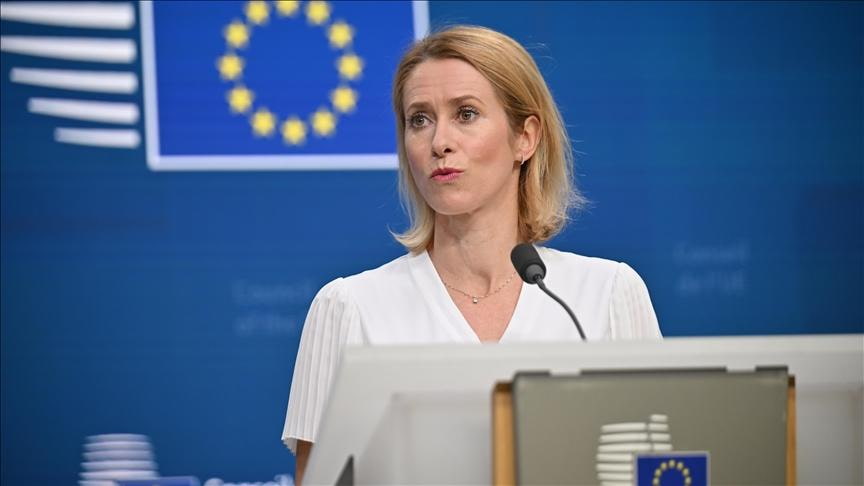
High Representative Kaja Kallas set out the plan on 17 August. The designations would raise the total number of names under the Russia regime by about a third, the largest single expansion since the full-scale invasion began. Each listing brings the standard triple effect: an asset freeze, a transaction ban and a travel ban into the Union. The service intends to circulate the list to capitals in early September and wants adoption in October.

The separation of listings from sectoral measures is the interesting part. Sectoral restrictions sit with the Commission and drag in trade ministries, energy regulators and industries with lobbying budgets. Individual designations sit with the External Action Service and turn on evidence about specific companies and specific people. Splitting the two removes the usual hostage-taking, where a government that dislikes one shipping clause blocks four hundred names attached to it.

That matters because every restrictive measure still needs unanimity. Officials expect several member states to raise objections when ambassadors work through the file, and the recent history of these negotiations suggests the resistance will be procedural rather than principled. Governments rarely defend a named arms manufacturer. They argue about exemptions, wind-down periods and the precise wording of a derogation for existing contracts.

The July round showed how much room that leaves. The Council adopted its twenty-first package on 23 July, reaching into energy, financial services and crypto assets, and the negotiation consumed weeks of ministerial time. Doing that again in the autumn while also processing 1,600 names would almost certainly have pushed the listings into next year.

Volume creates its own problem, though. Each designation must rest on a file that can withstand an annulment action at the General Court in Luxembourg, and delisting litigation has become a routine cost of the sanctions regime. Courts have struck down individual entries where the evidence amounted to press clippings, and a batch of this size multiplies the chance that a handful will fail. The service knows this, which is why the emphasis on military-industrial links matters: procurement records and corporate registries make better evidence than reputation.

Two further regimes are moving in parallel. Officials are preparing designations covering the trafficking of Ukrainian children and a separate track aimed at hybrid operations, including cyber intrusions and coordinated disinformation. Those instruments carry lower numbers and higher political weight, and they give the Union a way to respond to conduct that no energy embargo touches. The framework governing how all of this gets adopted is set out on the External Action Service sanctions page.

Enforcement remains the weak joint. Listings are decided collectively and applied nationally, by customs officers, financial intelligence units and company registrars whose capacity varies enormously across the Union. Adding a third more names to the register without adding staff to the offices that police it produces a longer list rather than a tighter net.

Watch the October target rather than the September presentation. If the file clears in a single month, the decision to strip out sectoral measures will look like the smartest procedural move of the year. If it slides into November, the lesson will be that unanimity constrains this Union regardless of how the paperwork is packaged.