Numbers that fall for seven months in a row start to look less like weather and more like a pattern. Frontex counted roughly 61,000 irregular crossings into the European Union between January and the end of July, a drop of 37 percent against the same stretch of 2025. The agency published the preliminary figures in mid-August, and they land at an awkward moment for capitals that spent the summer describing the situation at the external border as a crisis.
The Central Mediterranean carries most of the decline. Detections there more than halved, falling to 16,454 from 36,656 a year earlier. That single route accounts for a larger share of the overall drop than every other corridor combined, and it reflects the cooperation deals the Commission and individual member states struck with Libya and Tunisia over the past two years.
The Eastern Mediterranean tells a softer version of the same story. Arrivals reached 20,232 against 28,068 in 2025, a fall of 28 percent, which still leaves it the busiest route into the Union. Greek islands and the Cypriot coast continue to absorb the bulk of those arrivals, and Athens has kept pressing Brussels for a faster relocation mechanism under the Pact on Migration and Asylum.
Two smaller corridors moved in the same direction. The Western Balkans route recorded 4,910 detections against 6,673, down 26 percent, while the eastern land border with Belarus and Russia fell by 44 percent. Warsaw and Vilnius had warned through the spring that instrumentalised crossings would climb again. The data so far does not support that warning.
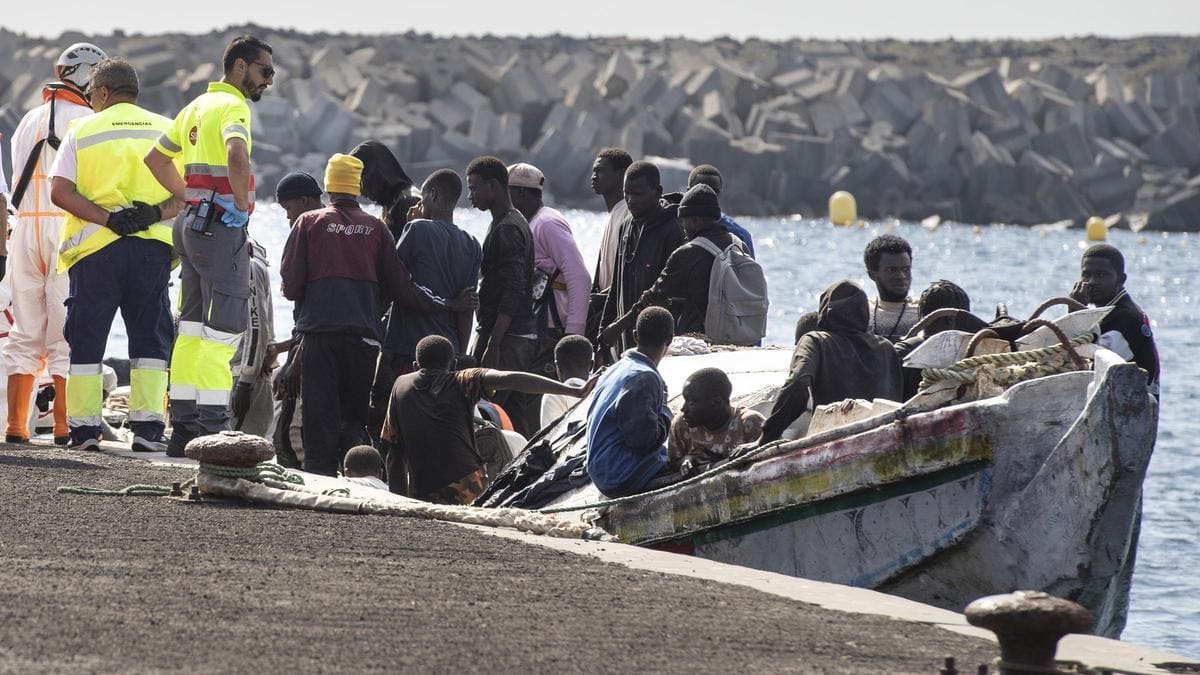
One route bucks the trend entirely. The Western Mediterranean rose, and Spain absorbs almost all of that increase. Departures from Mauritania and Senegal toward the Canary Islands have historically peaked in the autumn, so Madrid enters the strongest months of the year as the only capital facing more pressure than last summer, not less. Spanish officials have already asked the Commission to keep the Atlantic route separate in its next funding allocation.
What the aggregate figure hides matters as much as what it shows. A 37 percent fall in detections does not mean fewer people attempt the journey. It means fewer people are counted at the moment of entry. Search-and-rescue organisations recorded a rise in the share of departures intercepted before reaching European waters, and interceptions by Libyan and Tunisian forces do not appear in Frontex statistics at all. The mortality rate per attempted crossing has not improved in step with the headline number.
The political consequence is straightforward. Member states that argued for emergency derogations, faster returns and expanded detention capacity built those arguments on rising pressure at the border. The pressure is falling. Ministers can still make the case that the system needs rebuilding before the next surge, and several will. But they now have to make it against their own agency’s evidence rather than alongside it.
Frontex publishes the confirmed monthly series later in the year, and the preliminary count usually shifts by a few percentage points on revision. The direction rarely reverses. The full release from the agency is available through its media centre, and the mid-August reporting on the seven-month figures was covered in detail by Eunews.
The Council returns to the asylum file in September. The numbers will be sitting on the table whether or not anyone wants them there.