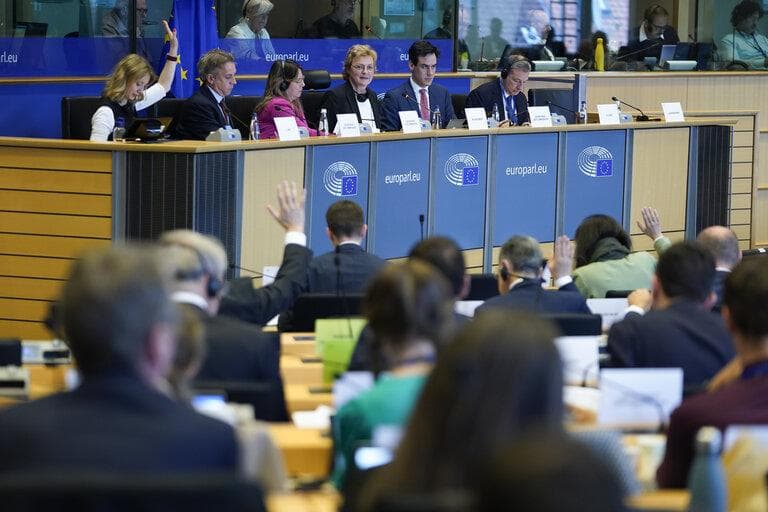
Negotiators in the European Parliament, the Council and the Commission are now arguing over a gap of roughly thirty-two billion euros in the FP10 budget, the envelope that will pay for European research between 2028 and 2034. The three institutions have each staked out a number, and none of them matches. Whoever concedes first will shape a decade of laboratory work across the Union.
The Commission opened the bidding on 16 July when Ursula von der Leyen presented plans to almost double the research programme to 175 billion euros inside the next long-term budget. That figure looked generous next to Horizon Europe. It looked considerably less generous once researchers noticed how much of it sits inside the new European Competitiveness Fund rather than in the framework programme proper.
Parliament rejected the offer. MEPs adopted a negotiating position demanding 200 billion euros, and the lead rapporteur has repeated since that the chamber will not treat the number as an opening gambit. The Council moved in the opposite direction. Its partial general approach of 24 June bracketed the money, and the Cypriot presidency then floated 167.9 billion in current prices, trimming the Commission text rather than expanding it.
That spread matters more than the headline suggests. Around sixty-eight billion euros of the proposed research money would sit in the Competitiveness Fund, a vehicle designed to push capital toward industrial priorities. Universities fear that a fund built for scale-ups will crowd out curiosity-driven work, the kind that produces results nobody commissioned. Industry associations counter that Europe has spent two decades publishing excellent papers while American and Chinese firms commercialised the outcomes.
Member states are split along familiar lines. The countries that win the most competitive grants want the envelope protected. Net contributors watching defence and enlargement costs rise want restraint. Cohesion ministers want a share reserved for laboratories outside the handful of regions that currently absorb most of the funding, an argument that resurfaces in every framework programme and has never been fully settled.
The Council has also pressed for a firmer grip on the programme’s direction, seeking a greater say in shaping FP10 priorities rather than leaving strategic planning largely to the Commission. Researchers read that as a warning. Every additional layer of political steering narrows the space for the European Research Council model, where the only test is whether the science is good.
Timing tightens everything. Officials want the whole multiannual financial framework agreed before the end of 2026, ahead of national elections that could harden several capitals’ positions. Research rarely wins a budget fight against agriculture or defence when the clock runs down, because laboratories do not stage protests and the payoff arrives years after the ministers who approved it have moved on.
The practical consequence for anyone applying to Horizon Europe today is uncertainty about what follows it. Grant cycles run long, doctoral contracts run longer, and institutions plan hiring against expected funding. A final number closer to 167 billion than to 200 billion would force universities to shrink pipelines they have already advertised.
Nothing about the arithmetic is fixed yet. Parliament can hold out, the Council can trade research money against other headings, and the Commission sits between them with a proposal neither side accepts. What is fixed is the deadline, and deadlines in Brussels tend to favour whoever is willing to say no for longest.