Fifteen negotiating chapters still separate Montenegro from the end of its accession talks, and the government in Podgorica has promised to close all of them before December. The arithmetic of Montenegro accession has become the most closely watched number in the enlargement file, because a country that finishes negotiations in 2026 could plausibly join in 2028.
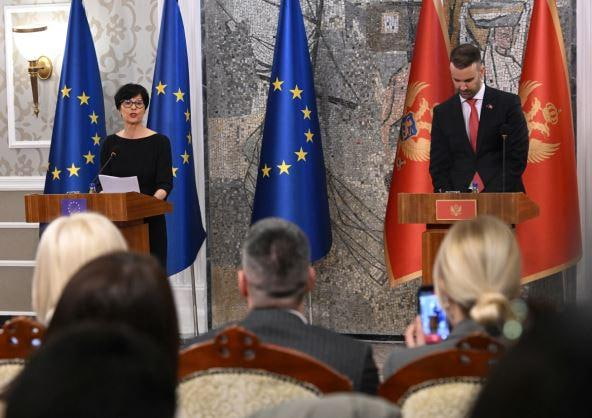
The tally moved twice this summer. At the accession conference on 14 July, Montenegro provisionally closed competition policy and the customs union, taking it to 18 chapters out of 33. In June it had closed free movement of workers and consumer and health protection. Steady progress, but the chapters that remain are the ones that hurt.
Judiciary and fundamental rights, justice and home affairs, agriculture and the environment tend to sit at the end of every accession process for the same reason. They demand institutional change that survives a change of government, not a law passed in a single session. The Commission grades them on track record, and a track record cannot be produced in four months.
That single day in July was unusually busy. The Council held four accession conferences, with Albania provisionally closing science and research, education and culture, and external relations. Tirana entered the closing phase in May and aims to conclude negotiations in 2027, a timetable that looked implausible eighteen months ago and now looks merely ambitious.
The July rule of law report extended the Commission’s monitoring to Albania, Montenegro, North Macedonia and Serbia, applying the same four-part assessment used for member states. The candidate country chapters matter because they set the evidentiary baseline against which the hardest negotiating chapters will eventually be judged.
Enlargement Commissioner Marta Kos has praised Montenegro’s recent pace while avoiding any promise about the closing date. Her caution reflects a structural problem the Union has not solved. Closing chapters is a technical exercise handled by officials. Ratifying an accession treaty is a political one handled by twenty-seven parliaments, several of which have populations sceptical about further enlargement and governments happy to say so.
Capitals are also arguing about whether the Union should reform its own decision-making before it grows again. A twenty-eighth member changes voting weights, budget flows and the size of every institution. France and the Netherlands have pushed hardest for internal reform first. Others argue that delay pushes the Western Balkans toward other partners, and the strategic case for speed has strengthened since 2022.
Montenegro’s leverage lies in being small enough to absorb easily and advanced enough to embarrass those who stall. A country of roughly 620,000 people places no serious strain on the budget or the labour market. If it finishes its chapters and the Union hesitates anyway, the message to every other candidate becomes difficult to explain.
Watch the autumn conferences rather than the rhetoric. Two or three more closures before December would make the 2028 target credible. Anything less, and the goal quietly slides into 2029, where it will join a long list of enlargement dates that Brussels announced and then declined to discuss.