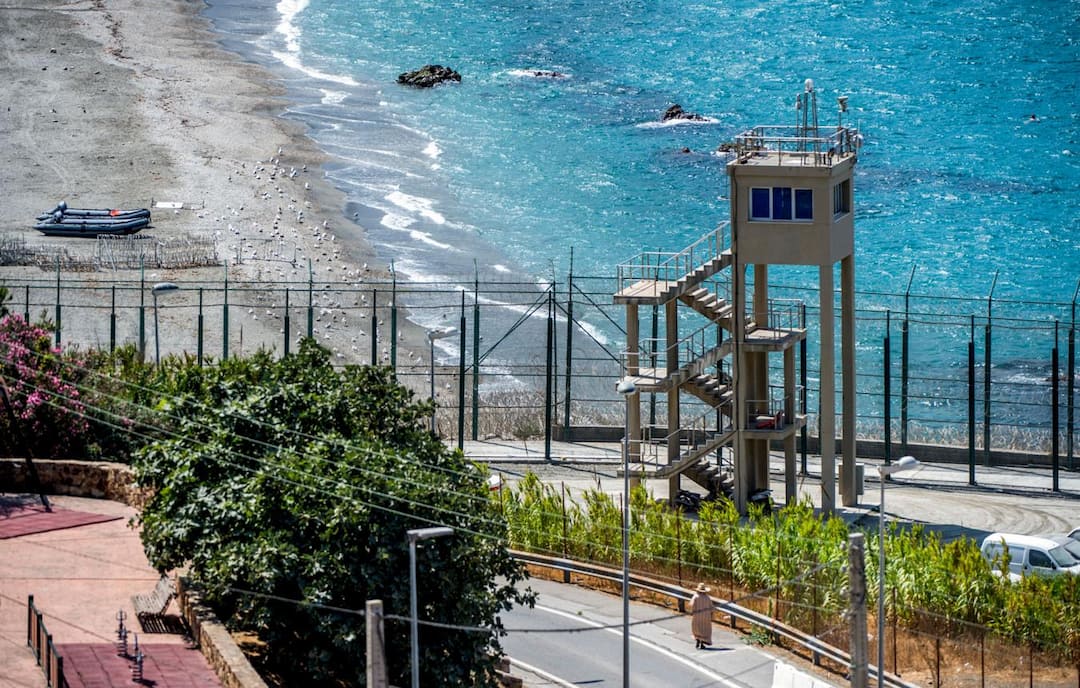
Ceuta: Spain’s North African exclave returned to the centre of European politics this week, as the European Parliament opened its plenary in Strasbourg on 14 September 2026 with the Ceuta border emergency on the agenda and a resolution due for a vote on 17 September.
MEPs debate the file on Tuesday 15 September with the European Commission and the Irish Presidency of the Council. The Parliament’s agenda gives the item a deliberately loaded title, framing the events as hybrid attacks and the instrumentalisation of migrants alongside the need to protect the Union’s external borders. Members can follow the item on the plenary agenda published by the European Parliament.
The facts behind the debate are stark. Over 30 and 31 July 2026, as many as 60,000 people swam around or climbed the fences that separate Ceuta from Morocco. At least 80 people died in the attempt, according to the figures circulating in Brussels, and Spanish authorities spent weeks processing arrivals in a city of roughly 85,000 residents.
Capitals moved before Parliament did. On 1 August 2026, in an initiative that Italy and Denmark coordinated, 22 of the 27 heads of state and government wrote to Ursula von der Leyen demanding an emergency meeting and a joint response. Several of those governments pointed at Spain’s regularisation scheme and called it a pull factor, which turned a border emergency into a quarrel about one member state’s domestic policy.
The language of the agenda item matters legally. If the Union treats the July crossings as instrumentalisation by a third country rather than as a spontaneous movement, member states unlock derogations on registration deadlines and reception standards that the asylum rulebook otherwise forbids. Lawyers who defended those derogations at the Polish and Finnish borders will now test them on a maritime frontier.
Group positions are already fixed. The European People’s Party and the groups to its right want the text to criticise Pedro Sánchez and to demand a harder migration line. The Socialists and Democrats intend to defend Madrid and to ask for solidarity from the other 26 capitals. Amendments will decide whether Thursday’s resolution reads as a rebuke of Spain or as a call for collective burden sharing.
Neither outcome binds anyone. Parliament’s resolution carries political weight and nothing more. The operational answer sits elsewhere, in the solidarity pool that the migration and asylum pact created and in whatever Frontex support Spain formally requests. The Parliament sets out the item and its framing in the plenary briefing on Ceuta and the external borders. Watch whether the Commission offers emergency funding during the debate, because that would signal how seriously it treats the exclave as a structural problem rather than a summer shock.
Ceuta also exposes a gap the pact never closed. The new rules distribute responsibility for people who arrive, yet they say little about a land border with a neighbour whose cooperation Europe cannot compel and does not want to lose. Morocco polices the fence on its side, and Rabat’s leverage grows every time Madrid needs that policing to hold.
The Ceuta border question will outlast this plenary. Thursday’s vote tells Europe which story it prefers to tell about the summer, and very little about what happens at the fence next July.