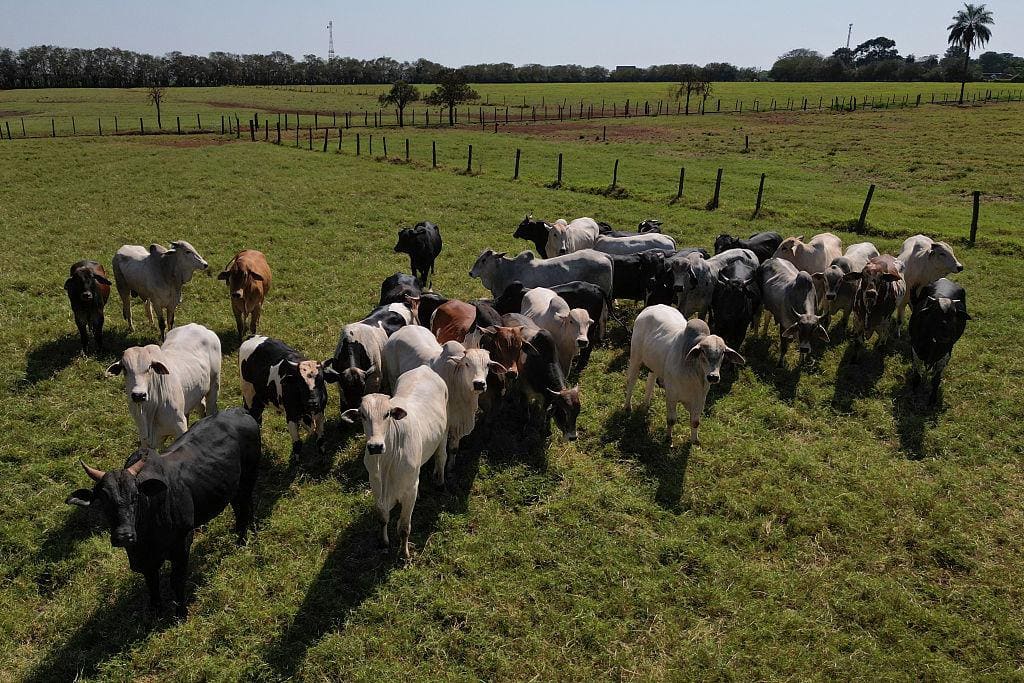
Barretos: The cattle yards of São Paulo’s interior have spent a decade learning to write European paperwork, and on 3 September they discovered the paperwork was no longer enough. Brussels stopped accepting beef, poultry, eggs and honey from Brazil because Brazilian authorities could not demonstrate that producers respect the European ban on antimicrobials used to fatten animals or to raise yield. The instrument is a mirror measure, and it did in a single day what years of tariff argument never managed.
The Commission built its case on Implementing Regulation (EU) 2026/1189, which removes Brazil from the list of third countries cleared to send those products into the single market. Nobody found contaminated cargo. The suspension rests on an evidentiary failure rather than a food-safety incident, and that distinction matters enormously for what happens next. A contamination scare ends when the batch clears. A missing guarantee ends only when a partner rebuilds a national control system and lets European inspectors verify it.
Brazil exported roughly 368,000 tonnes of meat worth about 1.8 billion dollars to Europe last year. JBS and Minerva absorb most of that loss, and the agriculture ministry in Brasília answered with the word indignation and a reminder that it reserves the right to use reciprocity instruments under national law, under the multilateral system, and under the Mercosur agreement itself. That last clause deserves close reading. Brazil is signalling that it will treat a sanitary decision as a trade dispute inside a treaty the two blocs signed in January and began applying, on the trade side, in May.
Here lies the uncomfortable arithmetic for European negotiators who spent twenty-five years assembling that deal. The agreement opens quotas. It does not open the sanitary gate. Tariff-rate quotas for South American beef mean nothing while the exporting country sits outside the authorised list, so the headline concession European farm lobbies fought hardest against has just been rendered theoretical for the largest Mercosur economy. Uruguayan shipments to Europe have climbed to a ten-year high in the same weeks, which tells you the market did not shrink. It relocated.
European livestock producers have lived under the growth-promoter ban since January 2006, and they have argued ever since that the rule penalises them unless Brussels applies it at the border. Mirror measures are the answer the Commission finally reached for. The question the next months will settle is whether the instrument survives contact with a partner large enough to retaliate. Applying an equivalence standard to New Zealand lamb costs Europe very little. Applying it to Brazilian protein, weeks after entering a partnership with Mercosur, costs a great deal more, and every other agricultural exporter negotiating with Brussels is watching how firmly the Commission holds.
Talks between the two sides continued even as the suspension took effect, which suggests both capitals want a technical exit rather than a legal one. A technical exit means Brazil supplies the missing guarantees, European auditors verify them, and the listing returns with conditions attached. A legal exit means arbitration under an agreement whose dispute machinery has never been tested and whose political pillar still waits on twenty-seven national parliaments. Ratification votes are easier to win when the flagship deal is not simultaneously producing a shouting match over chicken.
The wider lesson sits beyond Brazil. Europe has spent this decade attaching production-method conditions to market access, and it has generally done so with partners who lacked the leverage to object. That era has ended. The mirror measure works exactly as designed, and precisely for that reason it has become a foreign-policy decision rather than a veterinary one.