September 16, 2026
LATEST
Six Billion in Promised Savings Rests on a Digital WalletAuditors Question the rescEU Budget Before the Fleet ArrivesDuty-Free Access for Armenian Exports Comes With a Conditions ListA Mirror Measure Closed Europe to Brazilian Meat in One DayEurope’s Creative Sectors Wait on an AI Strategy DraftSoftware Makers Face Europe’s Product Liability Deadline in DecemberMetro 3 Overran by 477 Percent and the Line Sits FrozenCage-Free Promises Land Before the Transport File Is FinishedTwo New Calls Will Test How Flexible Horizon Europe Really IsEurope’s Innovation Act Counts 10 Billion It Has Not Found YetProcurement Is the Chapter That Could Stall the Thailand DealMobility Week Returns With a Test of Intergenerational FairnessMinisters Debate the Chips Act Next Week With No Money AttachedTaiwan Wants Tax Treaties That Brussels Has No Power to SignNorth Korea Now Earns From Europe Without Shipping AnythingPalm Oil Is the Last Hard Question Before the Indonesia SigningCan One Year Deliver Both a Trade Deal and a Sea CodeVietnam Reached Europe’s Top Partnership Tier With Little DetailLeaked Draft Puts Europe’s Social Media Age Limit at FifteenFP10 Clears Committee and the Budget Gap Stays Wide OpenSix Billion in Promised Savings Rests on a Digital WalletAuditors Question the rescEU Budget Before the Fleet ArrivesDuty-Free Access for Armenian Exports Comes With a Conditions ListA Mirror Measure Closed Europe to Brazilian Meat in One DayEurope’s Creative Sectors Wait on an AI Strategy DraftSoftware Makers Face Europe’s Product Liability Deadline in DecemberMetro 3 Overran by 477 Percent and the Line Sits FrozenCage-Free Promises Land Before the Transport File Is FinishedTwo New Calls Will Test How Flexible Horizon Europe Really IsEurope’s Innovation Act Counts 10 Billion It Has Not Found YetProcurement Is the Chapter That Could Stall the Thailand DealMobility Week Returns With a Test of Intergenerational FairnessMinisters Debate the Chips Act Next Week With No Money AttachedTaiwan Wants Tax Treaties That Brussels Has No Power to SignNorth Korea Now Earns From Europe Without Shipping AnythingPalm Oil Is the Last Hard Question Before the Indonesia SigningCan One Year Deliver Both a Trade Deal and a Sea CodeVietnam Reached Europe’s Top Partnership Tier With Little DetailLeaked Draft Puts Europe’s Social Media Age Limit at FifteenFP10 Clears Committee and the Budget Gap Stays Wide Open
September 16, 2026
LATEST
Six Billion in Promised Savings Rests on a Digital WalletAuditors Question the rescEU Budget Before the Fleet ArrivesDuty-Free Access for Armenian Exports Comes With a Conditions ListA Mirror Measure Closed Europe to Brazilian Meat in One DayEurope’s Creative Sectors Wait on an AI Strategy DraftSoftware Makers Face Europe’s Product Liability Deadline in DecemberMetro 3 Overran by 477 Percent and the Line Sits FrozenCage-Free Promises Land Before the Transport File Is FinishedTwo New Calls Will Test How Flexible Horizon Europe Really IsEurope’s Innovation Act Counts 10 Billion It Has Not Found YetProcurement Is the Chapter That Could Stall the Thailand DealMobility Week Returns With a Test of Intergenerational FairnessMinisters Debate the Chips Act Next Week With No Money AttachedTaiwan Wants Tax Treaties That Brussels Has No Power to SignNorth Korea Now Earns From Europe Without Shipping AnythingPalm Oil Is the Last Hard Question Before the Indonesia SigningCan One Year Deliver Both a Trade Deal and a Sea CodeVietnam Reached Europe’s Top Partnership Tier With Little DetailLeaked Draft Puts Europe’s Social Media Age Limit at FifteenFP10 Clears Committee and the Budget Gap Stays Wide OpenSix Billion in Promised Savings Rests on a Digital WalletAuditors Question the rescEU Budget Before the Fleet ArrivesDuty-Free Access for Armenian Exports Comes With a Conditions ListA Mirror Measure Closed Europe to Brazilian Meat in One DayEurope’s Creative Sectors Wait on an AI Strategy DraftSoftware Makers Face Europe’s Product Liability Deadline in DecemberMetro 3 Overran by 477 Percent and the Line Sits FrozenCage-Free Promises Land Before the Transport File Is FinishedTwo New Calls Will Test How Flexible Horizon Europe Really IsEurope’s Innovation Act Counts 10 Billion It Has Not Found YetProcurement Is the Chapter That Could Stall the Thailand DealMobility Week Returns With a Test of Intergenerational FairnessMinisters Debate the Chips Act Next Week With No Money AttachedTaiwan Wants Tax Treaties That Brussels Has No Power to SignNorth Korea Now Earns From Europe Without Shipping AnythingPalm Oil Is the Last Hard Question Before the Indonesia SigningCan One Year Deliver Both a Trade Deal and a Sea CodeVietnam Reached Europe’s Top Partnership Tier With Little DetailLeaked Draft Puts Europe’s Social Media Age Limit at FifteenFP10 Clears Committee and the Budget Gap Stays Wide Open

Metro 3 Overran by 477 Percent and the Line Sits Frozen

Metro 3 has become the reference case for how a European capital loses control of an infrastructure project. Brussels regional deputies spent eight months and more than fifty hearings dissecting a line that was costed under one billion euros, revised to 3.2 billion, and finally put at 4.76 billion by the Court of Audit, an overrun of 477 percent. The auditors judged the project’s financial sustainability seriously compromised, and the February 2026 government agreement froze the Albert to Bordet extension for ten years.

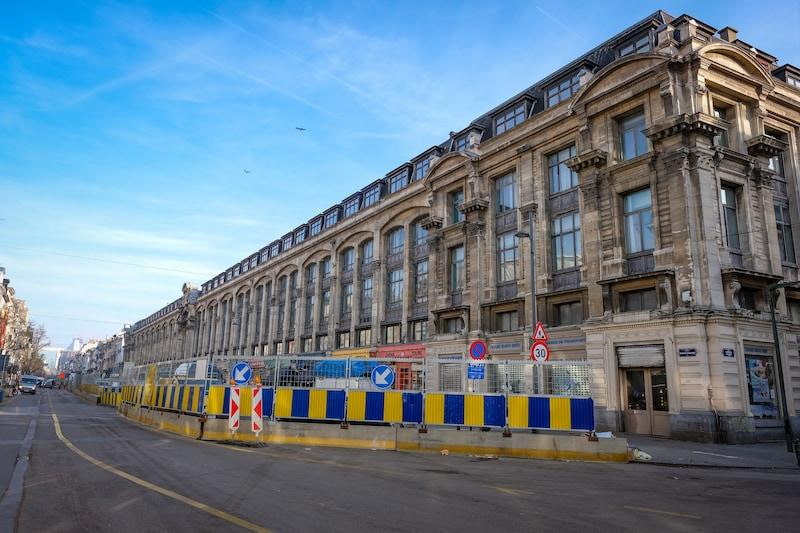
The freeze is not a pause. A tram will complete the loop of the existing network instead of the northern metro section, which redirects billions from tunnelling to surface transport and leaves Schaerbeek and Evere without the connection they were promised for two decades. Works already under way at Constitution and the Palais du Midi continue, so the region keeps paying for the expensive half of a project it has abandoned.

The special committee, chaired by Anne-Charlotte d’Ursel and created in November 2025 after the audit landed, adopted 22 recommendations on 9 July. The plenary approved 24 on 17 July by 53 votes to 20 with 9 abstentions, with the Workers’ Party and the Greens opposing. The recommendations cluster around one diagnosis: nobody was in charge. Regional ownership through STIB, federal co-funding through Beliris and a fragmented technical chain produced a project with no single accountable director.

That diagnosis explains the committee’s central proposal, which places any major regional infrastructure under one administration with a named project director answerable to the government and to parliament. The committee also wants a budgetary alert mechanism, technical studies shielded from political pressure, and mandatory geotechnical and heritage surveys before a site opens. Each recommendation reads as a description of what did not happen.

Geology delivered the most expensive surprises. Engineers from the consortium building the southern section told deputies in March that jet grouting failed against unexpectedly heterogeneous ground, that the clay layer sat far deeper than planned, and that the Palais du Midi should have been emptied years earlier so the cellars could be surveyed. Their contract was execution only, which meant they built plans they had no hand in designing.

The northern section fared worse. In April the head of one contractor told the committee that the tunnel cavity under the North Station was unlikely to proceed at all, after water ingress forced abandonment of the original method. A replacement technique would have added roughly 75 million euros to the 22.5 million already spent, with no guarantee it would work. In May, a bidding consortium told deputies that the requested six-year timetable was unrealistic and that ten years of works would be needed, partly because the ground must be frozen to 82 metres, a depth never attempted anywhere.

Even the surviving works keep generating obstacles. The region issued the partial dismantling permit for the Palais du Midi on 17 June with strengthened heritage conditions covering the facades, joinery, ironwork and north-wing roofs. On 9 September the urban research association ARAU said it had established the existence of two wartime air-raid shelters in the building’s cellars, built in 1940 and 1943, covering some 450 square metres. The association wants archaeological work before tunnelling continues and access to complete plans that the City refuses to release.

Newsrooms have not converged on that finding. Some report the shelters as established, others as possible, and neither STIB nor Beliris has responded publicly. The Brussels Governance Monitor dossier flags the divergence rather than resolving it, and ARAU concedes on its own published analysis that precise plans are still missing.

What remains is a 120-metre missing link requiring four years of civil engineering, possibly starting in 2027, and a northern branch whose realistic delivery date now sits closer to 2046 than to any figure a voter was ever shown. The committee’s recommendations may protect the next project. They arrive far too late for this one.