September 16, 2026
LATEST
Six Billion in Promised Savings Rests on a Digital WalletAuditors Question the rescEU Budget Before the Fleet ArrivesDuty-Free Access for Armenian Exports Comes With a Conditions ListA Mirror Measure Closed Europe to Brazilian Meat in One DayEurope’s Creative Sectors Wait on an AI Strategy DraftSoftware Makers Face Europe’s Product Liability Deadline in DecemberMetro 3 Overran by 477 Percent and the Line Sits FrozenCage-Free Promises Land Before the Transport File Is FinishedTwo New Calls Will Test How Flexible Horizon Europe Really IsEurope’s Innovation Act Counts 10 Billion It Has Not Found YetProcurement Is the Chapter That Could Stall the Thailand DealMobility Week Returns With a Test of Intergenerational FairnessMinisters Debate the Chips Act Next Week With No Money AttachedTaiwan Wants Tax Treaties That Brussels Has No Power to SignNorth Korea Now Earns From Europe Without Shipping AnythingPalm Oil Is the Last Hard Question Before the Indonesia SigningCan One Year Deliver Both a Trade Deal and a Sea CodeVietnam Reached Europe’s Top Partnership Tier With Little DetailLeaked Draft Puts Europe’s Social Media Age Limit at FifteenFP10 Clears Committee and the Budget Gap Stays Wide OpenSix Billion in Promised Savings Rests on a Digital WalletAuditors Question the rescEU Budget Before the Fleet ArrivesDuty-Free Access for Armenian Exports Comes With a Conditions ListA Mirror Measure Closed Europe to Brazilian Meat in One DayEurope’s Creative Sectors Wait on an AI Strategy DraftSoftware Makers Face Europe’s Product Liability Deadline in DecemberMetro 3 Overran by 477 Percent and the Line Sits FrozenCage-Free Promises Land Before the Transport File Is FinishedTwo New Calls Will Test How Flexible Horizon Europe Really IsEurope’s Innovation Act Counts 10 Billion It Has Not Found YetProcurement Is the Chapter That Could Stall the Thailand DealMobility Week Returns With a Test of Intergenerational FairnessMinisters Debate the Chips Act Next Week With No Money AttachedTaiwan Wants Tax Treaties That Brussels Has No Power to SignNorth Korea Now Earns From Europe Without Shipping AnythingPalm Oil Is the Last Hard Question Before the Indonesia SigningCan One Year Deliver Both a Trade Deal and a Sea CodeVietnam Reached Europe’s Top Partnership Tier With Little DetailLeaked Draft Puts Europe’s Social Media Age Limit at FifteenFP10 Clears Committee and the Budget Gap Stays Wide Open
September 16, 2026
LATEST
Six Billion in Promised Savings Rests on a Digital WalletAuditors Question the rescEU Budget Before the Fleet ArrivesDuty-Free Access for Armenian Exports Comes With a Conditions ListA Mirror Measure Closed Europe to Brazilian Meat in One DayEurope’s Creative Sectors Wait on an AI Strategy DraftSoftware Makers Face Europe’s Product Liability Deadline in DecemberMetro 3 Overran by 477 Percent and the Line Sits FrozenCage-Free Promises Land Before the Transport File Is FinishedTwo New Calls Will Test How Flexible Horizon Europe Really IsEurope’s Innovation Act Counts 10 Billion It Has Not Found YetProcurement Is the Chapter That Could Stall the Thailand DealMobility Week Returns With a Test of Intergenerational FairnessMinisters Debate the Chips Act Next Week With No Money AttachedTaiwan Wants Tax Treaties That Brussels Has No Power to SignNorth Korea Now Earns From Europe Without Shipping AnythingPalm Oil Is the Last Hard Question Before the Indonesia SigningCan One Year Deliver Both a Trade Deal and a Sea CodeVietnam Reached Europe’s Top Partnership Tier With Little DetailLeaked Draft Puts Europe’s Social Media Age Limit at FifteenFP10 Clears Committee and the Budget Gap Stays Wide OpenSix Billion in Promised Savings Rests on a Digital WalletAuditors Question the rescEU Budget Before the Fleet ArrivesDuty-Free Access for Armenian Exports Comes With a Conditions ListA Mirror Measure Closed Europe to Brazilian Meat in One DayEurope’s Creative Sectors Wait on an AI Strategy DraftSoftware Makers Face Europe’s Product Liability Deadline in DecemberMetro 3 Overran by 477 Percent and the Line Sits FrozenCage-Free Promises Land Before the Transport File Is FinishedTwo New Calls Will Test How Flexible Horizon Europe Really IsEurope’s Innovation Act Counts 10 Billion It Has Not Found YetProcurement Is the Chapter That Could Stall the Thailand DealMobility Week Returns With a Test of Intergenerational FairnessMinisters Debate the Chips Act Next Week With No Money AttachedTaiwan Wants Tax Treaties That Brussels Has No Power to SignNorth Korea Now Earns From Europe Without Shipping AnythingPalm Oil Is the Last Hard Question Before the Indonesia SigningCan One Year Deliver Both a Trade Deal and a Sea CodeVietnam Reached Europe’s Top Partnership Tier With Little DetailLeaked Draft Puts Europe’s Social Media Age Limit at FifteenFP10 Clears Committee and the Budget Gap Stays Wide Open

Early-Career Researchers Now Get a Single Shot at an ERC Grant

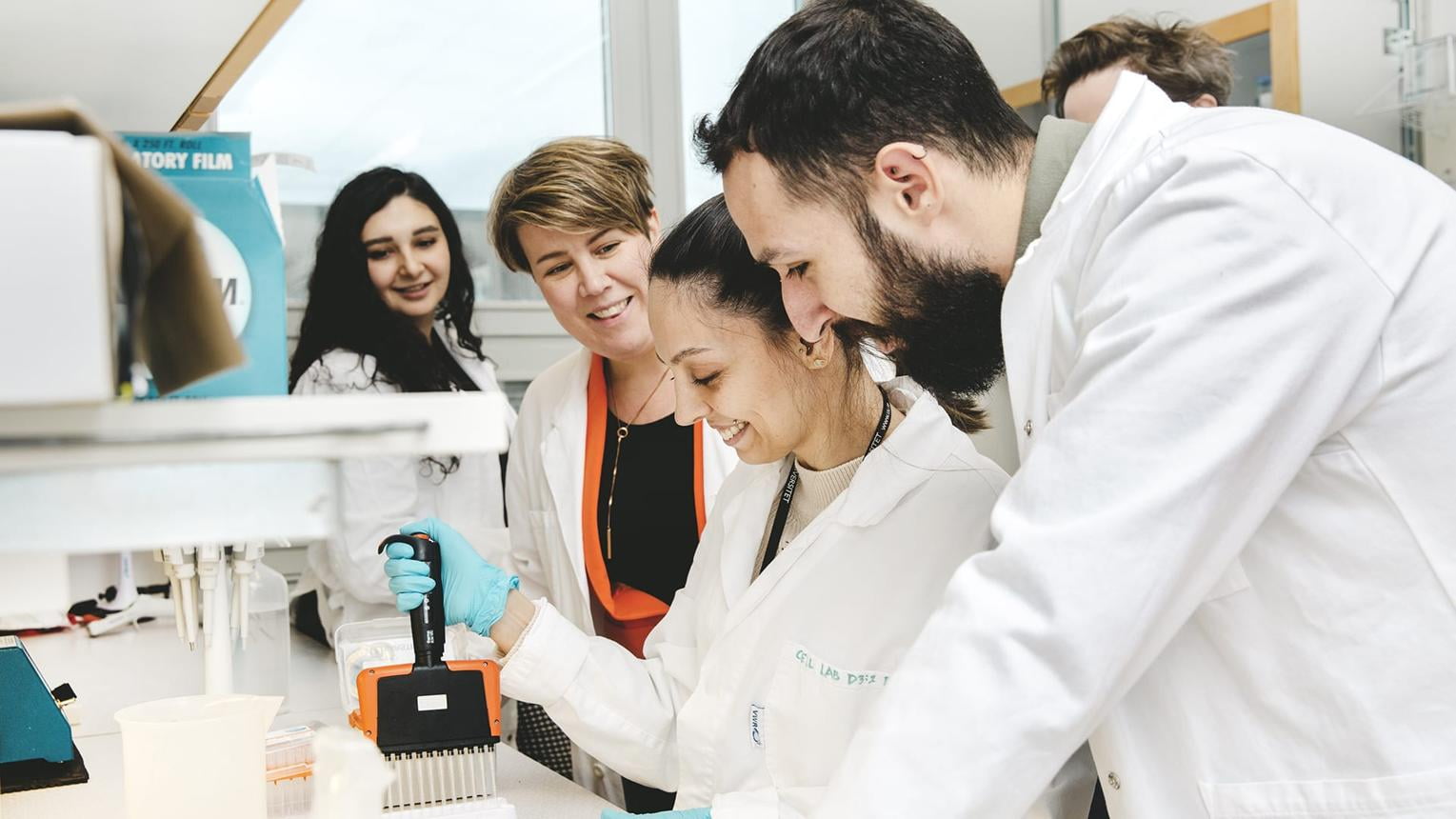
Uppsala: Postdocs in the university’s life science buildings are recalculating their career timelines. The European Research Council has rewritten the eligibility rules for its most competitive early-career award, and the change cuts both ways.

The ERC Work Programme 2027, adopted by the Commission in July, widens the Starting Grant window considerably. Applicants may now apply at any point from completing a doctorate up to ten years afterwards. The previous rule confined applications to a band between two and seven years post-PhD. Researchers who missed that window through parental leave, clinical training, a stretch in industry or simply a slow start now have a route back.

In exchange the ERC has imposed a hard limit. A researcher may hold an ERC Starting Grant or a Consolidator Grant once in an academic career, not once in each category. The old sequence, in which a successful Starting Grant holder progressed to a Consolidator award five years later, no longer exists. Applicants must choose which competition to enter and live with the choice.

The Starting Grant 2027 call opened on 22 July and closes on 14 October. The ERC has set aside €594.1 million for an estimated 373 grants. Each award runs up to €1.5 million over five years, with a further €1 million available for specified additional costs such as equipment or access to large facilities. The Consolidator Grant 2027 call is expected to open on 24 September and to close on 12 January.

The arithmetic explains the trade-off. Widening eligibility from a five-year band to a ten-year band roughly doubles the eligible population while the budget stays flat. Without the once-per-career rule, the ERC would have pushed success rates well below the figure that already draws complaints from national research councils. Restricting each researcher to a single attempt at one of the two schemes trims demand from exactly the group most likely to reapply, namely established grant holders.

Universities will feel this in how they advise staff. A department that routinely steered its strongest postdocs toward a Starting Grant at year four now faces a genuine strategic question. Apply early with a thinner track record and a higher chance of rejection, or wait until year eight with stronger publications and forfeit the Consolidator route entirely. Research offices in Sweden, the Netherlands and Germany have begun modelling both paths, because the answer differs by discipline. Experimental fields where independence arrives late favour waiting. Theoretical fields do not.

The change also pressures national funders. Member states have long used ERC near-miss lists to identify talent, with several running domestic schemes that fund applicants who scored well but fell short. A single-shot rule increases the pool of strong researchers permanently excluded from the ERC’s two main early-career instruments, and those researchers will look to national and regional programmes instead. Whether national budgets absorb them is a separate question, and the answer in most capitals is currently no.

Supporters of the reform argue that spreading grants across more individuals beats concentrating them in fewer careers, and that the ERC exists to launch independent researchers rather than to fund the same people repeatedly. Critics counter that scientific productivity is genuinely concentrated, and that denying a proven grant holder a second award wastes a demonstrated return.

The 2027 Starting Grant results, due in the second half of next year, will provide the first evidence. If applications surge and success rates fall sharply, the ERC will face pressure to raise the budget or narrow eligibility again. Neither looks easy with the next long-term budget still unresolved.