
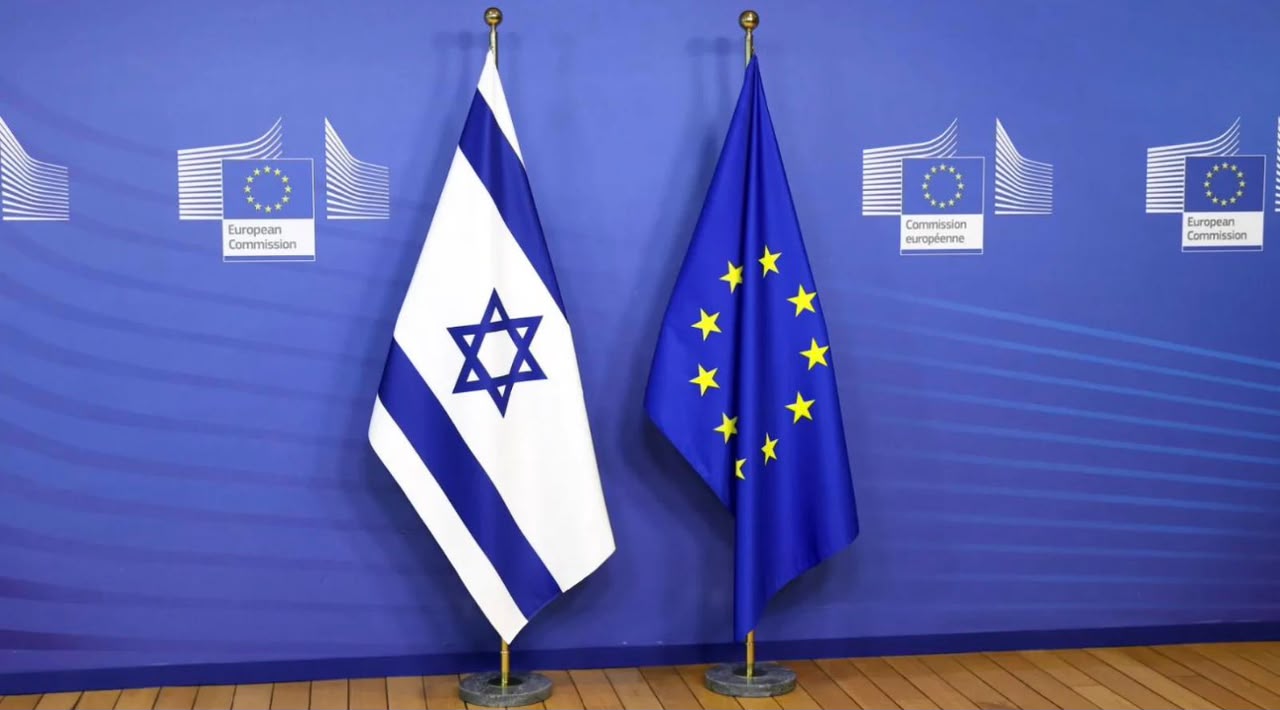
Gadi Eisenkot’s mandate tests whether Brussels objected to a government or to its conduct. EU-Israel relations need benchmarks that would survive a change of prime minister.
When President Isaac Herzog handed Gadi Eisenkot the mandate to form Israel’s next government on 8 November, Israel came closer to a government without Benjamin Netanyahu than at any point since 2021. Eisenkot promised a “national emergency government” and warned that Israel’s international relations were in a “devastating crisis.” He has 28 days, extendable by 14, to turn the 67 recommendations he received into a coalition. Few capitals will have read that last phrase more closely than Brussels. The EU greeted the 27 October election by praising Israel’s “vibrant democracy” and promising “frank and open dialogue” with whoever governs next. Behind the measured wording, officials in Brussels and several member states have, according to Israeli reporting, made little secret of preferring a transition away from Netanyahu. The preference is understandable. It is also where the next problem in EU-Israel relations begins.
What a Change of Government Would Change
Start with the optimistic reading, stated in full. Yashar has ruled out governing with Itamar Ben-Gvir’s party, removing one of the two ministers at the centre of Europe’s case against the outgoing coalition. The picture is less tidy on Bezalel Smotrich: at the mandate ceremony, Eisenkot invited members of Likud and of Smotrich’s Religious Zionism to back a government built on his principles. He has also pledged to dismantle illegal outposts, act against settlers who terrorise Palestinians, and repair Israel’s relationships abroad. He has opposed construction in the E1 area, the project Western governments regard as most damaging to Palestinian territorial continuity, and he endorses the framework of the American 20-point plan for Gaza.
For a European diplomat, that reads as a list of openings. After three years in which almost every contact with the Israeli government began with a protest, the prospect of a counterpart who shares at least some of Europe’s concerns about the West Bank is a genuine change, and nobody in Brussels should pretend otherwise.
What It Would Not Change
The obstacle lies in the rest of the platform. Eisenkot has called the principle of two states for two peoples “a mistake.” He insists that Israel must hold overriding security responsibility between the Jordan River and the sea, and he has voiced support for settlement in the West Bank even while opposing its most provocative projects. Eisenkot has also said that no Arab-led party accepts the four conditions he sets for coalition partners, although both Arab lists, holding a record 19 seats, recommended him to Herzog.
None of this disqualifies him as a partner. It does mean that the questions which drove European policy after October 2023, from humanitarian access in Gaza to the expansion of settlements, will remain open under any Israeli government. A change in tone would be welcome. It would not, by itself, settle the substance of EU-Israel relations.
Instruments Designed Around a Cabinet
Consider how Europe’s instruments were built. In June 2025, the High Representative’s review found indications that Israel was in breach of Article 2 of the Association Agreement, the clause that makes respect for human rights an essential element. In September 2025, the Commission proposed suspending the agreement’s trade concessions and sanctioning Ben-Gvir and Smotrich by name, alongside violent settlers. Its own text located the breach in “actions taken by the Israeli government.”
Little of that package has cleared the Council. In April 2026, Kaja Kallas reported no unanimity for suspending the agreement. In June, member states again failed to agree on sanctioning Ben-Gvir. A ban on trade with settlements drew the broadest support at the Foreign Affairs Council in July, yet on 5 November a Commission official told the European Parliament that the trade suspension remained on the Council’s agenda without a majority behind it. By the account of MEPs in the same debate, only the sanctions on violent settlers have been adopted.
Europe has also already let Israel’s electoral calendar set its pace. In September, Kallas acknowledged “pros and cons” to deciding on a settlement ban before the Knesset vote. The vote has now passed. If the next argument is that a new prime minister deserves a period of grace, the same measures will have been deferred first for an election and then for its result.
Benchmarks for EU-Israel Relations
The way out is to separate what Europe wants from whom it hoped to see in office. Measures aimed at individuals depend on who holds office, and even the two names in the Commission’s 2025 proposal may not share a fate: one excluded by Eisenkot’s party, the other invited to support it. Measures aimed at conduct should not lapse at all. Paris has already drawn that line: asked whether an Eisenkot victory could improve relations, Jean-Noël Barrot said French policy would remain unchanged. EU-Israel relations would be better served by a short list of benchmarks that any Israeli government could meet and any member state could defend in public.
The benchmarks can come from Europe’s own statements and, in part, from Eisenkot’s platform. First, humanitarian access in Gaza at the scale the ceasefire envisaged, including the registration of international NGOs that the EU has repeatedly demanded. Second, prosecution of settler violence and removal of illegal outposts, which Eisenkot himself has promised. Third, a halt to E1 and to the West Bank land-registration changes that Brussels called incompatible with international law in February. The first three ask something of Israel. The fourth asks something of Europe: a decision on settlement trade taken on its legal merits under the Treaties. All 27 member states already accept that the settlements are illegal under international law, and that illegality does not depend on who leads the government in Jerusalem. Without such a decision, the other three would be judged by a Union still unable to apply its own legal position to its own market.
Benchmarks cut both ways, and Europe should say so plainly. Progress against them should carry real weight in a fresh assessment under Article 2 and in the Council’s handling of the pending trade proposal. It would not close the legal file by itself: that requires a finding that the agreement’s essential elements are once again respected. A government that falls short should find that Europe’s objections did not leave office with Netanyahu.
Such benchmarks would also do something the Council has not managed since 2023: give member states a common reference point. Germany and Italy blocked suspension of the agreement in April, and the Czech government has opposed sanctions on the two ministers, while Spain and Ireland have moved ahead with national measures of their own. Capitals that will never agree on a legal verdict about the war in Gaza can still agree on whether aid convoys are crossing, whether violent settlers are being charged, and whether construction in E1 has stopped. Measurable facts are easier to vote on than verdicts, and a shared set of facts is the precondition for any coherent European voice on EU-Israel relations.
A Test Before the Coalition Exists
Eisenkot may not form a government at all. His four-party alliance holds 48 seats, he needs either the votes or the abstention of Arab-led parties, or defections from Netanyahu’s camp, and a failure within 42 days could send Israel back to the polls. That uncertainty strengthens the case for benchmarks rather than weakening it. A policy keyed to conduct works for an Eisenkot coalition, a Netanyahu return, or another caretaker period. A policy keyed to a prime minister has to be rewritten each time Israeli politics moves.
Brussels need not wait for the coalition talks to end. The High Representative could set out the benchmarks at the next Foreign Affairs Council, so that whichever government emerges reads them before its first ministerial conversation about EU-Israel relations, rather than discovering them afterwards as a list of grievances.
For three years, Europe has described its difficulty with Israel as a difficulty with one government. That framing allowed member states that disagree on almost everything about the conflict to agree on something. Its cost arrives now. If Brussels cannot say what it expects of Israel regardless of who leads it, a new prime minister will discover that Europe has nothing specific to ask, and Palestinians will conclude that Europe’s conditions were only ever about Netanyahu. The future of EU-Israel relations needs a firmer foundation than relief.
The Weekly Editorial
This is the editorial position of The European Post, published weekly on matters of European and international strategic significance. It represents the view of the Editorial Board.