November 9, 2026
LATEST
Consumer Enforcement Reform Rides With Digital Fairness ActAtlantic Hake and Sea Bream Face Cuts in 2027 Fishing Quotas2027 EU Budget Talks Race Towards Treaty Deadline of 16 NovemberEU Civil Protection Mechanism Targets Ukraine Energy EmergencyEurogroup Defence Spending Call Pushes Governments to Reorder BudgetsKallas Tells London EU UK Defence Cooperation Must Come FirstGeorgia Democratic Backsliding Pushes Tbilisi Toward EU ShowdownWater Resilience Strategy Faces Its Year-End Delivery TestNvidia General Court Ruling Tests EU Merger Referral PowerChips Act 2.0 Shifts Europe’s Chip Bet From Supply To DemandDigital Fairness Act Proposal Due This Quarter As Dark Patterns LastCouncil Splits Over EU Space Act Scope As Parliament Position WaitsOLAF Customs Fraud Probe Tracks 197 Million Euros Across Five StatesFAST-EU Pilot Offers Trial Sponsors A 70-Day Review RouteCommission Proposes EU Preparedness Day For 23 October 2027Non-Household Electricity Prices Fall 5.4% As Nordics ClimbFrontex Mandate Overhaul Would Double Border Corps And Add ReturnsJoint Defence Projects Win Council Backing For Drones And Air ShieldCOP31 Antalya Puts Europe’s Climate Diplomacy to a Hard TestIndia EU Trade Deal Heads to December Signing With Customs TestConsumer Enforcement Reform Rides With Digital Fairness ActAtlantic Hake and Sea Bream Face Cuts in 2027 Fishing Quotas2027 EU Budget Talks Race Towards Treaty Deadline of 16 NovemberEU Civil Protection Mechanism Targets Ukraine Energy EmergencyEurogroup Defence Spending Call Pushes Governments to Reorder BudgetsKallas Tells London EU UK Defence Cooperation Must Come FirstGeorgia Democratic Backsliding Pushes Tbilisi Toward EU ShowdownWater Resilience Strategy Faces Its Year-End Delivery TestNvidia General Court Ruling Tests EU Merger Referral PowerChips Act 2.0 Shifts Europe’s Chip Bet From Supply To DemandDigital Fairness Act Proposal Due This Quarter As Dark Patterns LastCouncil Splits Over EU Space Act Scope As Parliament Position WaitsOLAF Customs Fraud Probe Tracks 197 Million Euros Across Five StatesFAST-EU Pilot Offers Trial Sponsors A 70-Day Review RouteCommission Proposes EU Preparedness Day For 23 October 2027Non-Household Electricity Prices Fall 5.4% As Nordics ClimbFrontex Mandate Overhaul Would Double Border Corps And Add ReturnsJoint Defence Projects Win Council Backing For Drones And Air ShieldCOP31 Antalya Puts Europe’s Climate Diplomacy to a Hard TestIndia EU Trade Deal Heads to December Signing With Customs Test

Eurogroup Defence Spending Call Pushes Governments to Reorder Budgets

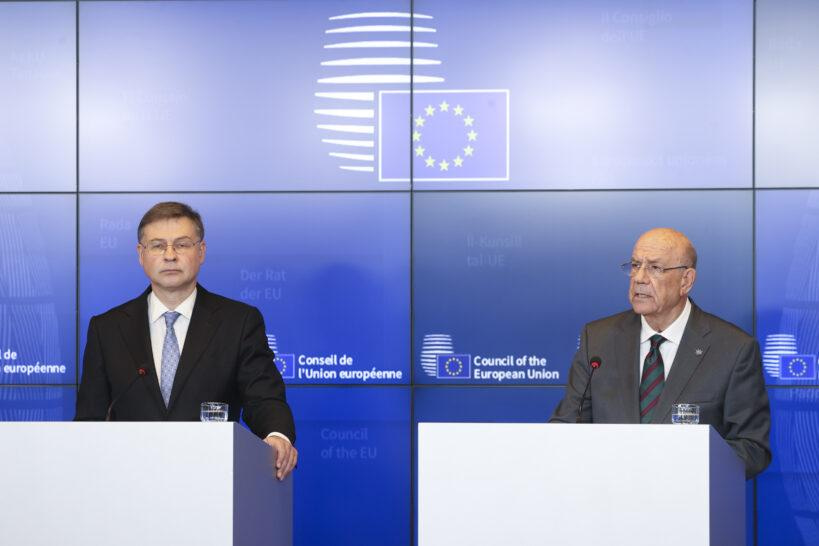
Brussels: Eurogroup defence spending moved to the centre of euro area budget talks on 9 November 2026, when Eurogroup President Kyriakos Pierrakakis and Economy Commissioner Valdis Dombrovskis urged governments to reorder national priorities to fund the defence agenda. The call followed a Eurogroup meeting in Brussels, where finance ministers weighed the strain on public finances against the need for faster military investment.

Pierrakakis framed the message in simple terms. “The motto is: doing more with less,” he said, adding that governments “must spend more, spend better and spend together.” His remarks put efficiency, rather than new borrowing, at the front of the debate on Eurogroup defence spending.

Dombrovskis described a squeeze on national budgets. Public finances are “under pressure due to competing priorities,” he said, and member states “will need to reorder the priorities in their national budgets gradually.” He stressed that planning for this reordering “cannot be postponed,” because the window for action is limited.

The Commissioner pointed to the national safeguard clause in the EU fiscal rules, which he said “offers flexibility until 2028.” Governments that want to lift defence outlays therefore have a defined period to do so, and the Commission expects them to plan inside it. That timing turns Eurogroup defence spending into a question of sequencing as much as size, because each euro moved to defence must come from somewhere else in the budget. The Eurogroup brings together the finance ministers of the euro area, so its message reaches the officials who write national budgets.

Procurement drew a separate warning. Dombrovskis said joint procurement remains “excessively fragmented” and that intensifying it “will be crucial” to European defence production. The argument is that governments buying together avoid duplication, while industry gets clearer and larger orders. Fragmented buying, in this reading, makes every euro of Eurogroup defence spending work less hard than it should.

Reporting by Eunews on Eurogroup defence spending adds an analytical layer. It notes that extra spending is aimed at defence and security, while other budget areas face a “prudence” principle. The report warns that heavily indebted countries such as Italy could feel the squeeze most, with transport, healthcare and education exposed to cuts. Neither official used the word austerity, and that framing belongs to the reporting rather than to the Eurogroup.

The tension behind the debate is familiar. Fiscal rules push governments to keep deficits and debt under control, while security needs push them to spend more. The safeguard clause lets governments reconcile the two for a limited time, and Dombrovskis made clear that the flexibility does not last forever. Finance ministers now have to decide what gives way in their own budgets. Pierrakakis and Dombrovskis did not name individual countries or budget lines, and they gave no new spending target, so the practical choices remain national. That leaves each government to explain to its own voters why one priority moves ahead of another, and how it will keep deficits within the agreed rules while doing so.

For now, Eurogroup defence spending rests on three messages from Brussels. Spend more, spend better and spend together, and do it inside the flexibility that runs until 2028. How capitals translate those words into national budget choices will decide whether the defence agenda gains speed or stalls.