November 10, 2026
LATEST
Europe’s Public Procurement Act Bets On PreferenceOmya Antitrust Investigation Targets Exclusive RebatesAdvertising Repositories Guidance Puts Platform Ads In ViewDeforestation Rules Reach Large Operators On 30 December DeadlineKIDS Act Proposal Sets Age 15 Limit For Social Media AccountsAzerbaijan Partnership Talks Need More Than Gas And ConnectivityGulf Trade Deal Hopes Rest On The Next EU-GCC Summit DecisionTrans-Caspian Transport Corridor Needs Roads Before Rail DreamsKorea Digital Trade Agreement Gives Brussels an Asian TemplateMercosur Provisional Application Starts a Long Court WaitEU Australia Trade Agreement Leaves Farmers Relying on SafeguardsConsumer Enforcement Reform Rides With Digital Fairness ActAtlantic Hake and Sea Bream Face Cuts in 2027 Fishing Quotas2027 EU Budget Talks Race Towards Treaty Deadline of 16 NovemberEU Civil Protection Mechanism Targets Ukraine Energy EmergencyEurogroup Defence Spending Call Pushes Governments to Reorder BudgetsKallas Tells London EU UK Defence Cooperation Must Come FirstGeorgia Democratic Backsliding Pushes Tbilisi Toward EU ShowdownWater Resilience Strategy Faces Its Year-End Delivery TestNvidia General Court Ruling Tests EU Merger Referral PowerEurope’s Public Procurement Act Bets On PreferenceOmya Antitrust Investigation Targets Exclusive RebatesAdvertising Repositories Guidance Puts Platform Ads In ViewDeforestation Rules Reach Large Operators On 30 December DeadlineKIDS Act Proposal Sets Age 15 Limit For Social Media AccountsAzerbaijan Partnership Talks Need More Than Gas And ConnectivityGulf Trade Deal Hopes Rest On The Next EU-GCC Summit DecisionTrans-Caspian Transport Corridor Needs Roads Before Rail DreamsKorea Digital Trade Agreement Gives Brussels an Asian TemplateMercosur Provisional Application Starts a Long Court WaitEU Australia Trade Agreement Leaves Farmers Relying on SafeguardsConsumer Enforcement Reform Rides With Digital Fairness ActAtlantic Hake and Sea Bream Face Cuts in 2027 Fishing Quotas2027 EU Budget Talks Race Towards Treaty Deadline of 16 NovemberEU Civil Protection Mechanism Targets Ukraine Energy EmergencyEurogroup Defence Spending Call Pushes Governments to Reorder BudgetsKallas Tells London EU UK Defence Cooperation Must Come FirstGeorgia Democratic Backsliding Pushes Tbilisi Toward EU ShowdownWater Resilience Strategy Faces Its Year-End Delivery TestNvidia General Court Ruling Tests EU Merger Referral Power

Commission Proposes EU Preparedness Day For 23 October 2027

The EU Preparedness Day is the Commission’s newest attempt to turn crisis planning into a habit for ordinary households. Commissioner Hadja Lahbib announced the proposal on 3 November at the European Civil Protection Forum 2026, where she also presented new guidelines on population preparedness. The Commission wants the first EU Preparedness Day to take place on 23 October 2027 and to repeat every year after that.

The date has a clear logic. On 23 October 2001 the EU Civil Protection Mechanism was established, so the anniversary falls on a day with institutional meaning. The Commission says the Mechanism has coordinated disaster response for 25 years. The EU Preparedness Day would encourage citizens and communities to take an active role, and it would recognise national, regional and local authorities and civil protection organisations.

The idea comes from citizens rather than officials. The Commission convened a European Citizens’ Panel on Preparedness of 150 people from across the Union between March and May 2026, and the panel recommended an annual EU Preparedness Week among other measures. The Commission chose a single day instead, and it will now work with the European Parliament, the Council, the European Economic and Social Committee and the Committee of the Regions on a joint declaration backing the initiative.

The guidelines that accompany the EU Preparedness Day proposal are non-binding. They cover four areas. The first is 72-hour self-sufficiency, meaning that households should be able to meet essential needs for the first three days of an emergency while public help is mobilised, including emergency supplies and grab bags. The second is preparedness education in early childhood and primary schools, with training for teachers and age-appropriate activities that avoid creating fear. The third is disability-inclusive planning, and the fourth is communication of risks and threats to the public.

A separate Commission recommendation on operational continuity and stress-testing completes the package. It asks member states and participating states to keep national civil protection contact points working around the clock, even during disruptive events, and it gives practical guidance on continuity plans and regular tests. Like the guidelines, the recommendation carries no legal force.

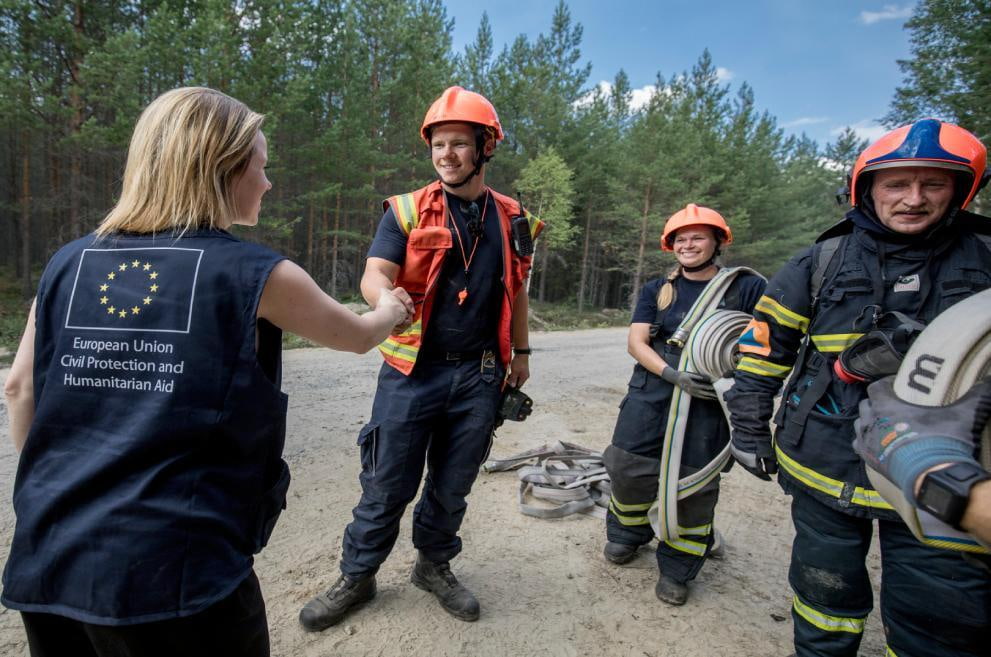
The EU Preparedness Day builds on the Preparedness Union Strategy of March 2025 and follows a summer of severe wildfires. On 30 October the Commission set up the PreparEU Advisory Group, with 11 senior crisis-management experts, to advise President Ursula von der Leyen and Lahbib. According to the Commission, wildfires burnt more than 686,000 hectares in 2026, and the group will deliver recommendations by spring 2027, including on a possible European Firefighting Fleet.

The practical test for the EU Preparedness Day lies in what governments do with it. Because civil protection remains mainly a national responsibility, the Commission can offer guidelines and a calendar date but cannot compel schools or ministries to act. The joint declaration with the other institutions will show how much political weight the idea carries, and the autumn 2027 date gives member states a year to decide whether the EU Preparedness Day becomes a real campaign or a symbolic one.