November 20, 2026
LATEST
Bank Account Information Gaps Put Estonia and Sweden on OLAF NoticeTwelve Capitals Get Fresh Single European Sky Warnings From Brussels2027 EU Budget Deal Faces Final Council and Parliament Votes Next WeekIndustrial Accelerator Act Mandates Slip Into DecemberMontenegro Accession Talks Close 25 of 33 ChaptersPosted Workers E-Declaration Clears Final Council HurdleAircraft Identification Gap Sends Greece Before the EU CourtArticle 255 Panel Flags Nine Unfit EU Court Nominees in Four YearsMoyale Refugee Crisis Draws €550,000 in EU Aid at the Kenyan FrontierMyanmar Genocide Ruling Tests How Far the EU Will Go for the RohingyaMarcos Keeps the EU-Philippines Trade Deal Alive After Trump’s VisitSenate Arithmetic Puts the EU-Australia Trade Deal at RiskKyiv Embassy Strikes Draw a Summons for Moscow’s Envoy to BrusselsTrump Xi Putin Summit Puts Europe on the Outside in ShenzhenOutermost Regions Strategy Takes Article 349 to EU MinistersCircular Economy Act Slips Again as Recyclers Demand ClarityMissing EUDR Competent Authorities Put Four Member States on NoticeElectricity Market Design Gaps Bring Legal Warnings for Three StatesPension Fund Taxation Rules in Eight States Draw EU Legal ActionIranian Strikes on Kuwait Expose Europe’s Thin Gulf Security RoleBank Account Information Gaps Put Estonia and Sweden on OLAF NoticeTwelve Capitals Get Fresh Single European Sky Warnings From Brussels2027 EU Budget Deal Faces Final Council and Parliament Votes Next WeekIndustrial Accelerator Act Mandates Slip Into DecemberMontenegro Accession Talks Close 25 of 33 ChaptersPosted Workers E-Declaration Clears Final Council HurdleAircraft Identification Gap Sends Greece Before the EU CourtArticle 255 Panel Flags Nine Unfit EU Court Nominees in Four YearsMoyale Refugee Crisis Draws €550,000 in EU Aid at the Kenyan FrontierMyanmar Genocide Ruling Tests How Far the EU Will Go for the RohingyaMarcos Keeps the EU-Philippines Trade Deal Alive After Trump’s VisitSenate Arithmetic Puts the EU-Australia Trade Deal at RiskKyiv Embassy Strikes Draw a Summons for Moscow’s Envoy to BrusselsTrump Xi Putin Summit Puts Europe on the Outside in ShenzhenOutermost Regions Strategy Takes Article 349 to EU MinistersCircular Economy Act Slips Again as Recyclers Demand ClarityMissing EUDR Competent Authorities Put Four Member States on NoticeElectricity Market Design Gaps Bring Legal Warnings for Three StatesPension Fund Taxation Rules in Eight States Draw EU Legal ActionIranian Strikes on Kuwait Expose Europe’s Thin Gulf Security Role

Commission Civil Society Platform Meets Amid Civic Squeeze

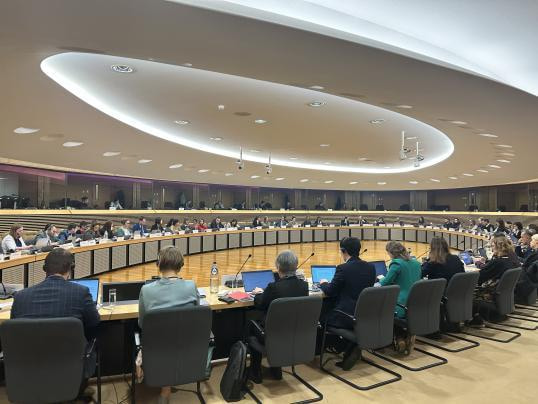
The European Commission held the first meeting of its new Civil Society Platform on Wednesday 18 November, creating a permanent channel for dialogue with organisations that defend rights, democracy and the rule of law. The launch comes as officials themselves warn that civic space across Europe is narrowing, and it tests whether Brussels can turn concern into structured action.

The Civil Society Platform brings together 30 independent organisations from the EU and several candidate countries. The Commission selected them through a public call for expressions of interest, after consulting the European Economic and Social Committee, the Fundamental Rights Agency and the Civil Society Europe network. Members hold a three-year mandate that the Commission can renew, and the group will meet at least three times a year.

The Civil Society Platform’s remit covers fundamental rights, democracy, equality and the rule of law. Members will help shape policy priorities, raise alarms about threats to civic space and give feedback on Commission initiatives. The body forms part of the EU Strategy for Civil Society, which the Commission adopted to support, protect and empower organisations that often face hostility at home.

Senior figures set out the stakes. Executive Vice-President Henna Virkkunen said civil society now faces a shrinking civic space, financial strain and even harassment. Commissioner Michael McGrath, who opened the meeting, warned that pressure on civic space can put democracy, the rule of law and fundamental rights at risk across the Union.

Those warnings reflect a pattern documented in recent years. Several governments have tightened rules on foreign funding, restricted protest or cut grants to organisations critical of their policies. Watchdog groups that monitor courts, media freedom and corruption often feed the Commission’s annual rule of law reports, yet many operate on thin budgets and face legal pressure.

The Commission also plans an online knowledge hub on civic space, two monitoring networks and dedicated funding under its proposal for the 2028 to 2034 budget. Together with the Civil Society Platform, these tools aim to give Brussels earlier warning when a government moves against independent groups.

Civil society networks have welcomed the idea while setting conditions. When the plan first surfaced, Civil Society Europe asked that the forum not be restricted to discussions on fundamental rights and civic space alone. It also called for co-creation of the body’s features and membership, the highest political priority and a clear Commissioner as counterpart. Those requests will shape how organisations judge the platform’s first year.

As a consultative forum, the Civil Society Platform has limits. It cannot block national laws, release frozen grants or overrule governments. Its influence will depend on whether the Commission acts on the evidence members bring, for instance through infringement procedures, budget conditionality or sharper recommendations in its rule of law reports.

Credibility of the Civil Society Platform will also depend on balance. Thirty members cannot represent every country, sector and viewpoint, and the Commission will face questions about how it rotates seats and handles organisations from candidate countries where civic space is under the greatest strain.

Still, the Civil Society Platform gives organisations a standing seat in Brussels at a moment when many feel squeezed at home. Its value will become clear in the coming months, when members bring their first concrete cases and the Commission must show it is listening.