October 3, 2026
LATEST
Climate Insurance Alliance Targets A 75 percent Gap In Disaster CoverSatellite Firms Await EU Space Act Verdict On NIS2 OverlapErasmus+ Budget Demand Leaves €6.6 Billion Gap To CommissionRaw Materials Corporation Would Stockpile Metals Europe Needs MostKallas Defence Group Collapse Shows Limits Of Her RoleEU Development Cooperation Meets Its Dublin Moment Of TruthG7 Energy Security Pledge Releases 100 Million BarrelsYabloko Sanctions Hit Ten Russian Judges And OfficialsConsultation On EU KIDS Act Tests Under-13 Social Media BanLeaders Await Irish 2028-2034 Budget Draft Before October 15 SummitMedical Devices Regulation Revision Draws 130 Amendments In ParliamentAGILE Defence Programme Heads For Final Vote With Four Month ClockSafe Countries Of Origin List Speeds Asylum Cases From JuneETS2 Delay To 2028 Gives Households A Longer Carbon ReprieveAir Passenger Rights Overhaul Keeps €600 Cap For Long TripsImplementation And Consolidation Year Splits Brussels On Red TapePhilippines Free Trade Agreement Opens 94 percent Of Tariff Lines To EuropeSaudi Arabia EU Summit Revives The Case For A Gulf Trade DealPacific Islands Forum Consensus Rules Test Europe’s Pacific StrategyTunisia Migration Deal Faces Rewrite Demands As Libya Takes The LeadClimate Insurance Alliance Targets A 75 percent Gap In Disaster CoverSatellite Firms Await EU Space Act Verdict On NIS2 OverlapErasmus+ Budget Demand Leaves €6.6 Billion Gap To CommissionRaw Materials Corporation Would Stockpile Metals Europe Needs MostKallas Defence Group Collapse Shows Limits Of Her RoleEU Development Cooperation Meets Its Dublin Moment Of TruthG7 Energy Security Pledge Releases 100 Million BarrelsYabloko Sanctions Hit Ten Russian Judges And OfficialsConsultation On EU KIDS Act Tests Under-13 Social Media BanLeaders Await Irish 2028-2034 Budget Draft Before October 15 SummitMedical Devices Regulation Revision Draws 130 Amendments In ParliamentAGILE Defence Programme Heads For Final Vote With Four Month ClockSafe Countries Of Origin List Speeds Asylum Cases From JuneETS2 Delay To 2028 Gives Households A Longer Carbon ReprieveAir Passenger Rights Overhaul Keeps €600 Cap For Long TripsImplementation And Consolidation Year Splits Brussels On Red TapePhilippines Free Trade Agreement Opens 94 percent Of Tariff Lines To EuropeSaudi Arabia EU Summit Revives The Case For A Gulf Trade DealPacific Islands Forum Consensus Rules Test Europe’s Pacific StrategyTunisia Migration Deal Faces Rewrite Demands As Libya Takes The Lead
October 3, 2026
LATEST
Climate Insurance Alliance Targets A 75 percent Gap In Disaster CoverSatellite Firms Await EU Space Act Verdict On NIS2 OverlapErasmus+ Budget Demand Leaves €6.6 Billion Gap To CommissionRaw Materials Corporation Would Stockpile Metals Europe Needs MostKallas Defence Group Collapse Shows Limits Of Her RoleEU Development Cooperation Meets Its Dublin Moment Of TruthG7 Energy Security Pledge Releases 100 Million BarrelsYabloko Sanctions Hit Ten Russian Judges And OfficialsConsultation On EU KIDS Act Tests Under-13 Social Media BanLeaders Await Irish 2028-2034 Budget Draft Before October 15 SummitMedical Devices Regulation Revision Draws 130 Amendments In ParliamentAGILE Defence Programme Heads For Final Vote With Four Month ClockSafe Countries Of Origin List Speeds Asylum Cases From JuneETS2 Delay To 2028 Gives Households A Longer Carbon ReprieveAir Passenger Rights Overhaul Keeps €600 Cap For Long TripsImplementation And Consolidation Year Splits Brussels On Red TapePhilippines Free Trade Agreement Opens 94 percent Of Tariff Lines To EuropeSaudi Arabia EU Summit Revives The Case For A Gulf Trade DealPacific Islands Forum Consensus Rules Test Europe’s Pacific StrategyTunisia Migration Deal Faces Rewrite Demands As Libya Takes The LeadClimate Insurance Alliance Targets A 75 percent Gap In Disaster CoverSatellite Firms Await EU Space Act Verdict On NIS2 OverlapErasmus+ Budget Demand Leaves €6.6 Billion Gap To CommissionRaw Materials Corporation Would Stockpile Metals Europe Needs MostKallas Defence Group Collapse Shows Limits Of Her RoleEU Development Cooperation Meets Its Dublin Moment Of TruthG7 Energy Security Pledge Releases 100 Million BarrelsYabloko Sanctions Hit Ten Russian Judges And OfficialsConsultation On EU KIDS Act Tests Under-13 Social Media BanLeaders Await Irish 2028-2034 Budget Draft Before October 15 SummitMedical Devices Regulation Revision Draws 130 Amendments In ParliamentAGILE Defence Programme Heads For Final Vote With Four Month ClockSafe Countries Of Origin List Speeds Asylum Cases From JuneETS2 Delay To 2028 Gives Households A Longer Carbon ReprieveAir Passenger Rights Overhaul Keeps €600 Cap For Long TripsImplementation And Consolidation Year Splits Brussels On Red TapePhilippines Free Trade Agreement Opens 94 percent Of Tariff Lines To EuropeSaudi Arabia EU Summit Revives The Case For A Gulf Trade DealPacific Islands Forum Consensus Rules Test Europe’s Pacific StrategyTunisia Migration Deal Faces Rewrite Demands As Libya Takes The Lead

Pacific Islands Forum Consensus Rules Test Europe’s Pacific Strategy

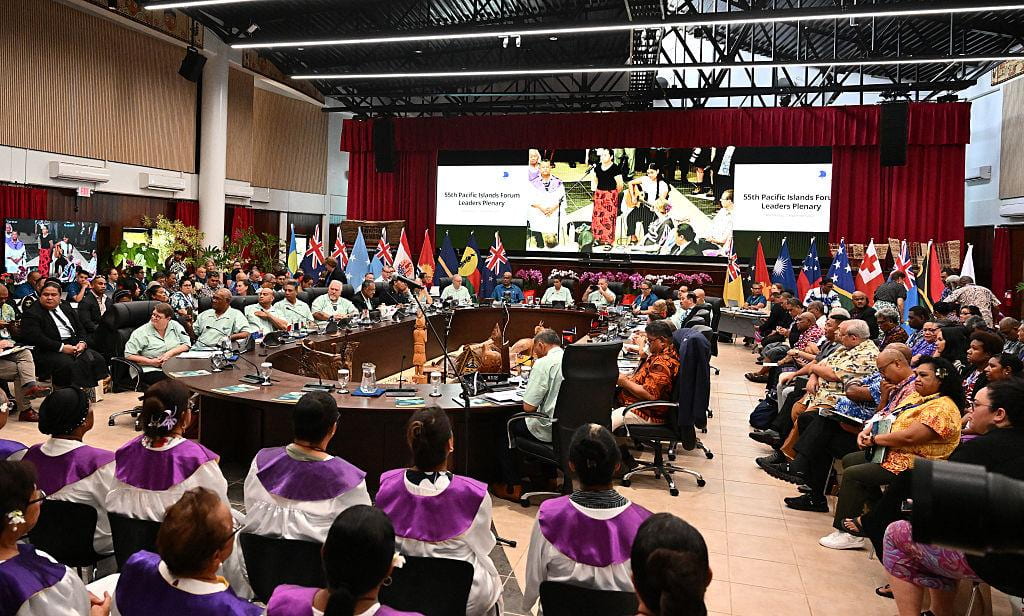
Palau: The Pacific Islands Forum has become a barometer of great-power competition, and its 2026 meeting in Palau showed why European diplomats are paying closer attention. The leaders’ gathering in August brought together the 18 member states and dialogue partners including the United States, Japan, Australia, New Zealand and China, with Taiwan attending as a development partner, a status it has held since 1993. Palau is one of only three Pacific states that recognise Taipei, alongside the Marshall Islands and Tuvalu.

Hosting the Pacific Islands Forum in Palau forced a question that members have tried to avoid. Beijing opposes any Taiwanese presence, and previous meetings have been shaped by that dispute. In 2024, China objected to pro-Taiwan language in the final communique after the Tonga meeting. Last year’s forum in the Solomon Islands excluded all non-member partners to prevent a clash. A month before this year’s gathering, Pacific ministers could not agree on a statement condemning a Chinese missile launch, which suggests how hard it is to find common language.

The cause is the forum’s consensus rule. Every decision needs agreement from all members, so one government that wants to avoid offending a larger partner can dilute a statement for everyone. A New Zealand official has said that some countries are using the need for consensus to respond to the wishes of outside partners rather than Pacific interests. That observation matters for Europe, which relies on statements, partnerships and development finance rather than military presence to build influence.

The European Union comes to the Pacific Islands Forum with a different toolkit from Washington or Beijing. It is a major donor and trade partner for the region, and its relationship with Pacific states runs through the Samoa Agreement with the Organisation of African, Caribbean and Pacific States, as well as through Global Gateway projects on climate resilience, connectivity and energy. Its pitch on climate adaptation is credible because Pacific leaders place rising seas at the top of their security concerns. The more difficult challenge is turning that credibility into visible results in small island economies that are tired of consultation and short of capacity.

Brussels should draw three lessons from the Pacific Islands Forum in Palau. First, it should avoid treating the region as a stage for rivalry with China, because Pacific governments reject being forced to choose. Second, it should work through regional institutions and align with Australia, New Zealand and Japan, whose presence in the islands is deeper than its own. Third, it should make the Pacific Islands Forum agenda its own by funding what leaders ask for, from undersea cables and fisheries monitoring to disaster finance, rather than projects designed in Brussels.

Taiwan will remain a delicate subject. The EU’s One China policy does not prevent it from supporting practical cooperation with Taipei in areas such as technology and trade, but in the Pacific it should avoid actions that give any side a reason to turn forum meetings into a contest. Quiet diplomacy that keeps the consensus process functioning serves European interests better than public positioning.

The Pacific Islands Forum will keep testing every outside power that claims a stake in the region. Europe’s strongest card is not size but reliability, and a forum that can still agree on climate, oceans and security language will be easier to work with than one that splinters under pressure from larger capitals.