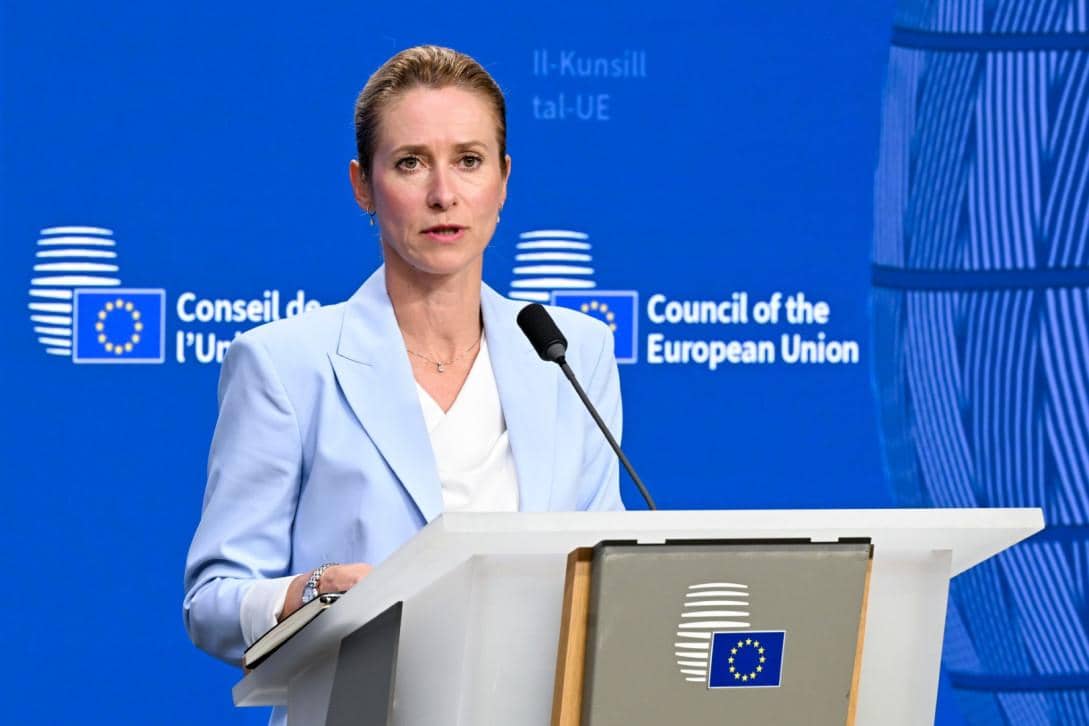
Brussels: The Council of the EU tightened its stance on EU sanctions circumvention on 15 October 2026, when it listed three individuals and nine entities that help Russia import restricted goods and evade oil and financial sanctions. High Representative Kaja Kallas, who chairs the Foreign Affairs Council, said that “circumventing EU sanctions is akin to aiding and abetting Russia’s illegal war of aggression.” The listings hit parallel imports, payment channels and the shadow fleet in one decision.
The three individuals behind the EU sanctions circumvention schemes are Dmitry Chudovsky, General Director of MOVERS GROUP LLC, Ivanna Savchuk, majority shareholder of LLC DT INIER, and Svetlana Gumenyuk, founder and director of United Stream LLC. The Council describes MOVERS GROUP as a cargo delivery company that handles parallel imports of goods under EU restrictions. It calls DT INIER a licensed customs broker and logistics operator that takes part in decentralised schemes to dodge the rules.
United Stream LLC works as a payment agent and intermediary for imports of restricted EU goods, which shows how the EU sanctions circumvention networks combine logistics with finance. Two Turkish trading firms, BEGLER TEKSTIL INSAAT ELEKTRONIK VE DIS TICARET LTD and MEDSE GROUP LLC, also appear on the list. The Council says both operate a global trade network that moves sanctioned goods toward Russia.
The oil-related EU sanctions circumvention listings aim at the shadow fleet and its commercial support. DIS Logistics DMCC, Vigor Marine Services LLP and SHIVA SHIPPING LTD belong to what the Council calls the shadow fleet ecosystem, while HURUS TRADE FZE supplies Russian-origin crude oil to India. The Council places the oil-related entities in the United Arab Emirates, India and the Seychelles, although its release does not match each company to a country.
The legal basis consists of Council Decision (CFSP) 2026/2332, which amends Decision 2014/145/CFSP, and Implementing Regulation (EU) 2026/2333, which implements Regulation (EU) No 269/2014. Both acts carry the date of 15 October 2026 and appeared in the Official Journal of the European Union. Every listed person and entity now faces an asset freeze, and nobody in the EU may make funds or economic resources available to them, directly or indirectly. The three individuals also face an EU travel ban.
The decision follows the largest Russia package of its kind. On 12 October the Council agreed the biggest set of listings since the war began, covering 1,569 individuals and entities in Russia’s military-industrial complex. Within three days, Brussels has therefore moved from military suppliers to the middlemen who keep trade flowing, and EU sanctions circumvention now sits at the centre of enforcement.
Kallas argued that stricter enforcement makes sanctions work better, and she said they have already denied Moscow more than one trillion euro. She added that the EU will keep making it “harder and more expensive for Russia to continue its war.” The Council release repeats the political line of the European Council conclusions of 18 and 19 June 2026, which reaffirmed support for Ukraine and condemned Russia’s large-scale missile and drone attacks on civilians.
For companies, the practical lesson of this EU sanctions circumvention round is that third-country intermediaries carry direct risk. Banks, customs brokers and logistics firms in the EU must screen counterparties in Türkiye, the Gulf and Asia, because the asset freeze covers funds that reach a listed party indirectly. The full text of the Council press release sets out the names and the legal acts.
The Council announced no further measures, so the next step depends on evidence from member states and customs authorities. If national investigators keep sharing cases, the Council can add more names without waiting for a full sanctions package. The latest EU sanctions circumvention listings show that Brussels now treats the enablers of Russia’s trade as targets in their own right.