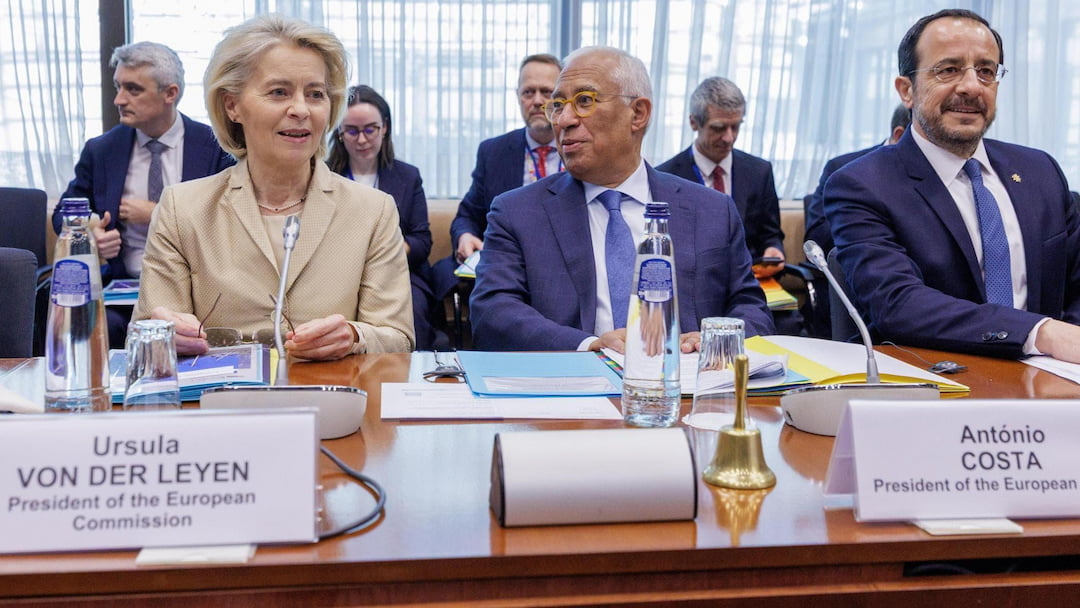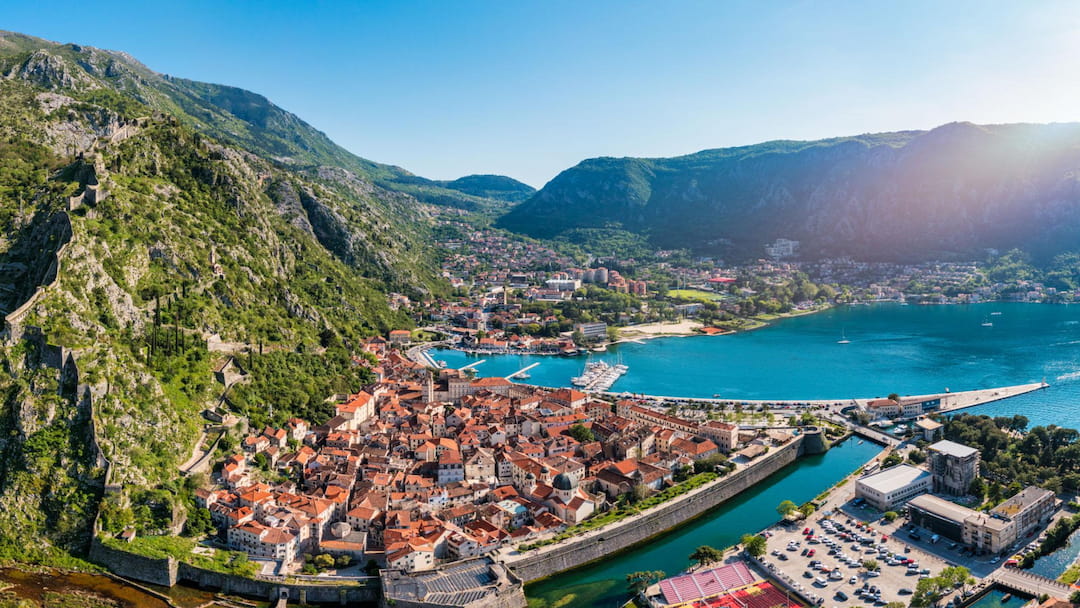
Kotor: Montenegro EU accession moved closer to the finish line on 12 October 2026, when the 29th Accession Conference in Luxembourg provisionally closed three more negotiating chapters. Chapter 17 on economic and monetary policy, Chapter 18 on statistics and Chapter 19 on social policy and employment join the closed list, which now stands at 21 of the 33 screened chapters. EU leaders then welcomed the “ongoing work on drafting the accession treaty with Montenegro” in their 16 October summit conclusions.
Nine of the 21 closures came in 2026, so the pace of Montenegro EU accession has clearly picked up this year. Prime Minister Milojko Spajić called the result “21 steps towards a stronger and more united Europe” and said “this leaves us with 12 more to go.” He added that his government has submitted all 12 remaining chapters to the Commission for approval.
The Irish presidency of the Council wants to keep that momentum for Montenegro EU accession. Minister of State Thomas Byrne, who spoke for the presidency, said Montenegro’s accession is “drawing closer every day” and that the Commission will present Chapter 33 on financial and budgetary provisions “in the coming weeks.” The European Council conclusions add that the presidency aims to provisionally close the remaining chapters, as long as Montenegro delivers the matching reforms.
Money is part of the picture. The Council approved conclusions on a €3.2 billion financial package for Montenegro’s membership, which the Commission proposed on 30 June 2026. That figure frames the budget expectations for the accession treaty before talks on Chapter 33 even start.
Enlargement Commissioner Marta Kos backed the goal of concluding negotiations by the end of 2026, but she attached a warning. Reforms on the rule of law and the anti-corruption constitutional amendments “cannot wait,” she said, and failure “risks holding back Montenegro’s EU future.” The message shows that Brussels treats political agreement in the Montenegrin parliament as a condition for the final stretch of Montenegro EU accession.
The government in Podgorica has set an ambitious timetable for Montenegro EU accession. According to Adi Ćerimagić, a senior analyst at the European Stability Initiative quoted by European Western Balkans, the government wants to close all talks by the end of 2026, sign the treaty in the first half of 2027 and join in 2028. Ćerimagić argues that leaders softened the expected explicit backing for a year-end finish into standard wording that readers can interpret either way.
Obstacles to Montenegro EU accession remain on the road. Croatia has circulated demands on bilateral issues, Spain has raised the question of linguistic recognition, and national elections in several member states in 2027 could slow ratification. Spajić said he is “absolutely certain” the dispute with Croatia can be resolved. The Commission plans to publish accession roadmaps for Montenegro, Albania, Moldova and Ukraine around the turn of October and November, with indicative timelines for closing chapters.
The history shows how long the process has run. Montenegro applied in 2008, received candidate status in June 2010 and opened negotiations in 2012. EU ambassadors endorsed an ad hoc working party on drafting the accession treaty on 22 April 2026, and it began work on 13 May. The Commission’s “Preparing for a wider Union” communication, which the European Council noted, adds the question of how the Union itself must change before it takes in new members.
The official record is available in the Council page on the 29th Accession Conference and in the European Council conclusions of 16 October. Both documents confirm the closed chapters and the presidency’s aim for the remaining ones.
The next tests are Chapter 33 and the autumn roadmap. If the last 12 chapters close on schedule, the treaty text can move from drafting to signature in 2027, and Montenegro EU accession would then depend on ratification in every member state. Until then, capitals will weigh the 2028 target against their own domestic calendars.