September 24, 2026
LATEST
Rights Groups Test the EU Civil Society Strategy as Pressure MountsJudges Weigh EU Staff Nationality Quotas in Parliament Hiring CasePatents Could Unlock Startup Loans Under the European Innovation ActHungary EU Funds Move Closer as Commission Lifts Rule of Law FreezeMinisters Debate Chips Act 2.0 as Europe Pushes for More Chip OutputMontenegro Waits on a Dutch Vote as the EU Enlargement Sprint StallsGlobal Green Bond Initiative Bets on Private Money for PartnersEurope Draws a Line on Strait of Hormuz Tolls as Iran Talks ResumeStrasbourg Lets the European Defence Fund Pay for Tests in UkraineCSAM Regulation Talks Hinge on Scanning Private MessagesGoogle GDPR Fine of €403 Million Puts Location Data on TrialMFF 2028-2034 Talks Stall as Ministers Hold Their Red LinesBanks Contest Key Parts of the EU Banking Competitiveness PlanEMFAF Amendment Offers Fishers Simpler Rules and a Quota Cut CushionTeachers Trail Pupils as AI in Education Reports Expose a Training GapMacron Presses Brussels to Relax EU Fuel Quality Rules Before WinterEurostat Fuel Prices Jump 23.8 Per Cent as Diesel Leads August RiseData Centre Rating Scheme Puts Energy and Water Use on the EU RecordEU Indo-Pacific Security Partnerships Move From Paper to the SeaEU Thailand Free Trade Agreement Heads to Phuket for Its Final ThirdRights Groups Test the EU Civil Society Strategy as Pressure MountsJudges Weigh EU Staff Nationality Quotas in Parliament Hiring CasePatents Could Unlock Startup Loans Under the European Innovation ActHungary EU Funds Move Closer as Commission Lifts Rule of Law FreezeMinisters Debate Chips Act 2.0 as Europe Pushes for More Chip OutputMontenegro Waits on a Dutch Vote as the EU Enlargement Sprint StallsGlobal Green Bond Initiative Bets on Private Money for PartnersEurope Draws a Line on Strait of Hormuz Tolls as Iran Talks ResumeStrasbourg Lets the European Defence Fund Pay for Tests in UkraineCSAM Regulation Talks Hinge on Scanning Private MessagesGoogle GDPR Fine of €403 Million Puts Location Data on TrialMFF 2028-2034 Talks Stall as Ministers Hold Their Red LinesBanks Contest Key Parts of the EU Banking Competitiveness PlanEMFAF Amendment Offers Fishers Simpler Rules and a Quota Cut CushionTeachers Trail Pupils as AI in Education Reports Expose a Training GapMacron Presses Brussels to Relax EU Fuel Quality Rules Before WinterEurostat Fuel Prices Jump 23.8 Per Cent as Diesel Leads August RiseData Centre Rating Scheme Puts Energy and Water Use on the EU RecordEU Indo-Pacific Security Partnerships Move From Paper to the SeaEU Thailand Free Trade Agreement Heads to Phuket for Its Final Third
September 24, 2026
LATEST
Rights Groups Test the EU Civil Society Strategy as Pressure MountsJudges Weigh EU Staff Nationality Quotas in Parliament Hiring CasePatents Could Unlock Startup Loans Under the European Innovation ActHungary EU Funds Move Closer as Commission Lifts Rule of Law FreezeMinisters Debate Chips Act 2.0 as Europe Pushes for More Chip OutputMontenegro Waits on a Dutch Vote as the EU Enlargement Sprint StallsGlobal Green Bond Initiative Bets on Private Money for PartnersEurope Draws a Line on Strait of Hormuz Tolls as Iran Talks ResumeStrasbourg Lets the European Defence Fund Pay for Tests in UkraineCSAM Regulation Talks Hinge on Scanning Private MessagesGoogle GDPR Fine of €403 Million Puts Location Data on TrialMFF 2028-2034 Talks Stall as Ministers Hold Their Red LinesBanks Contest Key Parts of the EU Banking Competitiveness PlanEMFAF Amendment Offers Fishers Simpler Rules and a Quota Cut CushionTeachers Trail Pupils as AI in Education Reports Expose a Training GapMacron Presses Brussels to Relax EU Fuel Quality Rules Before WinterEurostat Fuel Prices Jump 23.8 Per Cent as Diesel Leads August RiseData Centre Rating Scheme Puts Energy and Water Use on the EU RecordEU Indo-Pacific Security Partnerships Move From Paper to the SeaEU Thailand Free Trade Agreement Heads to Phuket for Its Final ThirdRights Groups Test the EU Civil Society Strategy as Pressure MountsJudges Weigh EU Staff Nationality Quotas in Parliament Hiring CasePatents Could Unlock Startup Loans Under the European Innovation ActHungary EU Funds Move Closer as Commission Lifts Rule of Law FreezeMinisters Debate Chips Act 2.0 as Europe Pushes for More Chip OutputMontenegro Waits on a Dutch Vote as the EU Enlargement Sprint StallsGlobal Green Bond Initiative Bets on Private Money for PartnersEurope Draws a Line on Strait of Hormuz Tolls as Iran Talks ResumeStrasbourg Lets the European Defence Fund Pay for Tests in UkraineCSAM Regulation Talks Hinge on Scanning Private MessagesGoogle GDPR Fine of €403 Million Puts Location Data on TrialMFF 2028-2034 Talks Stall as Ministers Hold Their Red LinesBanks Contest Key Parts of the EU Banking Competitiveness PlanEMFAF Amendment Offers Fishers Simpler Rules and a Quota Cut CushionTeachers Trail Pupils as AI in Education Reports Expose a Training GapMacron Presses Brussels to Relax EU Fuel Quality Rules Before WinterEurostat Fuel Prices Jump 23.8 Per Cent as Diesel Leads August RiseData Centre Rating Scheme Puts Energy and Water Use on the EU RecordEU Indo-Pacific Security Partnerships Move From Paper to the SeaEU Thailand Free Trade Agreement Heads to Phuket for Its Final Third

Three-Day Rule Anchors the EU’s Military Mobility Timetable for 2027

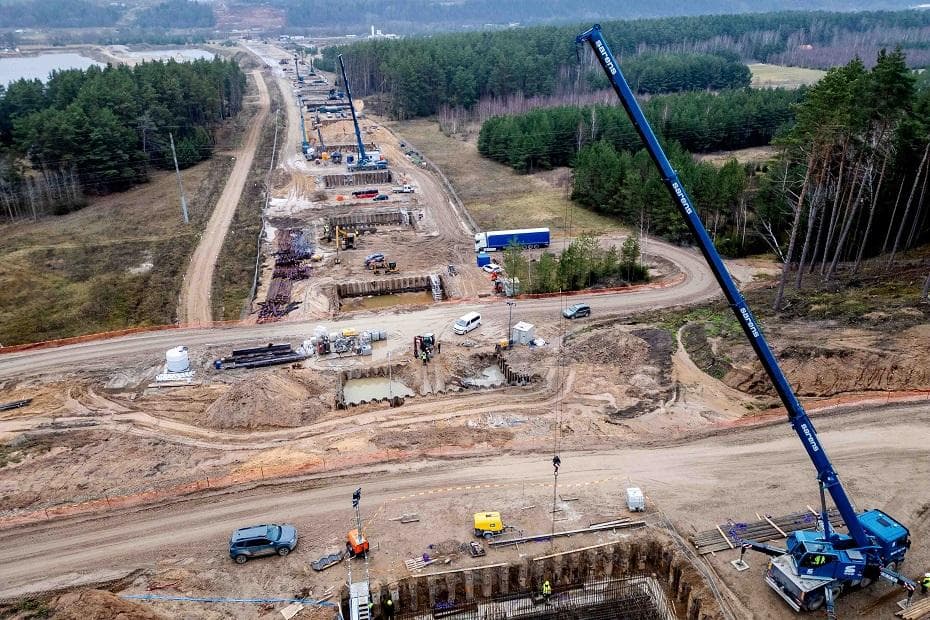
Kaunas: The rail junction linking Lithuania to the Polish network has become the practical measure of whether military mobility in Europe means anything on the ground. The Commission wants the legislative half of its November 2025 package adopted before this year ends, and negotiators returned in September to a timetable that leaves little room for the usual autumn drift.

Brussels built the package around a regulation proposal and a joint communication, and its central promise is procedural rather than physical. National authorities would have a maximum of three days to process a cross-border movement request for military personnel and equipment, with customs formalities streamlined to match. Commanders currently plan around permit processes that run from same-day to several weeks depending on which border they cross, which turns an exercise timetable into a negotiation.

Infrastructure carries the larger bill. Planners identified roughly 500 hotspots along four main corridors crossing Union territory, each a bridge, tunnel, road segment or rail line that cannot take the weight, width or loading gauge of modern military equipment. Fixing them is ordinary civil engineering with an unusual specification, and most of the work sits on assets that member states own and maintain from their own budgets.

A new emergency layer sits on top. The European Military Mobility Enhanced Response System, known as EMERS, would allow fast-track procedures and priority access to infrastructure when armed forces act in an EU or NATO context. Its drafting is where the sovereignty argument concentrates, because prioritising a military convoy means deprioritising the freight and passenger traffic that pays for the network.

Rail operators welcomed the harmonisation ambition and immediately pointed at the detail. Europe’s railways run on incompatible signalling, voltages and loading gauges, and no regulation legislates those differences away inside a decade. The sector argues that military mobility money should reinforce the same corridors commercial freight needs, rather than build a parallel network that sits idle between exercises.

The Parliament added a political condition in February, pushing for European preference in the procurement that follows. That demand echoes the defence industrial debate running alongside this file and complicates trilogues, since several member states buy dual-use equipment from suppliers outside the Union and do not wish to be told otherwise in a transport regulation.

Timing explains the pressure. The Commission wants the legislative parts agreed by the end of 2026 so that an EU-wide military mobility area can exist by the end of 2027. Negotiators chose those dates against a security assessment rather than a legislative calendar, and the institutions rarely move at that speed on files touching customs, infrastructure ownership and national defence prerogatives at once.

Practitioners test the arguments in public next week. Connecting Europe Days runs in Brussels from 28 September to 1 October, and military mobility shares the programme with road safety, intelligent transport systems and the future shape of the trans-European network. Ministers, infrastructure managers and defence planners will sit in the same rooms, which happens less often than the policy assumes.

For Kaunas and the Baltic corridor the question is concrete rather than conceptual. Rail Baltica turns a regional project into a strategic one the moment it carries heavy equipment northwards on a predictable schedule, and every month of legislative delay pushes that capability further into a decade European governments say they may not have. The Commission publishes progress on its military mobility pages, set out the original proposals in its November 2025 announcement, and lists the sessions in the Connecting Europe Days 2026 programme.